
A leaky kitchen faucet isn’t just annoying—it wastes water, drives up your bill, and can damage the cabinet underneath if you ignore it. That’s exactly what the team at RenoHeal found when we arrived at 185 The West Mall in Etobicoke for a kitchen faucet repair job. What looked like a simple drip turned into a practical lesson in what goes wrong with faucets, why it happens, and how a real fix actually gets done.
We handle dozens of kitchen faucet repairs across Etobicoke, Toronto, and the GTA every month. Most of them follow a pattern: the homeowner notices something off, puts up with it for a while, then calls us before it becomes an expensive problem. This job was no different—but the details matter, because they show you exactly what to look for in your own kitchen.
If your faucet is acting up, you’re not alone. We’ve seen it all, and we know the difference between a quick fix and a replacement. Read on to see what we discovered at The West Mall and what it means for your home.
The Job: What We Found at 185 The West Mall
The homeowner at this Etobicoke address had been dealing with a steady drip from their kitchen faucet for about three weeks. It wasn’t dramatic—just enough to be heard at night and to leave a small stain on the sink basin. They’d tried tightening the handle themselves, which helped for a day, then the drip came back.
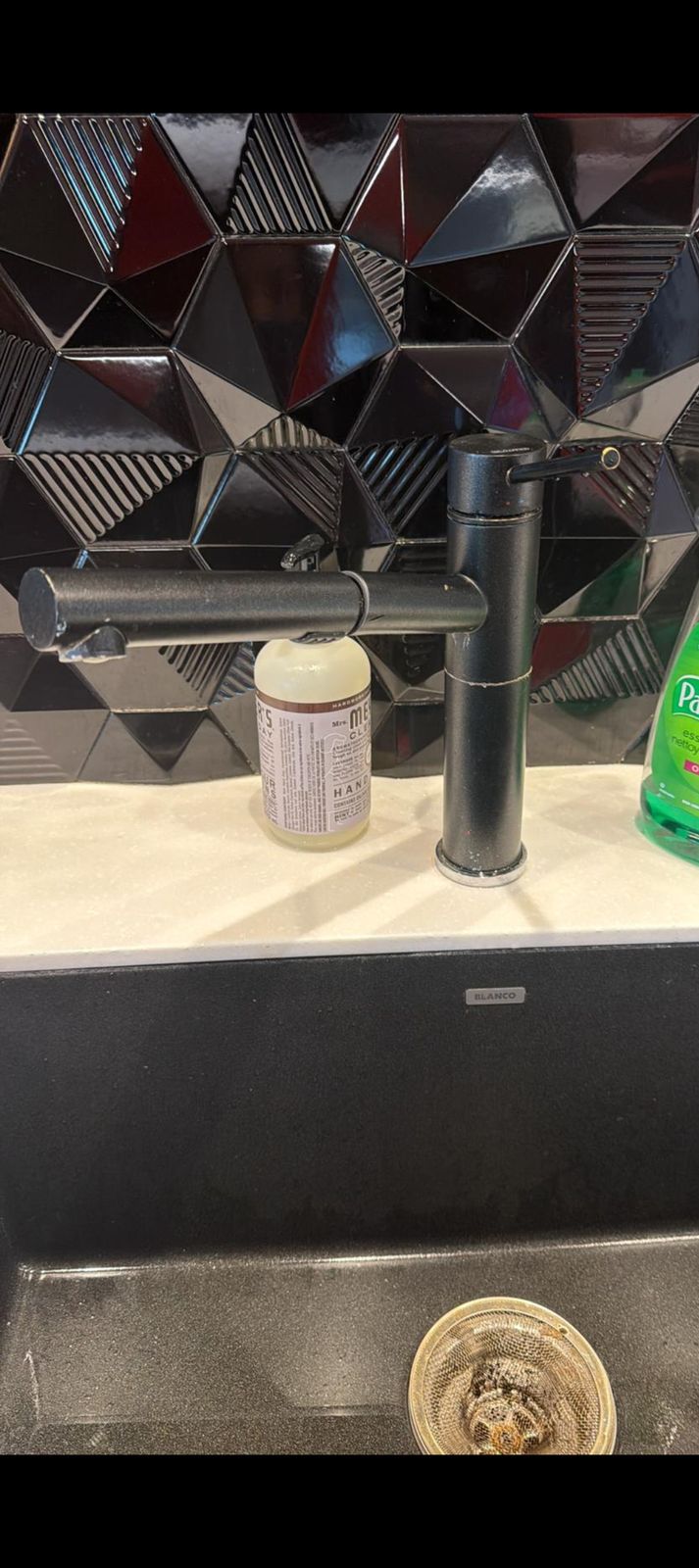
When our technician inspected the faucet, the issue was clear: the cartridge valve inside had worn seals. The faucet itself was a standard pull-down model, installed about seven years earlier, and still in decent cosmetic shape. No corrosion, no visible cracks. The problem was internal and invisible to the eye until you knew what to look for.
We had two options: replace the internal cartridge (about $150–$300 in parts and labor) or replace the entire faucet ($400–$900). Since the housing and spout were solid, we recommended the cartridge repair. The homeowner agreed, and we completed the job in under two hours. The faucet now runs smoothly with no drips, and they got another five to seven years of reliable service out of a fixture they already had in place.
Common Kitchen Faucet Problems (and What They Actually Mean)
Not every faucet problem is the same, and not every one requires a full replacement. Here’s what we typically see across Etobicoke, North York, and Scarborough kitchens, and what each one usually signals.
Steady Drip (1–2 drops per second)
This is almost always a worn cartridge or washer inside the faucet. The seals that stop water flow have degraded, usually from mineral buildup or normal wear. It’s the most common repair we do, and it’s fixable about 80% of the time without replacing the whole faucet. A steady drip wastes roughly 3,000 gallons of water per year in Ontario, so it’s worth fixing fast.
Low or Uneven Water Pressure
If one side of a pull-down faucet sprays weak or the pressure drops when you switch between hot and cold, the aerator (the screen at the tip) is usually clogged with mineral deposits. This is the easiest fix—we clean or replace it in five minutes. If both sides are weak, the supply lines to the faucet might be kinked, or the cartridge could be partially blocked. Mineral-heavy water in areas like Thornhill and Richmond Hill sees this more often.
Leak Under the Sink
This one scares people, but it’s usually just a loose or worn compression nut where the supply lines connect. We tighten or reseal these constantly. If the leak continues after tightening, the O-rings or supply line itself may need replacing—still a straightforward job. Leaving this unaddressed leads to cabinet damage and mold, so call us early.
Loose or Stuck Handle
A handle that wiggles at the base or won’t move smoothly is typically a loose set screw or a corroded cartridge inside. We tighten the screw first; if that doesn’t work, we usually need to replace the cartridge. A stuck handle that won’t move at all suggests mineral buildup or internal corrosion—that’s a cartridge replacement job.
Spray Head Doesn’t Retract
Pull-down and pull-out faucets have a spring and weight system in the spray head. When the head won’t snap back into place, that spring is worn out. We can replace just the head, which costs $50–$150 and takes 20 minutes. It’s a common problem on faucets three years old or older.
The good news: most of these problems are preventable or fixable at a fraction of the cost of a new faucet. Our kitchen services include faucet repair, replacement, and maintenance. We carry high-quality parts and offer a warranty on our work, so you can trust the job will last.
How Kitchen Faucet Repair Etobicoke Pros Diagnose and Fix the Issue
When we pulled up to the property at The West Mall in Etobicoke, the homeowner’s kitchen faucet was leaking steadily from the spout. Before ordering parts or charging for labour, we ran through a diagnostic checklist that takes about 15 minutes and costs nothing.
First, we shut off the water supply valves under the sink and tested both hot and cold lines to confirm where the leak originated. Then we examined the faucet handle, aerator, and valve stem for visible cracks, mineral buildup, or worn washers. A hand-held inspection light and magnifying glass catch details that matter—corrosion, sediment, thread damage.
In this Etobicoke job, the cartridge inside the valve had worn seals. Here’s what we did:
- Turned off hot and cold supply valves under the sink
- Removed the faucet handle cap and handle screw with a hex wrench
- Extracted the old cartridge using a cartridge puller tool (essential—forcing it breaks the faucet)
- Replaced it with a manufacturer-matched cartridge
- Reassembled the handle and cap
- Turned water back on and tested both lines for leaks
The whole process took 45 minutes. Tools we used: adjustable wrench, hex key set, cartridge puller, flathead and Phillips screwdrivers, and a bucket to catch residual water. No cutting or new plumbing—just a direct swap of the faulty part.
Kitchen Faucet Repair Cost Guide for Etobicoke Homeowners
Costs for kitchen faucet repair in Etobicoke vary by the fault type and whether your faucet is a budget single-handle model or a premium brand. Here’s a real breakdown of what you’ll pay in CAD for labour and parts:
| Repair Type | Part Cost (CAD) | Labour (CAD) | Total Range |
|---|---|---|---|
| Cartridge replacement | $40–$120 | $120–$180 | $160–$300 |
| Aerator cleaning / replacement | $8–$25 | $60–$100 | $68–$125 |
| Valve stem / washer kit | $15–$60 | $100–$150 | $115–$210 |
| O-ring and seal kit | $12–$40 | $80–$120 | $92–$160 |
| Full faucet replacement | $150–$600+ | $150–$250 | $300–$850+ |
The Etobicoke job we completed came to $220 total: a $85 cartridge plus $135 in labour. If the faucet had been corroded beyond repair or the customer wanted an upgrade, a full replacement with installation runs $300–$850 depending on the faucet brand and complexity.
One tip: get a free quote before any work starts. We’ll identify the exact issue and give you fixed pricing—no surprises when the technician leaves. Hard water buildup is common across the GTA, so preventive cleaning every 6–12 months saves money long-term.
DIY vs Hiring a Professional Plumber in Etobicoke
You can handle some faucet jobs yourself—replacing an aerator, cleaning a cartridge, or swapping out a spray head attachment takes basic tools and half an hour. If the leak is simple and you’re handy with a wrench, you might save the service call cost.
But most kitchen faucet repairs in Etobicoke end up needing a pro. Modern pull-down faucets have internal seals and cartridges that require the right cartridge model (which varies by brand and year), specialty tools, and knowledge of your home’s water pressure. Get it wrong, and you’re replacing the whole faucet—or calling someone to fix the damage.
Ontario plumbing codes also matter. If your repair involves shutoff valves, supply lines, or anything under the sink that ties into your home’s water system, it’s regulated work. A licensed plumber knows the code, carries liability insurance, and warranties their work. At RenoHeal, our technicians handle handyman plumbing tasks with full WSIB coverage and a $5M liability policy—that protection is real if something goes wrong.
Bottom line: Try the easy fixes. If the faucet still drips after 15 minutes, call a professional.
Common Mistakes That Make a Faucet Repair Worse
Over-tightening. Homeowners crank nuts and bolts thinking harder pressure stops leaks faster. It doesn’t. You’ll strip threads, crack plastic cartridges, and damage the faucet body. Hand-tight plus a quarter turn is usually the rule.
Buying the wrong replacement part. A moen cartridge isn’t a Kohler cartridge. Order the wrong one and you’ve wasted time and money. Always confirm your faucet brand and model number (usually on the manual or under the sink) before buying anything.
Skipping the shutoff valve. Turning off the main water valve before working under the sink feels like overkill—until water pours out and you’re scrambling. Locate your shutoff valves (there should be one for hot, one for cold, under most kitchen sinks) and test them before you start. If they don’t work, call a professional; non-functional shutoffs are a safety and code issue across Toronto and the GTA.
Ignoring the source. A slow drip might be the faucet itself, or it might be a pinhole leak in the supply line or a corroded fitting. If you fix the faucet and water still pools under the sink, you’ve wasted the repair. Get a professional inspection to identify the real problem first.
Frequently Asked Questions
How long does a kitchen faucet repair typically take?
Most kitchen faucet repairs take between 30 minutes and 2 hours, depending on the type of faucet and the root cause of the problem. A straightforward cartridge swap on a single-handle faucet is usually done in under an hour. More involved repairs — like fixing a corroded valve seat or dealing with old, seized shut-off valves under the sink — can push that closer to two hours.
Is it cheaper to repair a kitchen faucet or replace it entirely?
Repair is almost always cheaper when the faucet body is in good shape and the issue is an internal component like a cartridge, O-ring, or ceramic disc. Replacement makes more sense when the faucet is over 15 years old, heavily corroded, or the repair cost approaches the price of a new mid-range unit. A good rule of thumb: if parts and labour exceed 60–70% of a new faucet’s installed cost, replacing it is the smarter long-term move.
Can a dripping kitchen faucet increase my water bill in Ontario?
Yes — a faucet dripping once per second wastes roughly 30 litres of water per day, which adds up to about 11,000 litres a year. Toronto and Peel Region charge water by the cubic metre, so that steady drip can quietly add $30–$80 or more to your annual bill depending on your municipality’s rate. Fixing it promptly is one of the easiest ways to cut household water waste.
What parts are usually replaced during a kitchen faucet repair?
The most commonly replaced components are cartridges, ceramic disc assemblies, O-rings, and valve seats. On older two-handle faucets, worn washers and packing nuts are frequent culprits. The aerator at the spout tip is also worth replacing at the same time if there’s visible mineral buildup — it’s a $5 part that makes a noticeable difference in flow quality.
Do I need a licensed plumber to repair a kitchen faucet in Etobicoke?
Ontario law does not require a licensed plumber for basic faucet repairs — swapping a cartridge, replacing O-rings, or fixing a drip are considered minor maintenance work. That said, if the repair involves cutting into supply lines, moving drain connections, or any work that could trigger a permit, a licensed plumber is required under the Ontario Building Code. For straightforward faucet repairs, an experienced handyman with the right tools handles the job just fine.
How do I know if my faucet cartridge needs to be replaced?
The clearest signs are a drip that won’t stop even after fully closing the handle, a handle that’s become stiff or difficult to turn, or water that flows in only one temperature regardless of how you adjust it. If tightening the packing nut doesn’t stop the drip, the cartridge is almost certainly worn out. Pulling it out and inspecting it usually confirms the issue — cracked seals, scoring on the cartridge body, or mineral deposits that can’t be cleaned off are all signs it needs to go.
Kitchen Faucet Repair in Etobicoke: Fix It Right the First Time
A dripping or misbehaving kitchen faucet isn’t just an annoyance — it wastes water, drives up your utility bill, and tends to get worse if left alone. Whether the issue is a worn cartridge, a faulty O-ring, or a handle that’s lost its feel, most repairs are straightforward when you have the right parts and know exactly what you’re dealing with.
The job at The West Mall is a good example of how a targeted repair — done properly the same day — saves a homeowner from weeks of frustration and a premature faucet replacement. Matching the cartridge, shutting off correctly at the supply valves, and testing thoroughly before packing up are the details that separate a real fix from a temporary patch.
If your kitchen faucet is giving you trouble anywhere in Etobicoke or the GTA, RenoHeal’s technicians carry common faucet parts on every visit and can usually resolve the issue in a single appointment. Request a free quote today, or learn more about our full range of kitchen services — we’re ready to help the same day.