Every homeowner in Toronto has experienced this moment at least once. You turn on a light switch, and the bulb flickers for a second before settling. At first, it feels harmless. Maybe it happens only when the washing machine is running, or when you plug in the vacuum. You shrug and think, “It’s nothing, just the bulb.”
But then it keeps happening. Sometimes the lights dim. Sometimes a switch makes a crackling sound. Sometimes a room loses power for a moment. And suddenly, that “tiny flicker” doesn’t feel so small anymore.
Across the GTA — from Toronto to Vaughan, Richmond Hill, North York, Markham, Mississauga, Brampton, Aurora, and Newmarket — flickering lights are one of the most common early warning signs of electrical issues in a home. They can be something simple. But they can also be a sign of a deeper problem hiding behind the walls.
Understanding the difference can protect your family, prevent electrical damage, and save you from a costly emergency repair.
For dependable handyman services in Toronto, explore our complete range of local repair, maintenance, and home improvement solutions.handyman services in Toronto
Watch: When Flickering Lights Mean Electrical Trouble
This video explains why flickering lights may signal wiring problems, overloaded circuits, or loose electrical connections — and when homeowners should call a professional electrician.
Why Do Lights Flicker in the First Place?
Lights don’t flicker for no reason. Something causes the electrical flow to become unstable, and the fixture reacts to it. Sometimes the cause is harmless, but other times it’s a warning sign.
One of the most common reasons is a loose connection. Even a slightly loose wire can interrupt the electrical circuit. A loose connection can happen inside a switch, behind a fixture, inside the electrical panel, or even somewhere along the wiring path.
Another common reason is overloaded circuits. This happens often in older Toronto houses where the wiring was never designed for today’s electrical demands. When a microwave, space heater, hair dryer, or appliance turns on, the circuit becomes overwhelmed and causes lights to dim or flicker.
Some homeowners across North York or Vaughan experience flickering during storms. This can be caused by fluctuations from the power grid. But if the flickering continues after the weather clears, the issue is usually inside the home.
In condos around downtown Toronto, flickering can also be linked to problems in the building’s main electrical supply. This means your unit isn’t always the root cause — but the symptoms appear in your lighting.
For safe upgrades and troubleshooting, our professional electrical repair services in Toronto can inspect wiring, switches, and circuits to ensure your home’s electrical system runs safely.
Professional electricians also rely on certified wiring materials and electrical components available from stores like Home Depot to ensure safe and reliable repairs.
When Flickering Means Something Serious
A single flicker isn’t an emergency. But patterns matter. If the flickering happens repeatedly, or in multiple rooms, it often means the electrical system is struggling.
One major warning sign is when flickering lights come with burning smells, buzzing sounds, or warm switches. These are early stages of a dangerous electrical situation. Wires might be overheating, insulation could be melting, or arcs could be forming behind the wall — something most homeowners never see until it’s too late.
In older GTA homes, aluminum wiring is still common. This type of wiring expands and contracts with temperature changes and can loosen over time. Flickering lights in a home with aluminum wiring should never be ignored.
Another serious sign is inconsistent power in parts of the home. If one room dims when another appliance turns on, your circuits might not be balanced properly. This is a job only an electrician should handle.
Electrical problems rarely fix themselves. They get worse quietly until one day they become very obvious — and dangerous.
What Happens if You Ignore Electrical Flickering?
Ignoring electrical issues can turn a small problem into a major repair. A loose wire can start to arc, which produces heat. That heat can damage insulation and lead to sparks. Sparks can cause smoke, then fire. Many electrical fires begin this exact way.
Even if a fire never starts, faulty wiring can damage appliances, overheat outlets, or destroy electronics. One sudden voltage surge can ruin a fridge, TV, or furnace control board.
The longer electrical problems stay untreated, the more they spread through the system. Fixing a single connection is quick and affordable. Fixing a damaged panel or melted wiring is not.
This is why even minor flickering deserves attention — it’s one of the earliest signs of trouble.
How a Professional Diagnoses Electrical Flickering in GTA Homes
When homeowners call RenoHeal, the first goal is always to find the root cause. Electricians don’t just replace bulbs. They follow the path of the electrical flow, checking each point where power can weaken.
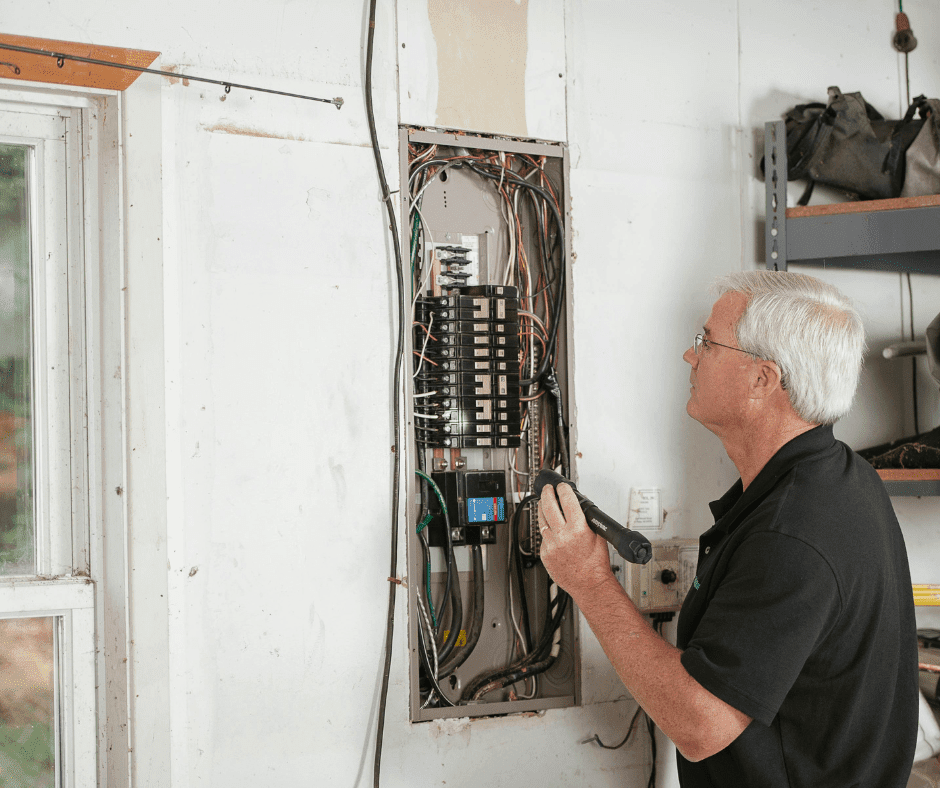
A proper diagnosis begins at the fixture. If the fixture is secure and the bulb is stable, the next step is examining the switch and wiring. Electricians look for loose connections, worn insulation, heat marks, or signs of arcing.
If these areas are clear, the panel is inspected next. A panel with old breakers, loose terminals, corrosion, or outdated wiring can easily cause flickering. Toronto has many older homes with panels that are long overdue for upgrades.
In condos, electricians may also check the building’s riser system or feeder lines to see if the issue comes from outside your unit.
Once the cause is identified, the repair is usually straightforward. Tightening connections, replacing damaged wire sections, updating breakers, or correcting overloaded circuits can restore stable power for years.
Homeowners often notice immediately how much smoother their lighting and appliances run after a proper repair.
What Professionals See That Homeowners Often Miss
A trained electrician sees signs the average person never notices. Slight discoloration around a switch plate, faint buzzing, a warm dimmer, or a breaker that isn’t fully seated can all be clues.
Even the pattern of flickering — whether it happens when appliances turn on, during certain times of day, or only on certain circuits — helps identify the deeper issue.
These small details are why professional inspection matters. Electrical systems leave clues long before they fail.
How to Prevent Electrical Problems at Home
Homeowners can reduce electrical risks by staying aware of small changes. If lights flicker, dim, or buzz, take note of when it happens. Make sure appliances are plugged into proper outlets and avoid overloading power bars. Replace old fixtures, tighten loose bulbs, and upgrade to LED lighting where possible.
In older Toronto homes, updating the electrical panel is one of the best long-term solutions. Panels installed decades ago were never designed for today’s electronics, heating systems, or kitchen appliances.
A little attention now helps prevent expensive repairs later.
Need Help with Flickering Lights or Electrical Issues in Your GTA Home?
Whether you live in Toronto, North York, Etobicoke, Scarborough, Vaughan, Richmond Hill, Mississauga, Brampton, Aurora, or Newmarket, flickering lights are not something to ignore. They can be early signs of faulty wiring, overloaded circuits, or aging electrical systems.
At RenoHeal, we take pride in delivering clean, durable, and professional home repairs that protect and improve your property.
Call 647-657-6367 or Request a Free Quote today.
Follow our renovation projects and tips on Instagram and YouTube.
RenoHeal proudly serves homeowners across the GTA including Toronto, North York, Vaughan, Richmond Hill, Markham, Aurora, Newmarket, Mississauga, and Brampton.