
Basement bathroom caulking in Scarborough typically needs replacement every 3–5 years, compared to 7–10 years in drier areas, because the environment is simply harsher. The combination of high moisture, cold concrete floors, and Ontario’s freeze-thaw cycles creates conditions that break down caulk far faster than upstairs bathrooms. If you’ve noticed peeling sealant or dark mold creeping along your shower corners, you’re not alone—it’s one of the most common basement bathroom issues we fix.
Caulk failure isn’t just cosmetic. Water seeps behind failed sealant, saturating drywall and subflooring, which leads to structural damage and mold growth that affects your home’s air quality. Replacing it quickly stops the damage before it spreads. The good news: catching it early and doing it right the first time makes all the difference.
Why Basement Bathrooms in Scarborough Are Harder on Caulk
Scarborough basements stay cold and damp year-round. Unlike upstairs bathrooms that warm up quickly, basement air lingers around 10–15°C even in summer, and humidity often hovers at 60–80% because basements are naturally closer to groundwater and soil moisture.
Caulk expands and contracts with temperature swings. In winter, concrete floors drop to near freezing while the air above stays warmer, creating stress at the joint where caulk sits. Every freeze-thaw cycle—and Ontario gets 30–50 of these annually in basement spaces—weakens the molecular bond that holds caulk to tile and grout. Standard acrylic caulk, which lacks flexibility, fails first.
Water also pools differently in basements. Shower water and splashes don’t evaporate as fast in cold, humid air, so caulk stays wet longer. Mold and mildew colonize that moisture within weeks. Combined with poor air circulation in below-grade spaces, the conditions are almost perfect for sealant breakdown and biological growth.
Scarborough’s heavy spring snowmelt and summer humidity peaks worsen this. If your basement bathroom is older—built before modern waterproofing codes—water infiltration from outside foundation walls can add pressure from behind, pushing moisture into the caulk joint itself.
How to Tell Your Basement Bathroom Caulking Has Failed
The most obvious sign is peeling. If caulk is curling away from the tile edge or pulling away from the wall, it’s lost adhesion. Run your fingernail along the joint—if it catches or flakes, the sealant is compromised and water is already finding its way underneath.
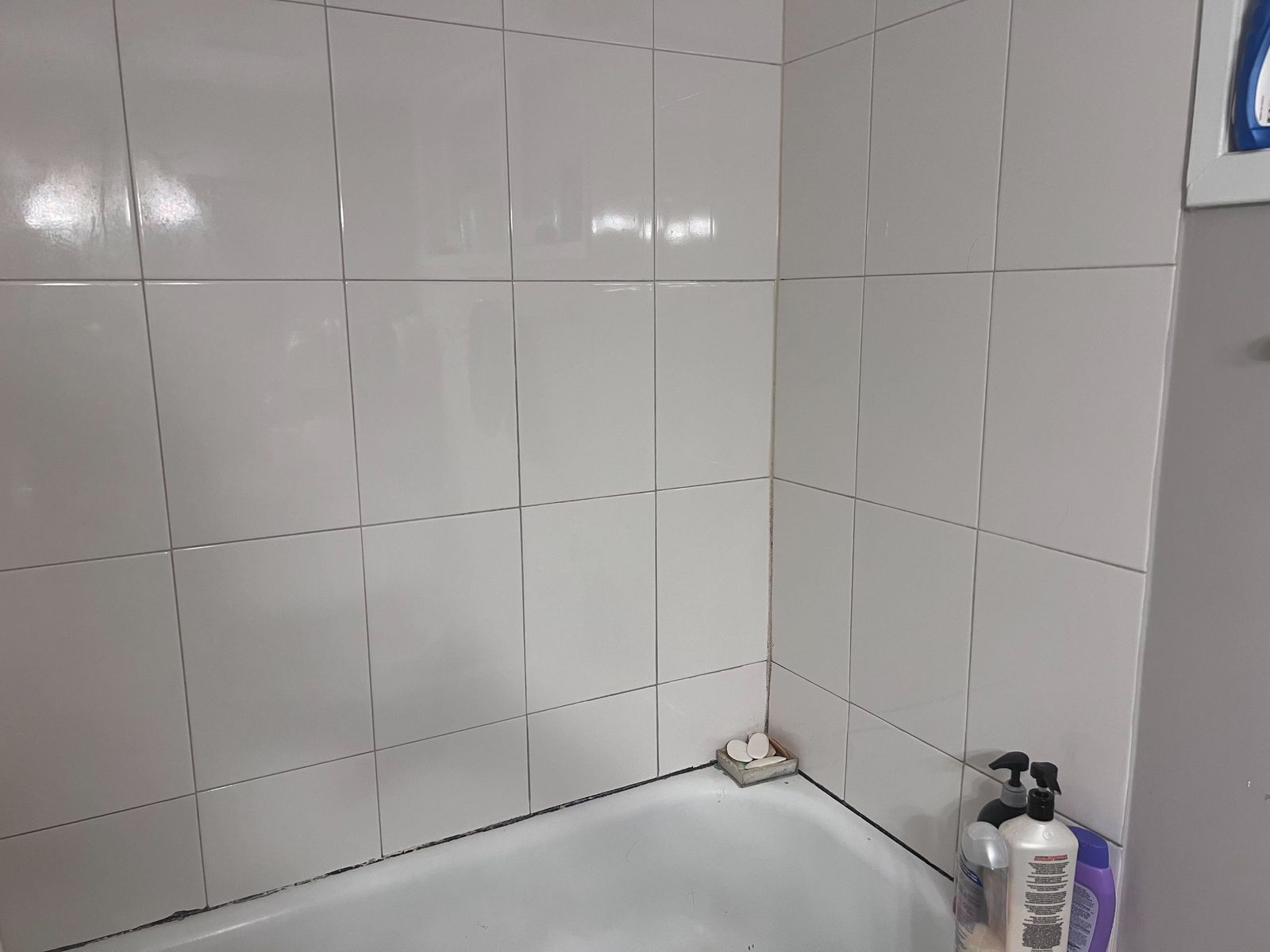
Mold and discoloration are red flags. Black or dark green streaks along caulk lines mean moisture is trapped in or behind the sealant, and mold has colonized. This happens fast in Scarborough basements because the cool, humid air is ideal for fungal growth. Even if the caulk still looks intact, mold inside the joint means it’s failing.
Look for gaps and shrinkage. If there’s visible space between the caulk and tile, water is already seeping in. Press on the caulk—if it feels hard and brittle, it’s lost flexibility and will crack under any movement. Soft, mushy caulk that smells sour or earthy is waterlogged and should be removed immediately.
Check the substrate behind the caulk. Staining on drywall, a soft or spongy feel to the wall, or visible moisture marks mean water has already breached the sealant. This is a sign the old caulk needs removal and the area needs to dry completely before resealing. Professional caulking services include an inspection to catch these issues before they become structural problems.
| Warning Sign | What It Means | Urgency |
|---|---|---|
| Peeling or curling edges | Loss of adhesion; water underneath | Replace within 1–2 weeks |
| Black mold streaks | Moisture trapped; mold colonized | Remove and reseal immediately |
| Visible gaps between caulk and tile | Sealant has shrunk; water entering | Replace within days |
| Hard, brittle texture | Caulk lost flexibility; cracking risk | Replace within 1–2 weeks |
| Staining or softness on wall behind | Water damage to drywall; mold risk | Replace and assess damage urgently |
Don’t wait to act. Water that breaches caulk spreads quickly in basement walls, especially in Scarborough homes where basements are already prone to moisture. If you spot any of these signs, get a free estimate to assess the damage and plan the repair.
How to Recaulk a Basement Bathroom the Right Way
Removing old caulk properly is half the battle. Use a caulk removal tool or utility knife to cut away the peeling sealant, then apply a commercial caulk softener (like DAP Fast ‘N Easy) and let it sit for 15–30 minutes before scraping. Don’t rush this step—leftover bits will undermine your new seal.
Once the joints are bare, clean them thoroughly with a damp cloth and let them dry completely (at least 2 hours in basement conditions). Run your finger along the gap to remove dust, debris, and any mold residue. In Scarborough’s humid climate, moisture is your enemy, so dry is non-negotiable.
Apply and Smooth
Load your caulk gun with a high-quality silicone or hybrid formula (we’ll cover product choice next). Cut the nozzle at a 45-degree angle to match your joint width—usually 1/4 inch for tile-to-tile seams. Apply steady, even pressure in one continuous bead. Work along the joint slowly; rushing creates air pockets.
Immediately smooth the bead with a wet finger or caulk tool—don’t wait. This presses the caulk into the gap and creates a professional finish. For basement bathrooms in Toronto and the GTA, this step prevents water from pooling on top of the caulk.
Cure Time
Most silicone caulks need 24–48 hours to fully cure before you shower or splash water. Check the product label. Latex cures faster (1–3 hours) but won’t last as long in a wet basement. If you’re working on shower corners or frequent wet zones, patience saves you from redoing this job in a year.
For a basement bathroom that’s already failed once, get a quote from RenoHeal and let our experienced technicians handle the removal and application—we warranty our caulking work and use only high-quality materials.
Choosing the Right Caulk for Basement Bathroom Caulking in Scarborough
Silicone vs. Latex vs. Hybrid
| Type | Durability | Mold Resistance | Cost | Best For Basements? |
|---|---|---|---|---|
| 100% Silicone | 10–20 years | High (naturally antimicrobial) | $8–15 per tube | Yes—top choice |
| Latex/Acrylic | 3–5 years | Moderate (fungicides added) | $3–8 per tube | Not recommended |
| Hybrid (Silyl-Polymer) | 7–10 years | High | $10–18 per tube | Good alternative |
For a basement bathroom in Scarborough, Etobicoke, or North York, silicone is the standard. It resists mold naturally, stays flexible through freeze-thaw cycles, and doesn’t degrade in constant moisture. The old latex caulk on your walls? That’s why it’s peeling and moldy.
Mold-Resistant Formulas
Look for caulks labeled “mold and mildew resistant” or with added fungicides. Top brands include Dow Corning’s DOWSIL line, Sikaflex products, or GE Silicone II (mold-resistant). Apply a thin bead—thick applications actually trap moisture behind the caulk, defeating the purpose in a humid basement.
If your bathroom has active mold, address it first with proper mold removal before recaulking. New caulk seals in existing spores and won’t solve the root problem. Once the surface is clean and dry, your new sealant will last.
Basement Bathroom Recaulking Cost Guide (Scarborough, 2024)
Basement bathroom caulking costs in Scarborough vary based on scope, materials, and whether moisture damage requires prep work first. Here’s what you’re looking at in 2024:
| Service | DIY Cost (Materials Only) | Professional Cost (Labour + Materials) | Time Required |
|---|---|---|---|
| Small bathroom (toilet, sink, basic tub surround) | $40–$80 CAD | $300–$550 CAD | 2–3 hours |
| Full bathroom (tub, shower, all corners, baseboards) | $80–$150 CAD | $600–$1,200 CAD | 4–6 hours |
| Recaulking with mold removal prep | $120–$200 CAD | $900–$1,500 CAD | 6–8 hours |
| Silicone caulk (premium, 10-year life) | $15–$25 per cartridge | Included in labour rates | N/A |
Labour Breakdown
Removal and prep: Cutting out old caulk and cleaning mold typically takes 30–50% of total time. Basement bathrooms often need this step because older sealant traps moisture and promotes growth. Application: Filling seams with fresh silicone or acrylic caulk takes 40–60 minutes for a full bathroom. Curing and touch-up: Professional jobs include a final inspection and minor caulk adjustments before you use the bathroom.
In Scarborough and across the GTA, labour rates for caulking services typically run $75–$120 per hour. If you’re dealing with visible mold or peeling sealant, budget extra for safe removal—this isn’t just cosmetic, it’s about preventing water damage to your basement walls and framing.
DIY vs Hiring a Professional for Basement Bathroom Caulking
When DIY Caulking Can Work
Small touch-ups on a relatively new bathroom with no visible mold or water damage are reasonable DIY projects. If you’re re-caulking a single wall or filling a small gap around a sink that doesn’t show signs of moisture intrusion, you can save $300–$500 and do it in an afternoon. The key is honest assessment: if the old caulk looks clean (no black spots, no separation from the wall), you have a shot.
Why Professionals Matter for Basement Bathrooms
Basements create unique pressure. Moisture moves upward through concrete and soil, making proper waterproofing and caulking essential. A poorly applied bead won’t stick, shrinks as it cures, or splits within months—especially in cool, damp conditions. Professional handyman services in Scarborough, North York, and Mississauga include surface prep (removing old caulk completely, drying the substrate), correct material selection (silicone for wet areas, acrylic for dry walls), and proper technique (consistent bead width, smooth finish, no gaps). Peeling and moldy sealant—like the real job we completed in Scarborough—signals that the old work failed. A professional won’t repeat that mistake.
Real Risks of Bad Caulking
Water seepage: Gaps or thin beads allow water to run behind tiles or drywall, leading to mold, rot, and structural damage. Mold growth: If old caulk isn’t fully removed, mold spores remain and spread under the new seal. Costly repairs: Damage to basement framing can cost thousands to fix. Health risk: Mold in a bathroom—especially a basement one—affects air quality and can trigger allergies and respiratory issues. The $600–$1,200 investment in professional work protects your home and health far better than a $50 DIY attempt that fails in six months.
Common Mistakes That Make Basement Caulk Fail Early
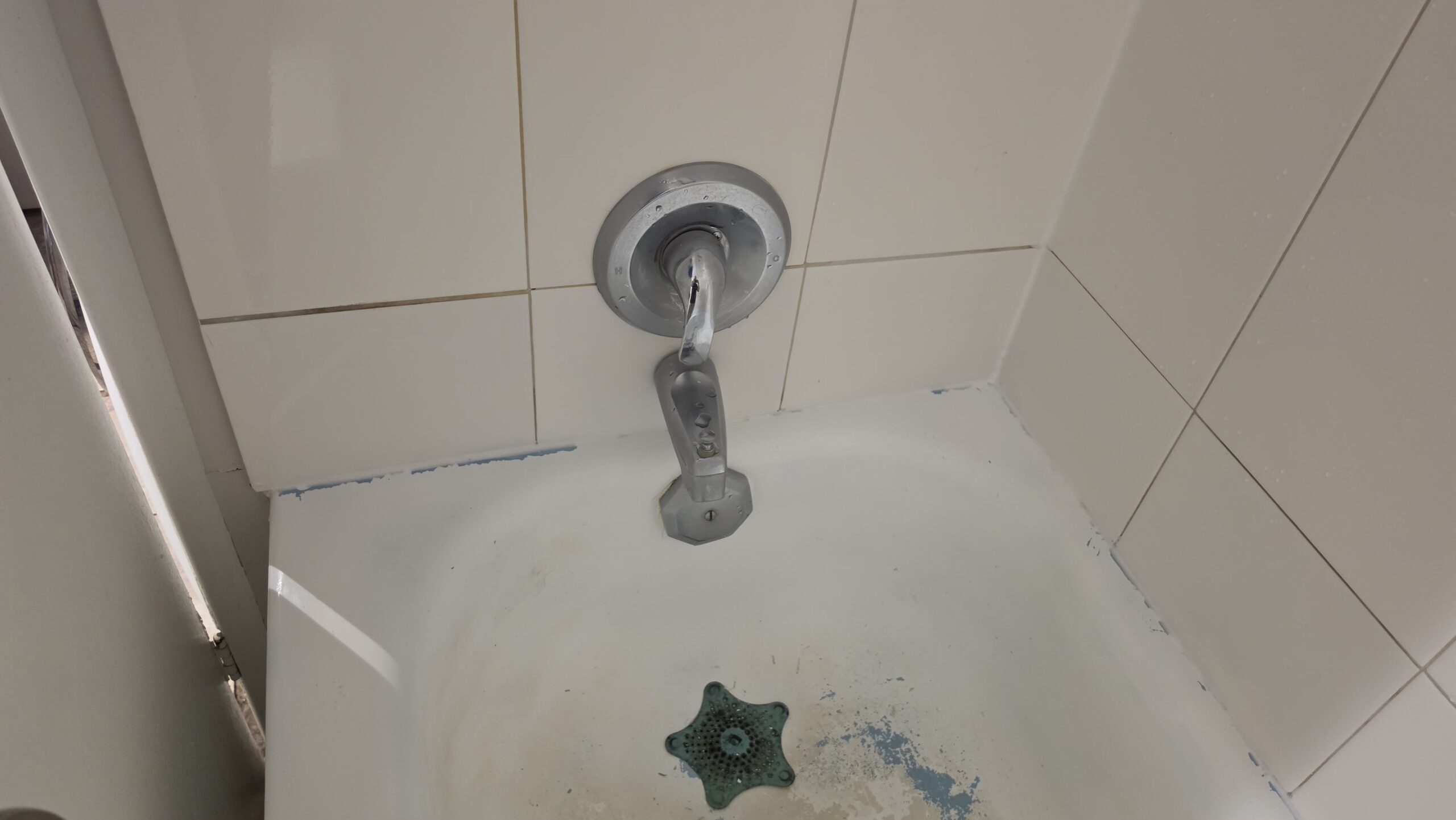
Basement caulk fails faster than upstairs bathroom work because homeowners often skip the steps that matter most in damp environments. The biggest culprit is caulking over existing mold or peeling sealant without removing it first. Your new caulk bonds to the old stuff, not the tile or tub rim—so within months, it peels away again and mold grows underneath.
Another common error is using the wrong product. Standard acrylic or silicone caulk works fine in dry bathrooms, but basements need 100% silicone or urethane-based caulk that resists moisture and prevents mold growth. Cheap acrylic caulks dry out and crack in fluctuating humidity, especially during Ontario’s freeze-thaw cycles.
Poor prep kills most basement caulking jobs. Dust, soap residue, and mineral deposits on tile or tub walls prevent adhesion. If you rush the surface and apply caulk directly, it won’t stick properly—adhesion fails within weeks.
Finally, not giving caulk enough cure time before exposing it to water is a guaranteed way to fail. Most silicone caulks need 24–48 hours to cure fully. Many homeowners use the shower the next morning, which forces water into uncured caulk and ruins the seal. Check your product label—cure time varies.
Why Basement Moisture Makes Caulk Vulnerable
Basements in Scarborough and across the GTA experience higher humidity, temperature swings, and occasional dampness. Caulk that works perfectly in a kitchen or main-floor powder room can fail in weeks down below because moisture and mold find every weak spot. That’s why professional basement bathroom caulking matters—correct product selection and surface prep are non-negotiable.
Frequently Asked Questions
How long should caulk last in a basement bathroom?
In a well-ventilated above-grade bathroom, quality caulk can last 5–10 years. In a basement bathroom in Scarborough, expect closer to 2–4 years due to higher humidity, lower airflow, and temperature fluctuations — especially in older homes without proper vapour barriers. Using the right product and keeping moisture in check can push that closer to the upper end.
Can I caulk over old moldy caulk in my basement bathroom?
No — and this is one of the most common mistakes homeowners make. Caulking over mold traps the spores underneath, where they continue to grow and cause the new caulk to fail within months. The old caulk must be fully removed, the surface treated with a mold-killing solution, and the area allowed to dry completely before fresh caulk is applied.
What type of caulk is best for a basement bathroom shower or tub?
A 100% silicone or siliconized latex caulk with built-in mildewcide is the best choice for basement bathroom showers and tubs in Scarborough. Silicone handles the constant moisture and minor substrate movement better than standard acrylic caulk. Look for products rated for high-humidity environments — brands like GE Supreme or Mapei Keracaulk are solid options available at most Ontario hardware stores.
How long does basement bathroom caulking take to cure before using the shower?
Most silicone caulks are touch-dry within 30–60 minutes but need a full 24 hours before water exposure. In a basement bathroom where humidity is already elevated and airflow is limited, it’s smart to wait the full 24 hours — or even 48 hours — before running the shower. Rushing this step is a leading reason new caulk peels or fails early.
Why does my basement bathroom caulk keep turning black or moldy so fast?
Basement bathrooms sit below grade, which means less natural ventilation, cooler wall temperatures, and higher ambient humidity year-round — a perfect environment for mold to grow on caulk. If your exhaust fan is undersized or venting into the ceiling cavity instead of outside, moisture has nowhere to go and mold returns quickly. Fixing the ventilation problem is just as important as replacing the caulk itself.
How much does it cost to have a basement bathroom recaulked in Scarborough?
Professional basement bathroom recaulking in Scarborough typically ranges from $150–$350 CAD depending on the size of the area, the condition of the existing caulk, and whether mold remediation is needed before reapplication. A full tub or shower surround with significant old caulk removal and mold treatment sits at the higher end of that range. RenoHeal offers free estimates so you know the exact cost before any work begins.
Getting Basement Bathroom Caulking Right in Scarborough
Basement bathrooms face a tougher environment than any other room in the house — higher humidity, limited airflow, cooler surfaces, and seasonal moisture swings that standard caulk simply isn’t built to handle long-term. Choosing the wrong product, skipping proper surface prep, or caulking over existing mold are the three fastest ways to end up with the same problem six months later.
The fix isn’t complicated, but it does need to be done correctly: full removal of old caulk, mold treatment where needed, proper drying time, the right silicone product, and addressing the root cause — usually inadequate ventilation. Done right, a recaulk job should hold up for years, not months.
If your basement bathroom caulk is cracking, peeling, or turning black again, RenoHeal’s technicians have handled hundreds of exactly these jobs across Scarborough and the GTA. We carry $5M in liability insurance, WSIB coverage, and back our work with a warranty on eligible services. Request a free quote today, or learn more about our professional caulking services to see how we can help.