
Bathtub recaulking Toronto jobs often look simple on the surface, but what’s underneath the old sealant tells the real story. Many homeowners assume a fresh coat of caulk will solve their tub problems, but when mold, moisture damage, or deterioration is hiding beneath, a top-coat is just a band-aid. We recently completed a bathtub sealant removal and recaulking project in downtown Toronto that shows exactly why full removal matters.
During that job, we discovered mold growth trapped between the old caulk and the tile—a situation that’s more common than homeowners realize, especially in Ontario’s humid climate. Removing the compromised sealant entirely, cleaning the joint thoroughly, and applying fresh, high-quality caulk was the only solution. Here’s what we learned from that project and how to spot when your bathtub needs the same treatment.
What We Found in Unit 1005: A Real Toronto Recaulking Job
The homeowner in this North York unit thought they just needed a refresh. The caulk looked discolored and had started to peel away from one corner of the tub rim. When we inspected it closely, we found the real problem: mold and mildew trapped underneath the old sealant, feeding on moisture that had been wicking behind the caulk for months.
The joint itself was soft and crumbling in spots—a sign the caulk had lost its flexibility and structural integrity. Simply laying new caulk over this would have sealed the mold inside, creating a hidden problem that could spread to the tile substrate and drywall behind it.
We removed the entire old caulk line, cleaned and dried the joint thoroughly, and applied a fresh, mold-resistant silicone caulk. The result was a waterproof seal that actually protects the tub, not one that hides damage. The project took a few hours longer than a simple re-caulk, but it prevented costly mold remediation down the road.
The 5 Signs Your Bathtub Caulk Needs Full Removal
Not every recaulking job requires complete removal—but these five red flags tell you when it does. Ignoring them now can lead to water damage, mold growth, and expensive repairs later. If you spot any of these in your Toronto or GTA bathroom, it’s time for a full caulking service, not a quick touch-up.
1. Visible Mold or Mildew Under the Caulk
Black or green spots appearing beneath or along the edges of the caulk are a deal-breaker for any top-coat approach. Mold thrives in the moisture trap between old caulk and the tile joint, and it won’t go away if you just seal over it. You need to remove the caulk, clean the joint with an antifungal solution, and let it dry completely before resealing.
2. Peeling or Pulling Away from the Tile
When caulk starts to separate from the tile edge, it’s no longer creating a waterproof barrier—water is already sneaking behind it. This is especially common in bathrooms in Scarborough and Etobicoke where humidity levels spike during winter heating and summer moisture. Once peeling starts, the rest will follow quickly, so remove it entirely rather than trying to patch isolated gaps.
3. Large Gaps or Chunks Missing
Gaps wider than 1/8 inch or chunks of caulk that have fallen away signal that the old sealant has lost its bond. Filling these spots with new caulk without removing the surrounding old material creates an unstable, multi-layered seal that will fail again. Full removal and fresh application gives you a uniform, reliable joint.
4. Discoloration That Won’t Clean Off
Staining that doesn’t respond to gentle scrubbing often means mold is embedded in the caulk itself, not just sitting on top. Surface dirt can be cleaned; embedded mold requires removal. In humid GTA homes, this is particularly common around the tub base where moisture concentrates.
5. Soft, Spongy, or Crumbling Texture
Press your finger gently on the caulk. If it feels soft, leaves an indent, or crumbles when you touch it, the material has broken down and lost its waterproofing properties. This typically happens after 5–10 years, depending on ventilation and use. A soft caulk won’t hold water back, so removal and fresh application is your only reliable fix. Get a free estimate from a professional who can assess which situation applies to your bathroom.

When a Top-Coat Is Actually Fine (And When It Isn’t)
Not every caulk job requires full removal. If your existing caulk is firm, discolored only on the surface, and has no gaps or visible mold, a fresh layer on top can work. This is cheaper and faster—ideal if the old sealant is just looking dingy from soap scum and age.
However, top-coating fails when the foundation underneath is already compromised. Mold, peeling edges, gaps between the caulk and tile, or a spongy texture are red flags. Water gets behind the old sealant, creating a humid pocket that feeds mold and rot. Applying new caulk over this simply delays the problem by 6–12 months, then mold returns worse.
In our Toronto Unit 1005 project, the inner bathtub sealant showed clear mold growth—a sure sign the old caulk was no longer sealing properly. A top-coat would have trapped moisture and made the problem worse. Full removal was the only right answer.
The rule: if you see mold, feel softness, or see separation from the surface, plan for removal. One extra day of work now saves callbacks and water damage later.
How Bathtub Recaulking in Toronto Is Done Right
Step 1: Complete Old Caulk Removal
This is the longest part and the most critical. Using a caulk removal tool, utility knife, or specialized caulk remover liquid, every trace of old sealant must come out. Leaving fragments behind traps moisture and causes mold to return quickly. In older Toronto condos and homes, this can take 45–90 minutes depending on how much caulk was applied and how long it’s been there.
Step 2: Surface Cleaning and Drying
Once removed, scrub the joint with a damp cloth and mild mildew cleaner to eliminate any remaining mold spores or soap residue. Dry completely with a cloth or let sit for 1–2 hours if humidity is high. Any moisture trapped in the joint will cause the new caulk to fail or allow mold to grow underneath.
Step 3: Apply Painter’s Tape
Run blue painter’s tape along both sides of the joint, about 1/8 inch from the gap. This creates clean, professional edges and lets you apply caulk confidently without worrying about smearing tile or porcelain.
Step 4: Caulking Application
Use a 100% silicone caulk (not acrylic). Silicone resists mold far better, stays flexible as the tub and walls shift with temperature, and won’t shrink. Apply in one smooth bead at 45 degrees, filling the entire joint. Work section by section around the tub.
Step 5: Smoothing and Cure Time
Immediately after application, use a wet finger or caulk tool to smooth and press the bead into the joint. Remove tape while the caulk is still wet. Most silicone caulk requires 24–48 hours to cure fully before water exposure. In Toronto’s humid climate, allow the full 48 hours if possible, especially in bathrooms with poor ventilation.
RenoHeal’s caulking service handles this entire process—removal, prep, and professional application—with high-quality materials and a warranty on workmanship. If you’re in Toronto, North York, or Scarborough and noticing mold in your tub seams, a free estimate will show exactly what’s needed.
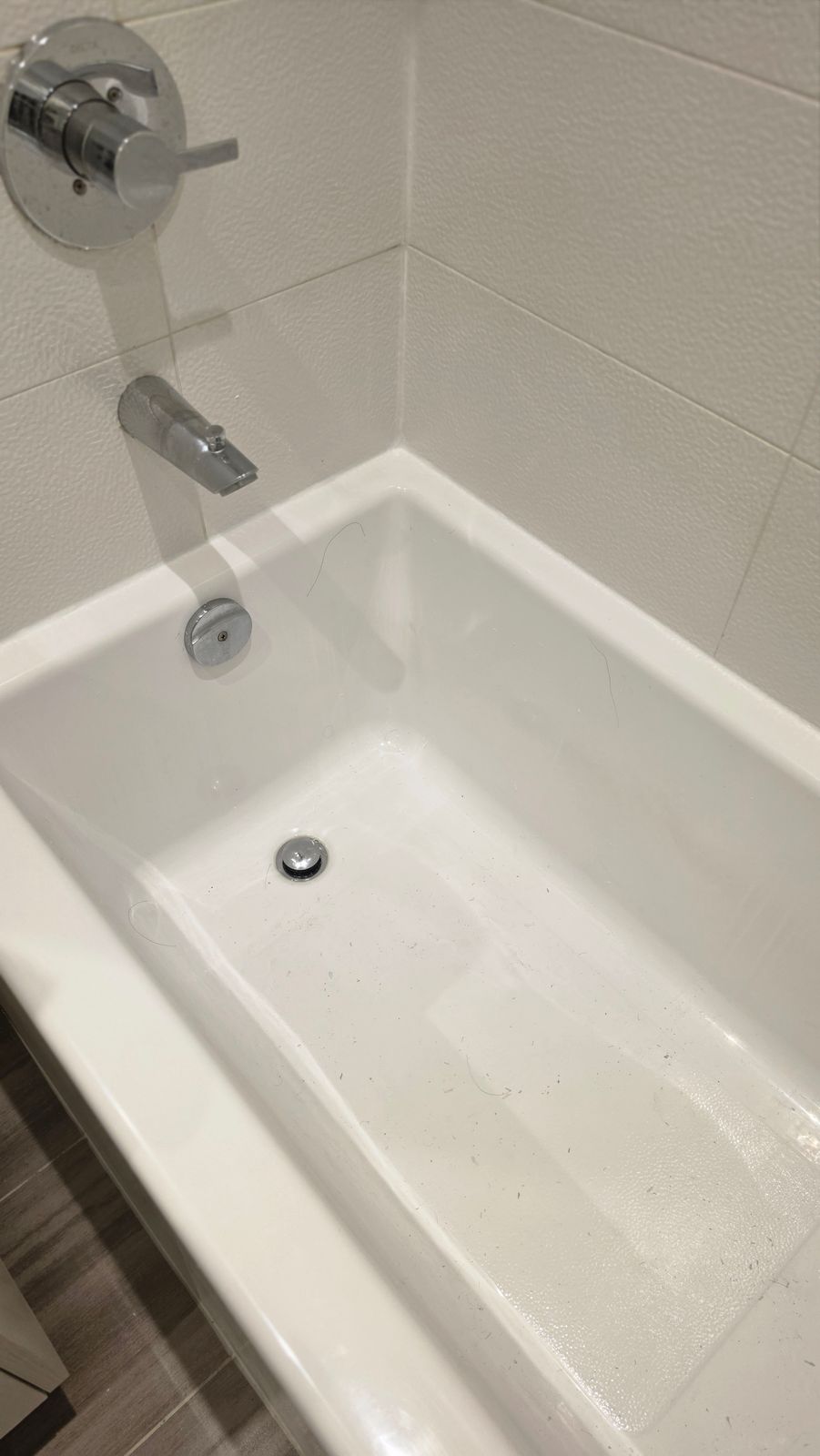
Bathtub Recaulking Cost Guide for Toronto Homeowners
Bathtub recaulking costs in Toronto vary widely depending on whether you tackle it yourself, hire a professional, and whether the old caulk needs full removal or just a refresh. Here’s what you can expect to pay in 2024:
| Service Type | DIY Cost (Materials) | Professional Cost | Best For |
|---|---|---|---|
| Top-coat caulking (existing caulk intact) | $20–$40 CAD | $150–$300 CAD | Cosmetic refresh, no mold |
| Full removal + recaulking (standard tub) | $50–$100 CAD | $300–$500 CAD | Mold present, sealant failing |
| Full removal + recaulking (condo/tight space) | $50–$100 CAD | $400–$650 CAD | Unit 1005–style confined bathrooms |
| Emergency mold remediation + recaulk | N/A | $500–$800 CAD | Visible mold, health risk |
Toronto condo owners often pay 20–30% more because smaller bathrooms and shared wall access require extra care. In North York and Scarborough, prices are similar; Mississauga and Brampton may run slightly lower due to shorter travel times.
A professional caulking service includes labour, debris removal, and warranty coverage—protecting against mold return within 12 months. DIY materials are cheap, but mistakes cost you: improper removal leaves moisture trapped, and poor application accelerates mold growth within weeks.
DIY vs Hiring a Professional for Bathtub Recaulking
DIY Bathtub Recaulking: When It Works
DIY recaulking makes sense if caulk is intact, no mold is visible, and you’re simply refreshing the appearance. You’ll need a caulking gun, silicone or acrylic caulk, and a wet tool to smooth the bead. The job takes 1–2 hours, and materials run $20–$40 CAD from Home Depot or Lowe’s.
The catch: if you don’t remove old caulk completely, moisture gets trapped underneath, and mold returns in 4–8 weeks. Many homeowners discover this too late.
When You Need a Professional
Full removal demands special tools (oscillating tool, scraper, caulk removal solution), skill, and patience. Leaving debris behind is the #1 reason recaulked tubs fail. A professional removes every trace, cleans the substrate, lets it dry properly, and applies new caulk in controlled conditions—especially critical in humid Toronto bathrooms where condensation speeds mold growth.
At RenoHeal, we’ve removed recaulked tubs in Toronto and Markham with hidden mold spreading behind walls. One Unit 1005 condo had sealant peeling after 6 months because the original removal was incomplete—full replacement solved it permanently.
Skill Level, Tools & Risk
Removing old caulk cleanly requires an oscillating multi-tool with a caulk-removal blade (cuts carefully without gouging tub/tile), caulk removal solvent, a scraper, and steady hands. Most DIYers either leave residue or damage the tub lip, creating new gaps where water enters.
Professional recaulking includes mold resistance—we use 100% silicone rated for bathrooms and apply it to proper depth. We warranty the work, meaning if mold or failure occurs, we fix it at no cost. DIY carries zero warranty; if mold spreads to drywall, the bill jumps to $800–$1,500 CAD for mold remediation.
The Mold Return Risk
Moisture + poor substrate prep = mold in 30–60 days. Professional removal includes drying time, anti-fungal prep, and premium caulk that resists mold for years. A DIY top-coat over damp or compromised old caulk traps moisture and guarantees failure.
In Thornhill and Vaughan, older condos with poor ventilation see mold recur 40% faster when DIY removal cuts corners. If your bathroom has black spots or sealant is already crumbling, hire a professional. Get a free quote and avoid costly mold removal later.

Common Mistakes That Make Mold Come Back Faster
When recaulking a bathtub, the job isn’t just about applying new sealant over the old—it’s about setting yourself up for lasting results. Most homeowners make one or more of these mistakes, and mold returns within months.
Not Removing Old Caulk Completely
This is the biggest culprit. New caulk applied over degraded, moldy sealant doesn’t bond properly and traps moisture underneath. That moisture feeds the mold that’s still hiding in the gap. You end up with a surface seal that looks fine but fails from the inside. Professional bathtub caulking starts with full removal, not a cosmetic cover-up.
Using the Wrong Caulk Type
Latex caulk is cheap and easy to paint, but it absorbs water and fails fast in bathrooms. Silicone caulk (100% or mostly silicone) is mold-resistant and flexible, making it the correct choice for wet areas. Acrylic latex blends are a middle ground but still underperform around tubs and showers.
Not Allowing Proper Cure Time
Caulk needs 24–48 hours to fully cure before water exposure. Rushing into a shower the next morning or wiping it wet before it sets creates gaps and weak points where mold colonizes quickly. Patience here saves you from repeating the job in six months.
Painting Over Mold Instead of Treating It
A fresh coat of paint or caulk won’t stop active mold—it just hides it. The mold continues to grow underneath, degrading the substrate and spreading. Any recaulking job requires removing and inspecting for mold first, and treating affected areas before sealing.
Frequently Asked Questions
How long does bathtub recaulking take to cure before I can use the shower?
Most silicone caulks are touch-dry within 30 minutes but need a full 24 hours before water exposure. In Toronto’s humid summers, curing can take slightly longer if bathroom ventilation is poor — keep the exhaust fan running and avoid sealing the room. For best results, schedule the job when you can stay out of that bathroom overnight.
What type of caulk should be used around a bathtub in Toronto’s humid climate?
100% silicone caulk is the best choice for Toronto bathtubs — it stays flexible through temperature swings, resists mold, and holds up against the constant moisture that comes with GTA winters (condensation, steam, humidity). Avoid latex or acrylic caulk in wet zones; it absorbs water over time and breaks down faster. Look for a product labeled “kitchen and bath” with built-in mildewcide for extra protection.
Can mold grow back after recaulking, and how do I prevent it?
Yes, mold can return if the root cause — poor ventilation or water pooling — isn’t addressed. After recaulking, run your exhaust fan for at least 15 minutes after every shower and squeegee standing water off the tub surround. Wiping the caulk line dry a few times a week adds years to a fresh seal.
How much does it cost to recaulk a bathtub in Toronto?
Professional bathtub recaulking in Toronto typically runs $150–$350 CAD depending on the size of the tub, the extent of old caulk removal needed, and whether there’s any surface prep (mold treatment, grout repair) involved. A straightforward single-tub job on a clean surface sits at the lower end. Getting a free estimate upfront is the best way to avoid surprises.
Is it safe to just caulk over old moldy caulk instead of removing it?
No — it’s one of the most common mistakes homeowners make. Applying new caulk over mold traps live spores underneath, and within weeks the new bead will start discoloring and failing from beneath. The old caulk also prevents the new layer from bonding properly to the tub surface, which means premature peeling. Full removal is always the right first step when mold is present.
How often should bathtub caulk be replaced in a Toronto condo?
In a Toronto condo with daily shower use, plan on replacing bathtub caulk every 3–5 years. High-traffic bathrooms shared by multiple people, or units with older exhaust fans that don’t clear humidity effectively, will sit closer to the 3-year mark. Doing a quick visual check once a year — looking for cracks, shrinkage, or discoloration — lets you catch problems before water gets behind the wall.
Bathtub Recaulking in Toronto: Get It Done Right the First Time
The difference between a long-lasting caulk job and one that fails in six months almost always comes down to preparation. Full removal of old, cracked, or moldy caulk — not a quick top-coat — is the foundation of any repair that’s actually going to hold. Pair that with the right silicone product and proper ventilation habits, and a fresh bead should protect your tub surround for years.
Toronto’s climate adds extra pressure on bathroom seals: cold winters drive condensation, humid summers slow curing, and older condo ventilation systems often can’t keep up. These aren’t reasons to put off recaulking — they’re reasons to make sure the job is done properly with quality materials and experienced hands.
If your tub caulk is cracking, pulling away, or showing black staining, don’t wait for water damage to show up behind the tiles. Request a free quote from RenoHeal today, and let our technicians handle the full removal and reseal — backed by our workmanship warranty. Learn more about our professional caulking services in Toronto and see why 3,500+ GTA homeowners have trusted us with their homes.