
A sagging closet shelf is one of those small problems that snowballs fast. At first, it’s just a slight gap between the shelf and the wall. Then the gap widens, items slip off the back, and before you know it, the entire shelf is pulling away. Closet shelf repair Mississauga homeowners call us for usually traces back to three culprits: weak drywall anchors, overloading, and humidity swings. We recently fixed three closet shelves in a Mississauga home by installing L-brackets and reinforcing the mounting points—a job that takes a few hours and solves the problem permanently.
The good news is that closet shelf repair doesn’t require replacing the entire shelf. Most of the time, a solid L-bracket installation—paired with screws driven into wall studs—stops the pull-away dead and restores full weight capacity. This guide walks you through why shelves fail and exactly how L-brackets bring them back.
Why Closet Shelves Pull Away from the Wall
Standard drywall anchors can only hold so much weight. Most closets use plastic toggle anchors or simple expansion plugs rated for 15–25 lbs per anchor. When you load a shelf with winter coats, storage boxes, or seasonal items, that weight adds up fast—often exceeding the anchor rating by 2 to 3 times.
Over time, the anchor holes enlarge and the fasteners spin loose. Each time you reach for something or bump the shelf, it shifts another fraction of an inch outward. Within weeks or months, a visible gap appears between the shelf back and the wall.
Humidity is another culprit, especially in the Greater Toronto Area where winter heating dries indoor air and summer moisture creeps in. Wood shelves expand and contract slightly with humidity changes, which stresses the anchor holes and weakens the connection. Drywall itself can absorb moisture and swell, pushing the wall surface forward slightly and tilting the shelf.
Poor original installation compounds the problem. If a shelf was mounted with anchors and no consideration for load distribution, or if studs were missed entirely, failure is almost inevitable. We see this regularly across Toronto, North York, and Scarborough—builder-grade closet shelving that was never designed to last.
How L-Brackets Fix Closet Shelves for Good
An L-bracket (also called a shelf support bracket) transfers the load from the shelf directly to the wall studs, bypassing the weak drywall anchors entirely. The bracket’s vertical arm is lag-screwed into the stud—which can support 100+ lbs per screw. The horizontal arm sits under the shelf, bearing the full weight and preventing any downward sag or outward pull.
The repair process starts with locating the wall studs using a stud finder. Studs are typically 16 inches apart and are the only point in the wall strong enough to anchor a bracket permanently. Once you’ve found the stud, you drill pilot holes and drive lag screws (usually 3/8 inch diameter, 3 inches long) through the bracket and deep into the stud. Two brackets per shelf is the minimum; three or more is ideal for heavy loads.
Bracket sizing matters. For standard closet shelves (6–12 inches deep), a 2-inch or 3-inch L-bracket is typical. For deeper shelves or high-load situations, step up to a 4-inch or 6-inch bracket. The goal is a bracket with enough horizontal span to support the shelf without the weight concentrating at the wall edge.
In our Mississauga project, we installed L-brackets on three shelves, ensuring each bracket was anchored into a stud and positioned to carry coats, boxes, and other household items without flex. The homeowner now has closet shelves that won’t move and won’t sag, even under heavy use. If you’re dealing with a similar problem across Mississauga, Brampton, or Vaughan, a free estimate will show you exactly what’s needed and how much the fix costs. Our technicians inspect the wall, identify stud locations, and recommend the right bracket size for your load and shelf depth.
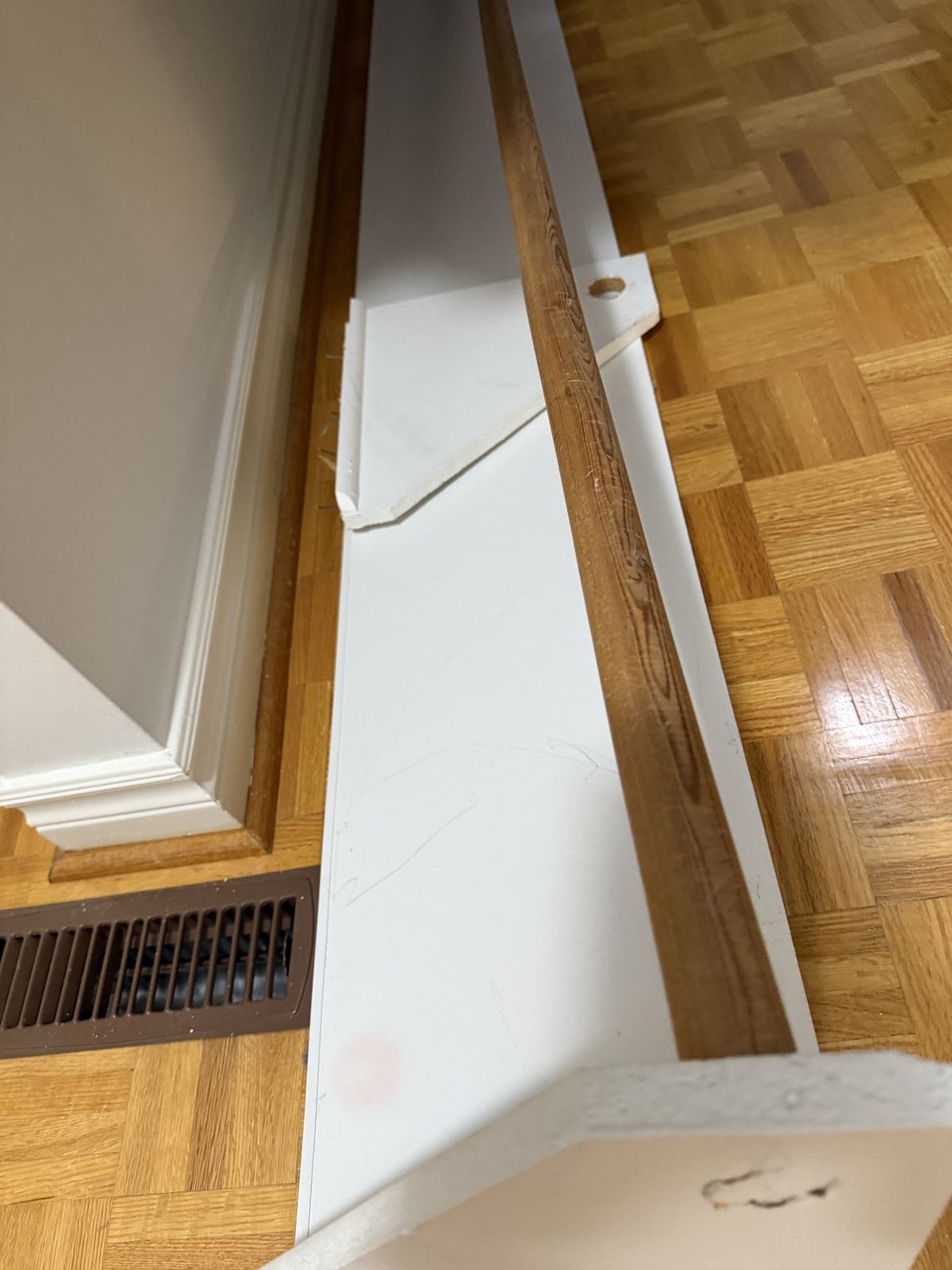
The Closet Shelf Repair Mississauga Process: What RenoHeal Did On-Site
On a recent handyman job in Mississauga, we tackled a common closet problem: three sagging shelves that had pulled away from the wall studs over time. The homeowner had noticed the shelves drooping under the weight of winter coats and storage boxes—a sign that the original mounting wasn’t adequate for the load.
Here’s exactly what our team did:
- Inspected the existing setup. We checked what was already holding the shelves—in this case, weak drywall anchors and undersized brackets that had gradually loosened. We also tested the cabinet hinges on adjacent doors to ensure the frame was square and stable.
- Located the wall studs. Using a stud finder, we marked where the studs were behind the drywall. This is critical—shelves need to anchor into solid wood or metal framing, not just drywall.
- Installed heavy-duty L-brackets. We removed the old shelves and hardware, then mounted new galvanized steel L-brackets directly into the studs on all three shelves. L-brackets distribute weight evenly and prevent the shelf from tilting away from the wall.
- Releveled and reinforced. Each shelf was checked with a level and tightened securely. We also inspected the cabinet frame and hinges to catch any other stability issues before the shelves were reloaded.
The result: three solid shelves that held firm under full load, no sag, no movement. What took our crew about 2–3 hours would have taken a homeowner much longer and risked damage if done incorrectly.
Closet Shelf Repair Cost in Mississauga: What to Budget
Closet shelf repair costs in the Mississauga area vary by scope, bracket type, and whether you’re tackling it yourself or hiring a professional. Here’s a realistic breakdown:
| Item / Service | DIY Cost (CAD) | Professional Labour (CAD) | Notes |
|---|---|---|---|
| Galvanized L-brackets (per pair) | $8–$15 | Included | Heavier gauge = more load capacity |
| Heavy-duty L-brackets (per pair) | $20–$35 | Included | Best for deep shelves or heavy items |
| Drywall anchors & screws (mixed pack) | $6–$12 | Included | Only used if studs aren’t available |
| Stud finder (if you don’t own one) | $20–$50 | Included | One-time investment or rental option |
| Single shelf repair (1 shelf) | $40–$80 | $150–$250 | Includes labour, bracket install, level check |
| Multiple shelf repair (3 shelves) | $100–$200 | $350–$550 | Like the Mississauga project; economies of scale apply |
| Full closet assessment & repair | $150–$300 | $400–$700 | Includes stud location, hinge check, all shelves |
Why hire a pro? If you miss a stud or use the wrong anchor, shelves will fail again—often with your belongings on them. RenoHeal charges a free estimate and guarantees the work, so you know the repair will hold. Across Mississauga, North York, and the GTA, we’ve completed over 3,500 projects with this exact attention to detail.
For shelves already pulling away, professional repair is the fastest and safest option—typically completed the same day.
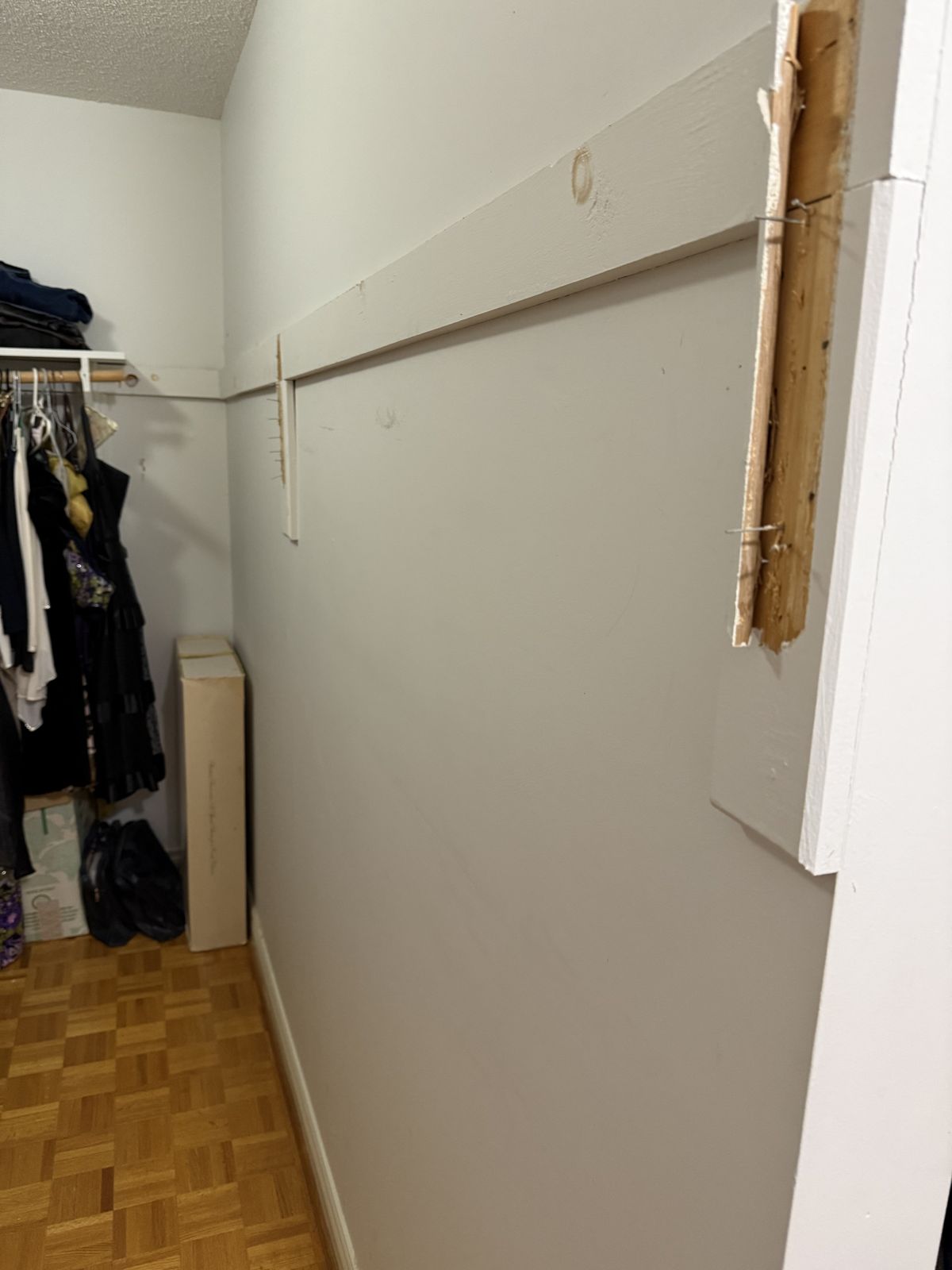
DIY vs Hiring a Professional for Closet Shelf Repair
Small shelf adjustments—like tightening existing brackets or adding a single L-bracket to an already-solid shelf—are fair DIY tasks if you have basic tools and patience. A stud finder (around $25–$50 at Home Depot) and a level take the guesswork out of placement, and anchoring directly into studs means the shelf will hold weight without question.
Where DIY gets risky is drywall-only installation. Missing the stud and relying on plastic anchors alone is why most shelves sag or pull away in the first place. Drywall anchors hold maybe 20–30 pounds; add a winter coat, winter boots, luggage, and holiday decorations, and you’re at 50–80 pounds. The wall gives, the anchor fails, and the shelf drops.
Hiring a professional handyman in Mississauga (or anywhere across the GTA) removes that guesswork. We bring stud finders, drill the right fasteners into the right places, and know exactly how much weight a given wall can handle. More importantly, we assess why your shelf pulled away in the first place—was the bracket undersized? Were the fasteners too shallow? Is the wall water-damaged or soft? Those details matter, and they’re easy to miss on a DIY attempt.
If your shelf is pulling away or sagging right now, get a free estimate and let us show you the fix. Most closet shelf repairs are same-day work in Mississauga and the surrounding area.
Common Mistakes That Make Shelves Fall Again
Wrong Anchors for the Job
Plastic expansion anchors are cheap and widely available, but they’re also the #1 reason closet shelves fail. They work only in solid drywall with no voids, and they depend on perfect installation—the hole size must be exact, and the anchor must be fully seated. One misstep and the anchor sits loose, spinning inside the hole rather than gripping the drywall. The shelf sags within months.
Skipping the Studs
A 16-inch stud spacing means that in a 4-foot-wide closet, you might have only one stud behind the shelf. Anchoring to drywall on either side of that stud and ignoring the stud itself is a classic error. If you’re installing an L-bracket (or any bracket), at least one fastener should go into a stud. That’s your real anchor point.
Overloading Without Planning
A shelf rated for 25 pounds of weight means 25 pounds evenly distributed. Stack 10 heavy boxes on one end, and you’ve created a lever that pries the bracket away from the wall. Check your bracket’s load rating and respect it. If you need to store more, use two shelves instead of one, or install a proper cabinet system designed to handle the weight.
Ignoring Existing Cabinet Hardware Issues
During our Mississauga project, we discovered that three closet shelves had come loose partly because the cabinet hinges supporting them were corroded and bent. Replacing just the bracket doesn’t fix the underlying hardware failure. A professional inspection catches these details and prevents the same problem from recurring weeks later.
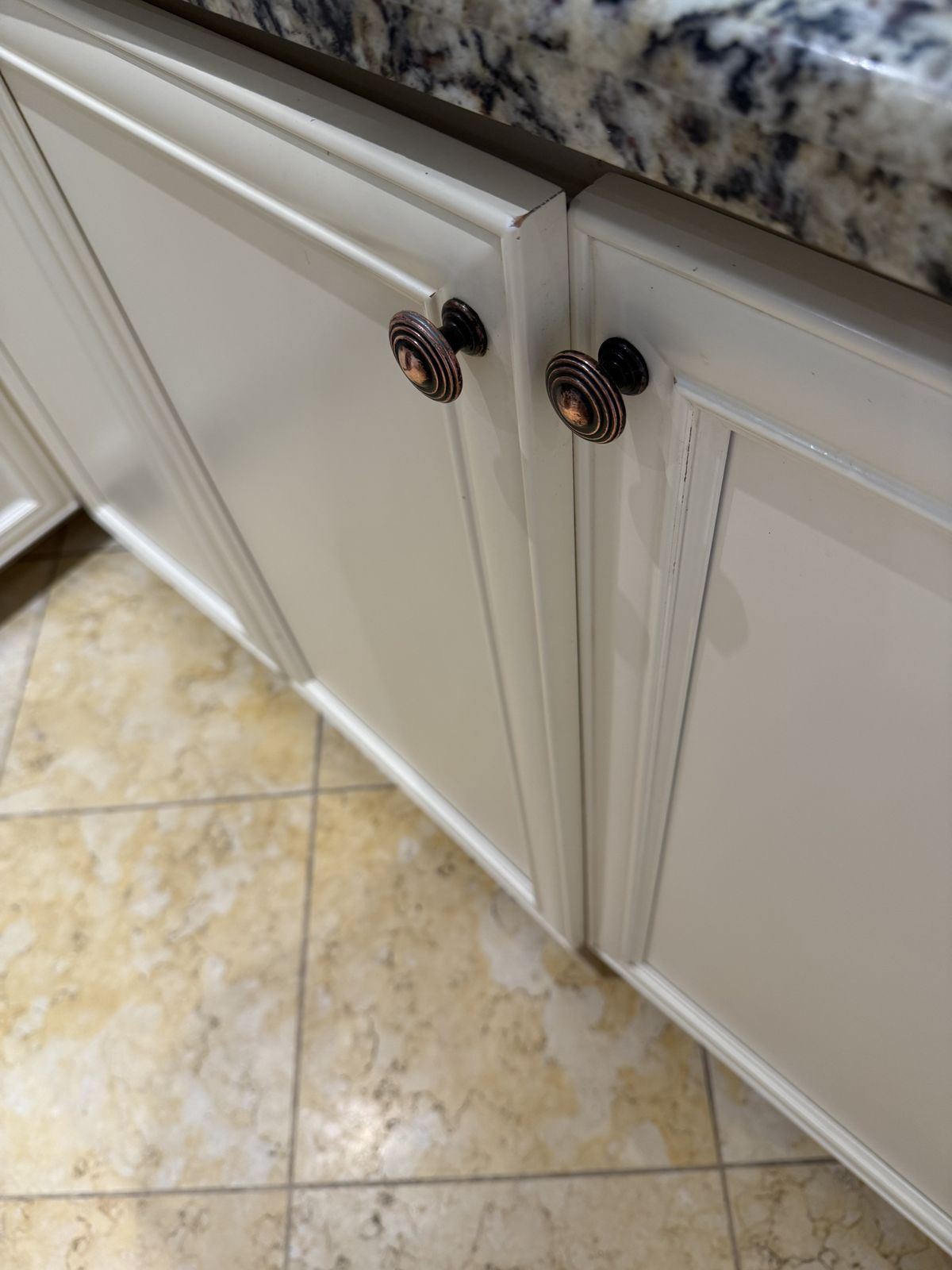
How to Know Your Closet Shelves Are Ready to Fail
A shelf that looks okay today might collapse under weight tomorrow. The key is spotting failure before it happens. If you notice any of these signs, your closet shelves need attention soon.
Sagging in the Middle
The most obvious red flag is a shelf that dips downward in the center, especially under weight. This happens because the shelf has lost support from the wall or the mounting brackets are no longer holding it level. A sag of even half an inch means the shelf is working harder than it should be and the fasteners are wearing out.
Visible Gaps Between Shelf and Wall
If you can see daylight between the back of the shelf and the wall, the shelf is pulling away. This commonly happens in Mississauga homes where humidity changes cause wood to expand and contract. The gap tells you the anchors or brackets have failed—and the shelf is only held by whatever weight is pressing on it.
Loose or Missing Shelf Pins and Brackets
Check the pins or brackets holding your shelf in place. Push on the shelf gently and listen for rattling or grinding. If the shelf moves before the wall anchors budge, the fasteners have lost their grip. In older closets, the original plastic anchors often deteriorate after 10–15 years of use.
Cracks in the Drywall Around Anchors
Small cracks radiating from anchor holes mean the drywall is failing. The weight of the shelf and its contents is slowly tearing the wall material. This is especially common in Mississauga older homes where drywall may already be brittle. Once drywall cracks, standard anchors won’t hold—you need reinforced fastening.
Don’t wait for the shelf to fail. RenoHeal’s handyman service can inspect your closet shelves and reinforce them before disaster strikes.
Frequently Asked Questions
How much does closet shelf repair cost in Mississauga?
Most closet shelf repairs in Mississauga run between $80 and $250 CAD depending on the extent of the damage, wall patching required, and number of brackets being replaced. Simple bracket re-anchoring jobs on the lower end of that range are often completed in under an hour. Getting a free estimate before committing is always the smartest move.
Can I use drywall anchors instead of hitting a stud for shelf brackets?
You can, but only with the right anchor for the load. Togglebolts or snap toggles rated for 50+ lbs per anchor are a reliable choice when studs aren’t where you need them. Standard plastic expansion anchors are not adequate for shelves holding clothing, shoes, or boxes — they will eventually pull through the drywall under repeated load.
How many L-brackets do I need to support a closet shelf?
The general rule is one bracket every 16 to 24 inches along the shelf length, plus one bracket at each end no more than 2 inches from the edge. A 48-inch shelf typically needs three brackets minimum. Heavier loads — like shoe storage or folded sweaters — call for brackets at every stud, which in most Mississauga homes means every 16 inches.
What size L-bracket should I use for a standard closet shelf?
For a standard 12-inch deep closet shelf, use an L-bracket where the horizontal arm is at least 10 inches — roughly 80–85% of the shelf depth gives proper support without the bracket nosing past the shelf edge. The vertical wall arm should be at least the same length or longer to distribute the load properly. For deeper shelves, like 16-inch linen shelves, step up to a 14-inch horizontal arm bracket.
Is it worth repairing an old closet shelf or should I replace it entirely?
If the shelf board itself is structurally sound — no warping, rot, or major cracks — repair is almost always worth it. Re-anchoring brackets and patching the wall costs a fraction of full replacement and typically takes less than two hours. Replacement makes more sense when the board is badly damaged, undersized for your storage needs, or you’re planning a full closet upgrade anyway.
How long does a professional closet shelf repair take?
A straightforward closet shelf repair — removing the old brackets, patching anchor holes, locating studs, and reinstalling with new hardware — typically takes 45 minutes to 1.5 hours. If drywall damage is significant or multiple shelves need attention, expect 2 to 3 hours total. RenoHeal offers same-day service across Mississauga, so you’re rarely waiting more than a day to get it done.
Closet Shelf Repair in Mississauga: Fix It Right the First Time
A shelf that’s pulling away from the wall isn’t just frustrating — it’s a sign that the original installation skipped the basics: proper stud location, correct bracket sizing, and adequate fasteners. Once you address those three things, the repair holds for years without a second thought.
The fix itself is straightforward when you know what you’re doing. Hit a stud or use a rated toggle anchor, choose an L-bracket with a horizontal arm at least 80% of your shelf depth, and space brackets no more than 24 inches apart. Patch the old holes cleanly before you reinstall, and the wall looks as good as the shelf works.
If the damage is more involved — crumbling drywall, multiple failed shelves, or you just don’t want to spend your weekend on it — RenoHeal’s technicians handle closet shelf repairs across Mississauga the same day. Request a free quote and get your closet back in order, or learn more about what we cover on our Handyman Services page.