
A door closer that won’t close properly is more than just annoying—it’s a security and safety issue. Whether you’re in North York, Scarborough, or anywhere across the GTA, a malfunctioning door closer can let your home lose heat in winter, let pests in, or fail to secure your space. At RenoHeal Inc., we’ve completed 3,500+ handyman projects, and door closer repair North York is one of the most common fixes we handle. The good news: most closer problems are straightforward to diagnose and fix.
Door closers seem simple on the surface—just a mechanical arm that pulls your door shut. In reality, they’re precision hydraulic devices that balance force, speed, and closing timing. When one starts to fail, the whole system falls apart. Understanding what’s actually broken will help you know whether you need a repair, adjustment, or replacement.
In this guide, we’ll walk you through how door closers work, why they fail, and what a professional handyman can do to get yours working again.
How a Door Closer Actually Works (And Why It Matters)
A door closer is a hydraulic damping device mounted above or inside your door frame. Its job is to automatically close and control the speed of your door so it doesn’t slam. Inside the closer’s sealed cylinder is hydraulic fluid (usually oil) that resists movement and slows the door down as it swings.
The mechanism relies on three key components working together. A spring provides the closing force—this compressed metal spring pushes the door shut. An arm linkage (the visible metal bar) transfers that force from the closer body to the door. As the door opens, the arm extends and compresses the spring. As it closes, hydraulic fluid flows through small valves to control the speed, preventing a hard slam.
The hydraulic fluid is critical. If it leaks or degrades, the door either closes too fast (a slam) or too slowly (it stops halfway). Proper closing speed isn’t just comfort—it’s code compliance in Ontario, where the Ontario Building Code sets requirements for self-closing doors in many buildings. Commercial and multi-unit buildings require door closers to meet fire safety and accessibility standards. A failed closer can violate building code and create liability.
The Most Common Reasons Door Closers Fail
Door closers typically last 7–15 years depending on use and environment. In the harsh Ontario climate, freeze-thaw cycles and temperature swings can degrade hydraulic fluid faster. Here are the most frequent failure points our technicians see:
1. Hydraulic Fluid Leaks
This is the #1 reason closers fail. Over time, seals inside the cylinder wear out and hydraulic oil seeps out. You’ll notice the door closing very slowly or not at all, or you might spot dark oily stains on the door frame or arm. Once fluid leaks, the closer can’t be repaired—only replaced. Leaks are common in Etobicoke and North York due to freeze-thaw stress on exterior doors.
2. Worn or Broken Spring
The internal spring gradually loses tension with age and use. Your door might start staying open longer than it should, or close slower each year. A weakened spring can’t generate enough closing force to overcome friction, especially if the closer arm is slightly misaligned. Spring replacement is possible on some models, but often the entire closer is replaced for warranty and safety.
3. Stripped or Loose Mounting Screws
The closer arm attaches to the door with two or three screws. If these work loose (from vibration or repeated door use), the arm loses rigidity and the linkage becomes sloppy. The closer still has power, but the arm doesn’t transfer force efficiently. In busy commercial spaces or multi-unit buildings in Markham and Vaughan, this happens quickly.
4. Misaligned or Bent Arm
Door closers are precision tools. If the arm gets bent (from a hard impact or someone pulling the door open too far), alignment shifts and hydraulic resistance becomes uneven. The door might close perfectly one moment and jam or close erratically the next. Bent arms usually can’t be straightened safely and require replacement.
5. Age and Material Degradation
Hydraulic fluid breaks down over 10+ years, especially in attics, basements, or unheated spaces. Metal parts corrode, seals harden, and efficiency drops. In humid GTA basements or exposed exterior doors in Scarborough or Mississauga, this happens faster. Once a closer reaches 12–15 years, replacement is usually the best option.
| Failure Sign | Likely Cause | Repair or Replace? |
|---|---|---|
| Door closes very slowly or stops halfway | Hydraulic fluid leak | Replace |
| Door stays open longer than before | Weak spring | Replace (usually) |
| Arm is loose or wobbly | Loose mounting screws | Repair (tighten) |
| Door closes unevenly or jams | Bent arm or misalignment | Replace |
| Older than 12 years and inconsistent | General wear and fluid breakdown | Replace |
If you’re in North York or the surrounding GTA and your door closer isn’t working right, get a free estimate from RenoHeal. Our experienced technicians will diagnose the exact problem and tell you whether a simple repair will work or if replacement is the best long-term solution. With 7+ years in business and 3500+ completed projects, we know door closers inside and out.
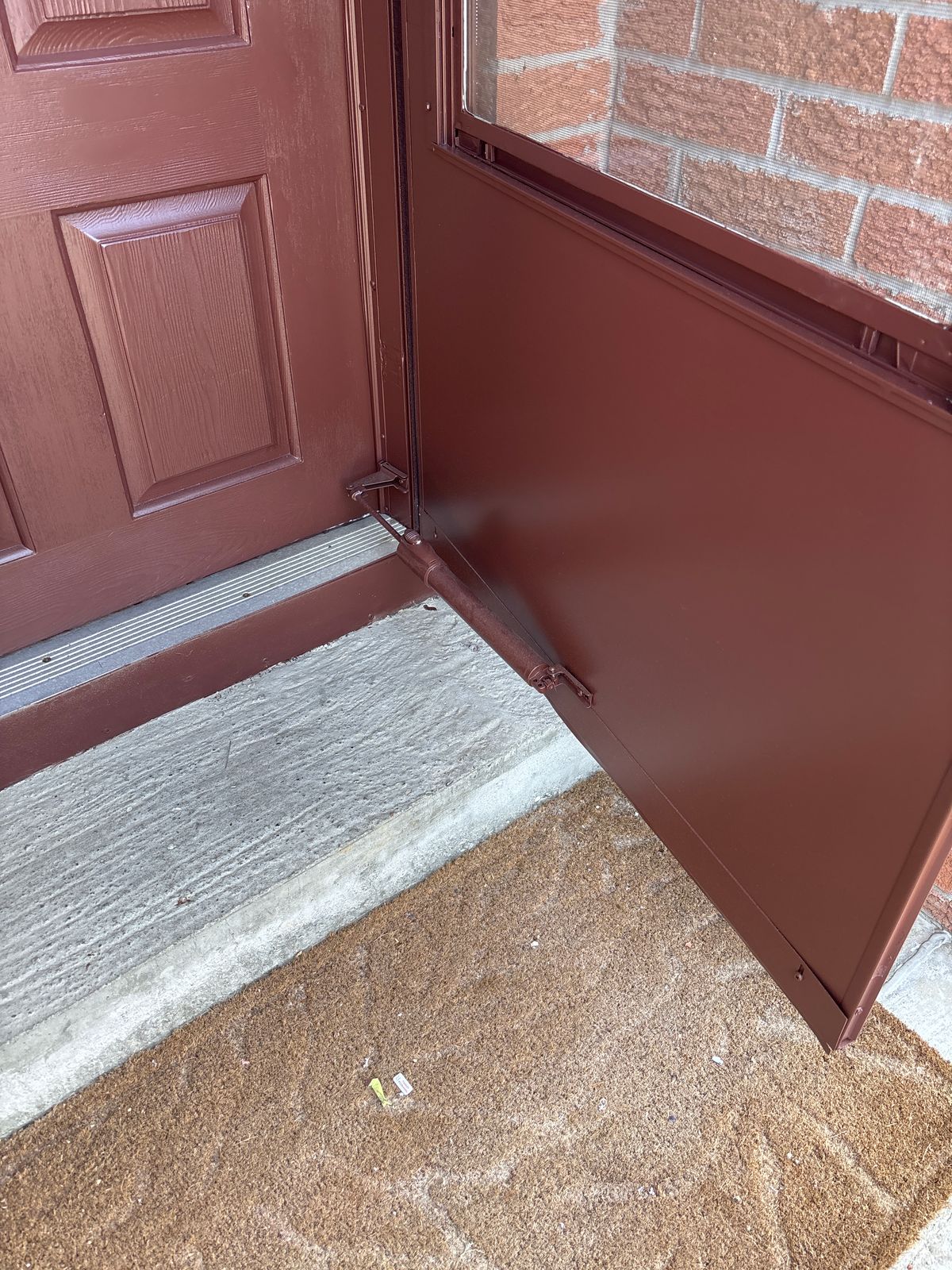
Door Closer Repair North York: What a Handyman Diagnoses and Fixes
When a door closer stops working properly, most homeowners assume it needs replacement. In reality, a trained handyman can often fix the problem without the cost of a new unit. During a recent North York handyman service call, we diagnosed a door closer that was slamming shut too fast and not holding open properly—classic signs of internal hydraulic wear or a misaligned arm.
The first step is checking the adjustment screws. Most door closers have two valves: one controls closing speed, the other controls the hold-open delay. A quarter-turn on either screw can make a huge difference. If adjustment doesn’t work, the arm itself may have shifted out of its bracket due to impact or settlement—a quick re-seating often fixes it.
If the bracket is bent or cracked, that’s repairable too. We either straighten it or replace just the mounting hardware rather than the entire closer. However, if the internal hydraulic cylinder is leaking (you’ll see oil pooling inside the arm) or the piston won’t hold pressure, replacement is the only solution. In that North York project, the closer was beyond adjustment—we removed the old unit and installed a commercial-grade replacement. If the door itself is damaged, our door installation service can replace it at the same time.
Commercial vs Interior Residential Closers: Key Differences
Not all door closers are created equal, and choosing the wrong one wastes money. Residential closers are lighter-duty units designed for low-traffic interior doors. Commercial closers are built for high-traffic entries, exterior doors, and fire-rated openings—they cost more but last longer and meet stricter building codes.
Duty Ratings and Performance
A residential closer might handle 500 cycles per day comfortably; a commercial unit handles 1,500+. The hydraulic system in commercial closers is more robust, with better seals and heavier oils that resist temperature swings common in Toronto and the GTA winters. If your door is in a commercial space, an office building (see our commercial maintenance services), or a multi-unit property in Thornhill or Mississauga, you need commercial-grade equipment.
Mounting Types and Code Compliance
| Closer Type | Common Mounting | Best For | Ontario Code Notes |
|---|---|---|---|
| Residential (Grade 2-3) | Arm-mounted, top-jamb mounted | Interior doors, home offices | Suitable for standard interior use |
| Commercial (Grade 1-2) | Concealed, pivot, top-jamb mounted | Storefronts, fire doors, entries | Required for fire-rated doors per Ontario Building Code |
Fire-rated doors and accessible entrances (AODA compliance in Ontario) require specific closer types. A concealed closer gives a cleaner look and protects the mechanism from weather. Top-jamb mounting works on almost any door frame but may need backing plates in Vaughan or North York homes with thin frames. Our technicians verify that any replacement meets Ontario Building Code requirements and your door’s specific use.
If you’re unsure whether your closer meets code or needs upgrading, get a free estimate from our team. We’ll assess the door’s duty cycle and recommend a solution that’s safe, compliant, and built to last.
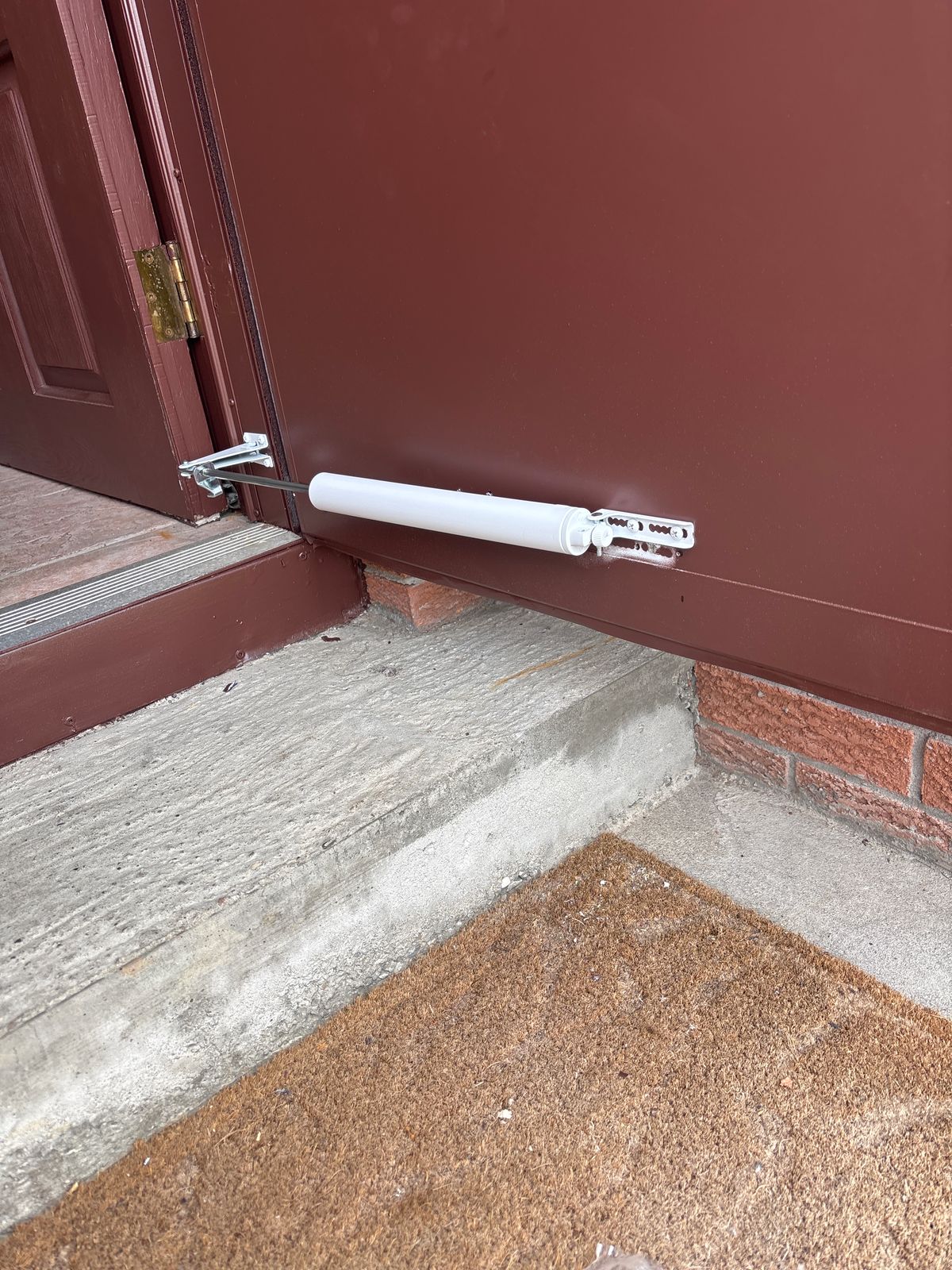
Door Closer Repair North York Cost Guide for Homeowners
Door closer repair costs in North York depend on whether you need an adjustment, a fix, or a full replacement. Most jobs fall into one of three categories, and labour typically takes 30 minutes to 1.5 hours depending on complexity.
| Service | Typical Cost (CAD) | What’s Included |
|---|---|---|
| Adjustment Only | $150–$250 | Technician adjusts closing speed, hold-open, and latching tension screws. No parts needed. |
| Repair (Arm/Bracket/Mounting) | $150–$300 | Re-seats or replaces the arm, bracket, or stripped mounting screws. Closer body stays in place. |
| Full Replacement | $200–$600 | Removes old closer, installs new unit (commercial-grade or residential), hardware included. Labour + parts. |
RenoHeal charges the same rate for handyman services across North York, Etobicoke and Scarborough: $90 per hour with a $150 minimum. If your closer is over 10 years old or leaking oil, replacement is often more cost-effective than repair. We provide free estimates so you know the exact cost before work starts.
DIY vs Hiring a Handyman for Door Closer Repair
Some door closer adjustments are genuinely DIY-friendly—others aren’t. Knowing the difference saves time and prevents damage to your door frame or the mechanism itself.
What You Can Adjust Yourself
- Closing speed: Turn the main adjustment screw (usually marked on the closer body) clockwise to slow the close, counterclockwise to speed it up. A quarter-turn at a time—don’t force it.
- Latching action: The secondary screw tightens how hard the door pulls shut at the final 10 centimetres. Test after each small adjustment.
- Hold-open force: Some commercial closers have a hold-open adjustment if your door doesn’t stay propped open at 90 degrees.
These tweaks take 5–10 minutes and cost nothing. Use a multi-tool or adjustable wrench that fits the screw head without stripping it.
When a Handyman Is Worth It
Call a pro if the door slams shut unexpectedly, closes too slowly (taking over 30 seconds), or leaks oil onto your frame. Internal damage to seals, worn cylinders, or mounting issues require specialized tools and knowledge of frame load-bearing. In North York and surrounding areas like Vaughan and Thornhill, experienced technicians can diagnose whether repair or replacement makes sense—and won’t accidentally strip mounting bolts or damage your door hardware.
Common Mistakes That Make Door Closer Problems Worse
Most door closer failures start with small mistakes that compound over time. The biggest culprit is over-tightening the hydraulic valve in an attempt to make the door close faster. This puts extra pressure on the internal seals and burns through hydraulic fluid faster, leading to leaks and a door that either slams or won’t close at all.
Another frequent error is installing a closer that’s too light or too heavy for the door. A commercial-grade closer on a residential interior door wastes energy and strains the mounting hardware. Conversely, using a light-duty closer on a heavy fire-rated door means it won’t have enough closing force, and the door won’t latch properly.
The Backcheck Adjustment Nobody Adjusts
The backcheck valve controls how fast the door swings open—it should slow down at the final 10–15 degrees to prevent slamming. Most property owners and even some inexperienced installers skip this step entirely. When the backcheck is too loose, you get that harsh bang every time someone opens the door. Over time, this impact loosens the mounting bracket and cracks the frame around the door jamb, turning a $200 repair into a $1,500 frame replacement.
If your door closer is acting up in North York, get a free estimate before you try adjusting it yourself. A trained handyman knows exactly which valve to turn and by how much.
Frequently Asked Questions
Can a door closer be repaired or does it always need to be replaced?
Many door closer problems — like a door that swings too fast, slams shut, or won’t latch properly — can be fixed by adjusting the valve screws that control closing speed, latching speed, and back-check tension. If the body is cracked, leaking hydraulic fluid badly, or the arm is bent beyond straightening, replacement is the better call. A handyman can assess the unit on the spot and tell you whether an adjustment or a swap makes more financial sense.
Why is my door closer slamming shut even after I adjust the screw?
If the sweep-speed screw (usually labelled ‘S’) is already backed out as far as it will go and the door still slams, the internal valve seat is likely worn or the fluid has thinned out from age and temperature cycling — common in North York’s freeze-thaw seasons. At that point the closer is no longer holding hydraulic pressure properly, and no amount of screw adjustment will fix it. Replacement is almost always the answer once you’ve exhausted the adjustment range.
How long does a door closer last before it needs replacing?
A commercial-grade door closer (LCN, Norton, DORMA) on a residential or light-commercial door typically lasts 15–25 years with occasional adjustment. Budget residential units can start failing in 5–10 years, especially on high-traffic doors or doors exposed to Canada’s temperature swings. Annual lubrication of the arm pivot points and a quick valve check every few years adds significant life to any unit.
Is door closer replacement something a handyman can do, or do I need a locksmith?
Door closer installation and replacement is squarely in handyman territory — it doesn’t involve lock cylinders, keying, or any work that requires a locksmith’s licence in Ontario. A handyman will remove the old unit, patch or fill the existing screw holes if the new closer has a different footprint, mount the new body and arm, and calibrate all the adjustment valves before leaving. You only need a locksmith if the closer is integrated into a panic bar or electronic access-control system.
What does door closer repair cost in North York?
A basic adjustment service — where a technician re-calibrates the existing closer’s valves — typically falls within our $150 minimum service charge in North York, depending on accessibility and how long it takes. If the closer needs replacing, add the cost of the unit itself: residential-grade closers start around $40–$80, while commercial-grade units (ANSI Grade 1) run $90–$250+. Most homeowners pay $200–$450 all-in for a full replacement including labour, hardware, and minor touch-up of the door frame.
My door closer is leaking oil — is it still worth fixing?
Once hydraulic fluid starts leaking from the closer body, the seal has failed internally and the unit cannot be repaired — there are no consumer-serviceable seals available for standard door closers. The leak will only get worse, and as fluid levels drop the door will eventually swing freely with no resistance at all. Replacement is the only real fix, and because closers are relatively affordable, it’s almost always worth doing rather than leaving the door uncontrolled.
Reliable Door Closer Repair North York Homes Can Count On
Most door closer problems come down to three things: worn-out hydraulic seals, adjustment valves that have drifted out of range, or a mounting arm that’s taken too much abuse over the years. Knowing which one you’re dealing with saves you from wasting money on adjustments that won’t hold, or replacing a unit that actually had a few good years left in it.
At RenoHeal, our technicians can usually source common residential and commercial-grade closers quickly, so most North York jobs are completed in a single visit. Every installation is backed by our workmanship warranty, and we’re fully insured to $5M with WSIB coverage, so you’re protected from the moment we show up.
Ready to stop fighting a door that slams, drags, or refuses to latch? Request a free quote today and let our team handle it, or learn more about everything we take care of on our Handyman Services page.