
Fire alarm installation in Toronto homeowners often put off until something prompts them — a home inspection report, a landlord notice, or a close call. But Ontario’s fire code is specific about what’s required, and most homes in the GTA are either under-protected or have outdated detectors that no longer meet current standards. Getting this right isn’t complicated, but it does require knowing exactly what the rules say and where devices actually need to go.
RenoHeal recently completed a fire alarm installation in Toronto — the kind of straightforward job that looks simple on the surface but involves real decisions about detector placement, interconnection, and code compliance. The homeowner had a mix of old ionization-only detectors and a few missing units in key areas. After the work was done, every floor was covered, the units were interconnected, and the home met Ontario Fire Code requirements from top to bottom.
Whether you’re buying a home, renovating, or just overdue for an upgrade, this guide covers what the code actually requires, what installation costs look like in Toronto, and how to get it done properly the first time. If you’d rather skip straight to booking, you can get a free estimate here.
What Ontario’s Fire Code Actually Requires for Toronto Homes
Ontario’s Fire Code (O. Reg. 213/07) sets the minimum standards for smoke and carbon monoxide alarms in residential properties. These aren’t suggestions — they’re legal requirements, and non-compliance can affect your home insurance coverage and your liability as a homeowner or landlord.
Smoke Alarms
Every home in Ontario must have a working smoke alarm on every storey and outside every sleeping area. That means if your house has three floors — a basement, main floor, and upper level — you need a smoke alarm on each one, regardless of whether there are bedrooms on every floor. Alarms must be installed on or near the ceiling, following the manufacturer’s placement guidelines.
- Every storey of the dwelling: At minimum one smoke alarm per level
- Outside every sleeping area: A dedicated unit within close proximity to bedroom doors
- Inside bedrooms: Required if the bedroom door is normally closed during sleep
Carbon Monoxide Alarms
Since 2014, Ontario law requires a CO alarm adjacent to every sleeping area in any home that has a fuel-burning appliance (furnace, gas stove, fireplace) or an attached garage. This applies to the vast majority of detached and semi-detached homes across Toronto, North York, Scarborough, and Etobicoke.
Interconnection Requirements
In newly constructed homes and in homes undergoing significant renovation, Ontario’s Building Code requires that smoke alarms be interconnected — meaning when one sounds, they all sound. This is typically done with hardwired units, though newer wireless interconnect technology also meets code in many applications. For existing homes with no prior interconnection, replacement during a renovation triggers the requirement. You can review the current provincial standards directly at ontario.ca.
Detector Lifespan
Smoke alarms have a maximum service life of 10 years from the manufacture date, not the installation date. Many homes in older Toronto neighbourhoods still have detectors from the mid-2010s or earlier that are technically expired and must be replaced regardless of whether they still beep during a test.
Where to Place Fire Alarms in a House (Room-by-Room Guide)
Placement is everything with fire alarms. Ontario’s Fire Code (O. Reg. 213/07) sets minimum requirements, but smart placement goes beyond the minimums — especially in older Toronto homes where layouts don’t always follow a straight floor plan.
Bedrooms and Sleeping Areas
Every bedroom needs its own smoke alarm, installed inside the room. This is non-negotiable under Ontario code — a hallway alarm alone won’t wake a sleeping person through a closed door. In homes we’ve worked on across North York and Scarborough, we often find entire upper floors with only one alarm in the hallway. That’s not compliant and it’s genuinely dangerous.
Hallways and Common Areas
A smoke alarm is required in every hallway that serves a bedroom. Mount it on the ceiling, roughly centred in the hallway. If the hallway is longer than 9 metres, you’ll need more than one unit spaced appropriately.
Basement
The basement needs at least one smoke alarm, ideally near the base of the stairs. If your basement has a finished room used for sleeping — common in many Etobicoke and Brampton homes — treat it the same as a bedroom and install an alarm inside that room too.
Kitchen
Keep smoke alarms at least 3 metres away from cooking appliances to reduce nuisance trips. A heat alarm or a photoelectric smoke alarm positioned away from the stove is a better choice for kitchen areas. Never remove or disconnect a kitchen alarm — adjust placement instead.
Ceiling vs. Wall Mounting
Ceiling mounting is preferred. If you must use a wall, position the alarm between 15 cm and 30 cm from the ceiling — dead air space near corners and wall-ceiling junctions will delay detection. Our technicians follow these exact specs on every handyman service call involving alarm installation.
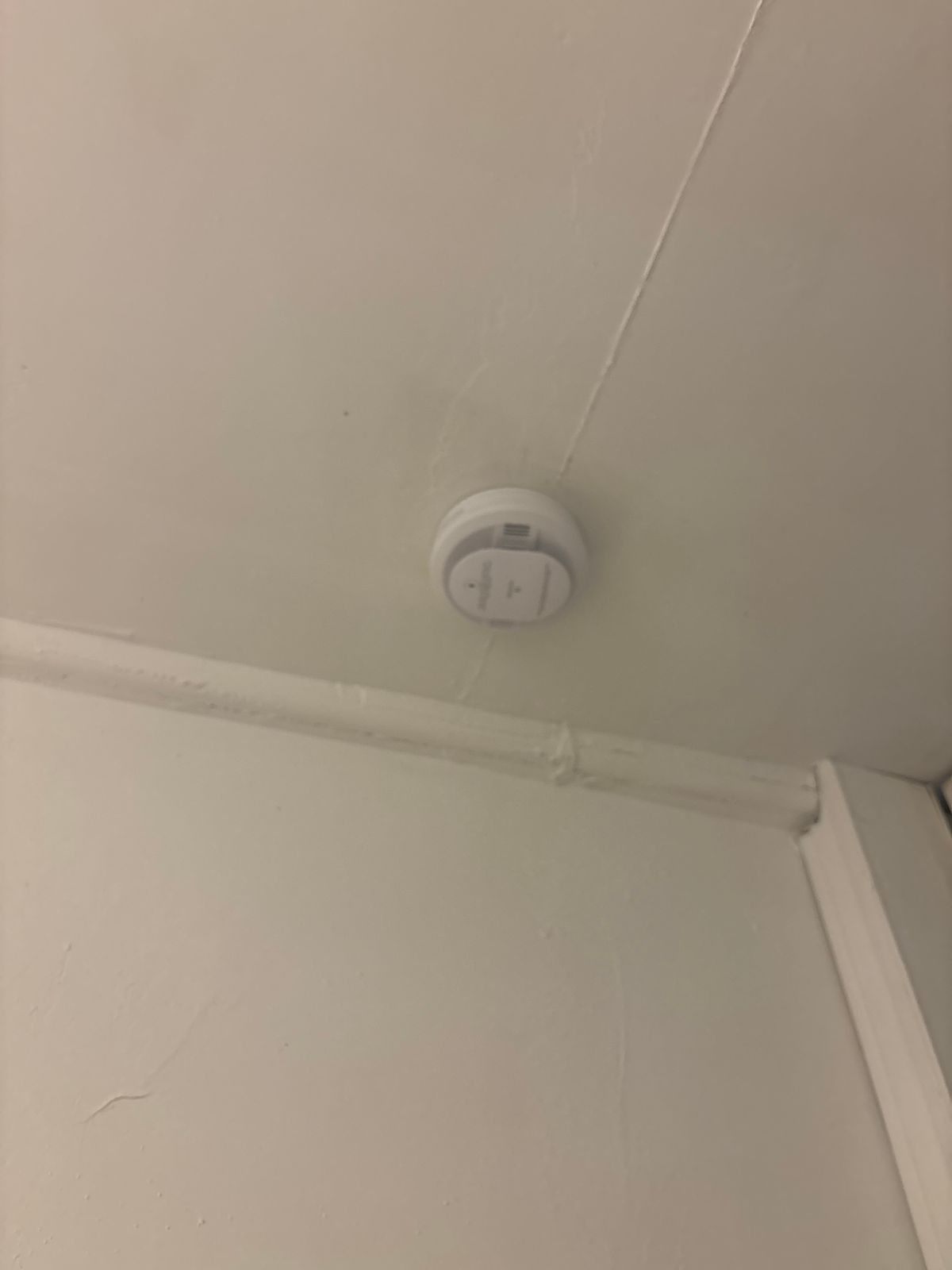
Hardwired vs. Battery-Operated: Which Type Do You Need?
Ontario’s Fire Code distinguishes clearly between the two, and the right choice depends on your home’s age, existing wiring, and the scope of work involved. Getting this wrong means a failed inspection — or worse, inadequate protection.
Hardwired Alarms
Hardwired smoke alarms connect directly to your home’s electrical system and include a battery backup in case of a power outage. Ontario Building Code requires hardwired, interconnected alarms in all new construction and in homes undergoing significant renovation. When one alarm triggers, every unit in the house sounds simultaneously — a critical advantage in a two-storey or three-storey Toronto home where a basement fire might otherwise go unheard upstairs.
Battery-Operated Alarms
Battery-only units are acceptable as replacements in older homes where no hardwired system exists, provided the rest of the installation meets code. In many Scarborough and Etobicoke homes built before the mid-1990s, running new electrical circuits solely for alarms isn’t always practical. A sealed 10-year lithium battery alarm is the current standard — no more annual battery changes.
Combination CO/Smoke Detectors
Combination carbon monoxide and smoke detectors satisfy two Ontario Fire Code requirements in one unit. Most quality combo units — expect to pay $60–$120 CAD each — are available in both hardwired and battery formats. Our handyman technicians typically recommend Kidde or First Alert combination units for their reliability and straightforward interconnection compatibility.
Quick comparison:
| Feature | Hardwired | Battery-Operated |
|---|---|---|
| Required for new builds | Yes | No |
| Interconnectable | Yes (via wiring) | Some (wireless RF models) |
| Power outage protection | Battery backup included | Fully battery-dependent |
| Installation complexity | Electrician often needed | DIY-friendly |
| Typical unit cost (CAD) | $40–$130 | $25–$80 |
Fire Alarm Installation in Toronto: Real Cost Breakdown
When a Toronto homeowner contacted RenoHeal for a fire alarm installation in their detached house, the first question was straightforward: “What’s this going to cost me?” The honest answer is that it depends on the number of units, the alarm type, and whether you’re hardwiring into the electrical system or using battery-operated devices.
For that project, we installed interconnected smoke and CO alarms throughout a two-storey home — covering all required floors and bedrooms per Ontario’s Fire Code. The total came in at a fair, transparent rate with no surprises on the final invoice.
Typical Fire Alarm Installation Costs in Toronto (2024–2025)
| Service | Estimated Cost (CAD) |
|---|---|
| Single battery-operated alarm (supply + install) | $45 – $85 per unit |
| Single hardwired alarm (supply + install) | $90 – $160 per unit |
| Hardwired + interconnected system (whole home, 4–8 units) | $450 – $1,100 |
| Combination smoke/CO alarm (supply + install) | $110 – $185 per unit |
| Labour only (technician time, per hour) | $75 – $120/hr |
Materials typically represent 40–55% of the total project cost. Quality hardwired combination alarms from brands carried at Home Depot Canada run $40–$90 per unit before installation. RenoHeal sources high-quality materials and provides free estimates upfront — no guessing before you commit.
Hardwired systems cost more initially but are the right long-term choice for most Toronto and North York homeowners because they draw backup power from your home’s electrical panel and interconnect automatically — when one alarm triggers, they all sound. For a free quote on your specific home, get a project estimate from RenoHeal here.
DIY vs. Hiring a Professional for Fire Alarm Installation
In Ontario, homeowners can legally install battery-operated smoke alarms themselves — no permit required. If you’re replacing a single unit or adding a standalone detector in a Toronto house, that’s a straightforward DIY job most people can handle in under 20 minutes.
The line gets crossed the moment wiring is involved. Hardwired smoke alarms and interconnected systems that tie into your home’s electrical panel require a licensed electrician under the Ontario Electrical Safety Code. Doing this work yourself — or hiring an unlicensed person — can void your home insurance policy and create serious liability if a fire occurs.
There’s also a practical argument against DIY even for battery units: placement errors are common. Detectors mounted too close to kitchens, bathrooms, or HVAC vents generate constant false alarms, and homeowners often disable them out of frustration. That’s exactly the scenario Ontario’s Fire Code (O. Reg. 213/07) is designed to prevent.
For a full house installation — like the project our team recently completed in Toronto — professional installation ensures every unit is correctly placed, interconnected where required, and tested before we leave. Our handyman services cover battery and low-voltage alarm installation, and we coordinate with licensed electricians when hardwired work is needed. All work is backed by $5M liability insurance and WSIB coverage.
Common Mistakes Homeowners Make With Fire Alarm Installation
After completing fire alarm installation projects across Toronto, North York, and Scarborough, our technicians see the same errors come up again and again. Most of them are easy to avoid once you know what to look for.
Installing Alarms in the Wrong Spots
Placing a smoke alarm too close to a kitchen or bathroom is one of the most common mistakes in houses. Steam and cooking smoke trigger constant nuisance alarms, so most homeowners disconnect them — which defeats the purpose entirely. Ontario’s Building Code requires alarms on every storey and outside each sleeping area, not just wherever there’s a spare outlet.
Skipping Interconnection
In a detached Toronto home, if only one alarm sounds, someone sleeping on the second floor may not hear an alarm triggered in the basement. All smoke alarms in a house must be interconnected — when one activates, they all sound. Many DIY installs skip this step completely.
Ignoring Expiry Dates
Smoke alarms have a manufacturer-rated lifespan of 10 years. After that, the sensing chamber degrades and the unit may not respond reliably to actual smoke. Check the manufacture date stamped on the back — if it’s expired, replacement isn’t optional. Our handyman services include checking and replacing outdated units during every fire alarm installation visit.
Frequently Asked Questions
How many smoke detectors does a Toronto home legally need?
Ontario’s Fire Code requires a smoke alarm on every storey of a dwelling and outside every sleeping area. So a two-storey home with a basement needs at least three smoke alarms — one per floor — plus additional units outside each bedroom cluster. Detached rooms like a finished basement bedroom or an in-law suite count as separate sleeping areas, so they need their own coverage.
Do hardwired fire alarms need to be installed by a licensed electrician in Ontario?
Yes. Any work that involves connecting a device to your home’s wiring — including hardwired smoke alarms — falls under the Ontario Electrical Safety Code and requires a licensed electrical contractor. The work also needs to be inspected by the Electrical Safety Authority (ESA). Skipping this step can void your home insurance and create liability if a fire occurs.
Can I replace a hardwired smoke detector myself in Toronto?
Replacing a hardwired unit with an identical model on the same wiring harness is generally considered minor maintenance, and many homeowners do it without an ESA permit. However, if you’re upgrading to a different model, adding interconnection, or altering the wiring in any way, you’re entering electrical work territory that legally requires a licensed electrician. When in doubt, hire a professional — the cost is small compared to the risk.
How much does it cost to install fire alarms in a house in Toronto?
Battery-operated smoke alarm installation typically runs $25–$60 per unit in labour, since no wiring is involved. Hardwired smoke alarm installation ranges from $80–$180 per unit when done by a licensed electrician, plus the cost of the detector itself ($20–$80 CAD depending on features). A full interconnected system for a three-bedroom Toronto home usually lands between $400–$900 installed, depending on the number of alarms, whether CO detection is combined, and ESA permit fees.
Do smoke detectors expire, and how often should they be replaced?
Yes — smoke detectors have a manufacturer-rated lifespan of 8–10 years, and Ontario’s Fire Code requires replacement before they expire. The manufacturing date is stamped inside the unit; if you can’t find it or it’s older than a decade, replace it. Testing monthly and replacing batteries annually is mandatory maintenance, but it doesn’t extend the unit’s service life.
Is a combined smoke and carbon monoxide detector acceptable under the Ontario Fire Code?
Yes. Ontario amended the Fire Code to require carbon monoxide alarms outside all sleeping areas in homes with fuel-burning appliances or attached garages, and a single combination smoke/CO unit can satisfy both requirements in the same location. Just make sure the device is CSA-certified and listed for both functions — not all combination units meet both standards. Placement rules for each hazard still apply, so the combined unit must be in a spot that works for both smoke and CO detection.
Fire Alarm Installation in Toronto: What You Need to Know Before You Start
Getting fire alarm installation right in Toronto comes down to three things: meeting Ontario Fire Code placement rules, using the correct detector type for each location, and having hardwired work done by a licensed electrician who can pull the necessary ESA permits. Cut corners on any of these and you’re looking at failed inspections, voided insurance, or worse.
For most Toronto homes, a properly installed, interconnected smoke and CO alarm system costs between $400–$900 and takes a few hours. That’s a small price for code compliance and genuine peace of mind — especially given how quickly Ontario winters drive up the risk from gas appliances and space heaters.
RenoHeal’s experienced technicians handle fire alarm installation across Toronto and the GTA, fully insured with $5M liability and WSIB coverage. Request a free quote today, or learn more about our full range of general home repair services — we’re ready to help the same day.
Frequently Asked Questions
How many smoke detectors does a Toronto home legally need?
The Ontario Fire Code requires a smoke alarm on every storey of a home and outside every sleeping area. For a two-storey house with bedrooms on the upper floor, that typically means a minimum of three smoke alarms. Finished basements count as a storey, so they need one too.
Do hardwired fire alarms need to be installed by a licensed electrician in Ontario?
Yes. Any new hardwired smoke alarm installation involves work on your home’s electrical system, which requires a licensed electrician under the Ontario Electrical Safety Code. A permit is typically needed as well, and the work must be inspected by the Electrical Safety Authority (ESA). Skipping this step can void your home insurance and create liability issues if a fire occurs.
Can I replace a hardwired smoke detector myself in Toronto?
Swapping a like-for-like hardwired unit on an existing circuit is generally considered minor electrical work, and some homeowners do it themselves. That said, if you’re changing the wiring, adding units to a circuit, or upgrading to an interconnected system, you legally need a licensed electrician and an ESA permit. When in doubt, hire a professional — the cost is small compared to the risk.
How much does it cost to install fire alarms in a house in Toronto?
Battery-operated smoke alarm installation is straightforward and typically runs $50–$100 per unit in labour. Hardwired interconnected smoke alarms cost more — expect $150–$300 per unit installed, including wiring, plus ESA permit fees which generally range from $100–$200 for a residential job. A full home installation with four to six interconnected alarms commonly lands between $600–$1,500 CAD all-in, depending on home size and existing wiring.
Do smoke detectors expire, and how often should they be replaced?
Yes — smoke detectors have a manufacturer-rated lifespan of 10 years from the date of manufacture, not the date you installed them. After that, the sensing chamber degrades and the unit may not respond reliably to smoke. Check the manufacture date printed on the back of the unit, and replace any detector that’s at or past the 10-year mark.
Is a combined smoke and carbon monoxide detector acceptable under the Ontario Fire Code?
Yes, combination smoke/CO detectors are fully acceptable under both the Ontario Fire Code and the Carbon Monoxide Detectors Act. They must meet the relevant CSA or UL standards for both functions. Using combination units is a practical way to meet both requirements without doubling the number of devices on your walls or ceilings.
Fire Alarm Installation in Toronto: Get It Right the First Time
Ontario’s Fire Code sets clear minimums — smoke alarms on every storey, outside every sleeping area, and CO detectors near all sleeping areas in homes with fuel-burning appliances or attached garages. Meeting those requirements with properly placed, interconnected, CSA-certified alarms isn’t just a legal obligation; it’s the difference between a working early warning and one that fails when it matters most.
Whether you’re building new, finishing a basement, or replacing aging detectors that are past their 10-year lifespan, the installation details matter. Hardwired systems need a licensed electrician, an ESA permit, and the right interconnected wiring — not a DIY afternoon project. Getting it done properly protects your family, your home insurance, and your peace of mind.
RenoHeal’s experienced technicians handle fire alarm installation across Toronto and the GTA, with $5M liability insurance, WSIB coverage, and a 4.9-star rating backed by 3,500+ completed projects. Request a free quote today, or learn more about our full range of handyman services to tackle everything your home needs.