
A 56-inch TV can weigh 35–50 pounds, and when it’s mounted on an articulating arm that extends 12–18 inches from the wall, the physics change dramatically. Full motion TV mount installation Vaughan requires more than finding a stud and drilling—it’s about understanding load distribution, wall composition, and hardware capacity. We’ve completed hundreds of TV mounts across the GTA, and the articulating systems are the ones where most DIY attempts fail or damage walls.
The difference between a fixed flat mount and a full-motion arm comes down to leverage. A fixed mount spreads load vertically down into studs. An articulating arm creates a cantilever—the TV’s weight multiplies as it extends outward, placing enormous stress on the anchor points. That stress doesn’t just push straight back; it also tries to rotate the mounting plate, bend fasteners, and shear the wall material itself.
In Vaughan‘s mix of newer builds and older residential stock, wall construction varies enough that the same installation method won’t work everywhere. Getting it right means knowing what’s actually behind that drywall before you start drilling.
What Makes a Full-Motion Mount Different (And More Demanding)
A fixed TV mount locks the screen flat against the wall. All the weight travels straight down into the studs, and the forces are predictable. Full-motion (or articulating) mounts change that equation entirely.
When you pull a 40-pound TV forward 15 inches on an articulating arm, you’re not applying 40 pounds of force to the wall brackets. Physics multiplies it. The moment arm created by the distance between the wall and the TV’s center of gravity can double or triple the actual stress on those fasteners. The bracket isn’t just anchored; it’s being leveraged like a crowbar. If the anchor isn’t rated for that load—or installed into material that can’t hold it—the whole thing sags, twists, or pulls free.
That’s why every full-motion mount has a weight limit and a maximum extension distance. A 75-pound TV on a 20-inch articulating arm needs heavier-gauge steel, larger fasteners, and more anchor points than a 50-pound TV on a 12-inch arm. Cheap brackets save money but surrender precision and safety.
Installers also have to account for arm friction and lock integrity. A loose or poorly balanced articulating arm drifts downward over weeks. Friction tabs wear out. The TV gradually settles into a downward angle, and over time, that creates uneven load on one side of the mounting plate—exactly where a wall failure starts.
Wall Types in Vaughan Homes: What’s Behind Your Drywall Matters
Vaughan was built in phases. 1970s bungalows and raised ranches sit alongside 2000s-era subdivisions and newer townhouses. Each era comes with different wall construction, and that directly affects how securely an articulating mount holds.
Wood Stud Walls (Most Common in Vaughan)
The ideal scenario: 2×4 or 2×6 wood studs behind 1/2-inch drywall. A wood stud can hold a lag bolt or structural screw rated for 200+ pounds of lateral pull. If you hit a stud dead-center with the right fastener, a full-motion mount stays rock-solid for years. The problem is that many homes have studs spaced 16 inches apart, and TV width rarely lines up perfectly. This means one bracket might hit a stud while the other sits on drywall only. That’s a disaster waiting to happen—one side anchored, the other side relying on drywall’s shear strength alone.
Our teams in Vaughan always stud-locate first, measure stud width, and adjust mounting-plate position so both brackets land on solid wood. If the studs don’t align with the TV’s mounting holes, we use toggle bolts or heavy-duty anchors to bridge the gap—but never as the primary anchor.
Metal Stud Walls
Common in condos and newer multi-unit buildings (and increasingly in Vaughan townhouses), metal studs look like drywall on the inside but present a fastening challenge. A lag bolt won’t grip metal the way it grips wood. You need self-drilling screws or threaded inserts. The stud itself is thinner—often 20-gauge—so pulling force can crush the flanges if you overtighten.
Metal studs do hold articulating mounts, but the fasteners have to be specifically rated for the stud gauge, and the load limit is usually lower than with wood. Oversizing the hardware helps, but it’s not a workaround—it’s just management.
Concrete and Brick Walls
Some Vaughan homes, especially older ones or those built on concrete slabs, have exterior walls of concrete block or solid brick behind the drywall. Concrete is actually ideal for TV mounts—you can use concrete anchors (wedge anchors, chemical anchors, or drop-in anchors) rated for thousands of pounds. The challenge is finding where the concrete is. Studs in a frame wall are usually 16 inches apart and easy to locate. Concrete backing might be covered by 1.5 inches of drywall and a furring strip, and you won’t find it with a standard magnetic stud finder.
If your Vaughan home has concrete or brick walls, we drill a test hole to confirm, then use the right anchor type. This setup typically handles full-motion mounts beautifully—one of the strongest mounting scenarios.
Plaster Walls and Older Construction
Houses built before the 1980s often have plaster over wood lath instead of drywall. Plaster is hard and brittle. A large fastener creates a stress concentration and can cause chunks to crack or crumble. Older Vaughan homes in neighborhoods like Kleinburg or areas near King Road sometimes have original plaster walls. If you’re mounting a TV on plaster, you need to locate the studs behind the lath and lag into them—never rely on the thin lath strips or the plaster shell alone. It’s doable but requires experience and patience.
| Wall Type | Best Fastener | Load Capacity | Difficulty |
|---|---|---|---|
| Wood studs | Lag bolts / structural screws into stud | 250+ lbs per fastener | Low (if studs align) |
| Metal studs | Metal stud screws / threaded inserts | 100–150 lbs per fastener | Medium |
| Concrete / brick | Wedge or chemical anchors | 300+ lbs per fastener | Medium (locating takes skill) |
| Plaster over lath | Lag bolts through plaster into studs | 150–200 lbs per fastener | High (brittle material) |
Understanding your wall construction before you buy hardware or start drilling is the difference between a 10-year installation and a repair call in six months. If you’re unsure what’s behind your drywall, our TV mounting team can assess it during a free on-site evaluation. We’ve installed full-motion mounts across Vaughan, Markham, Richmond Hill, and Toronto, and we treat each wall type with the right method—not a one-size-fits-all approach.
Full Motion TV Mount Installation Vaughan: A Real 56-Inch Project
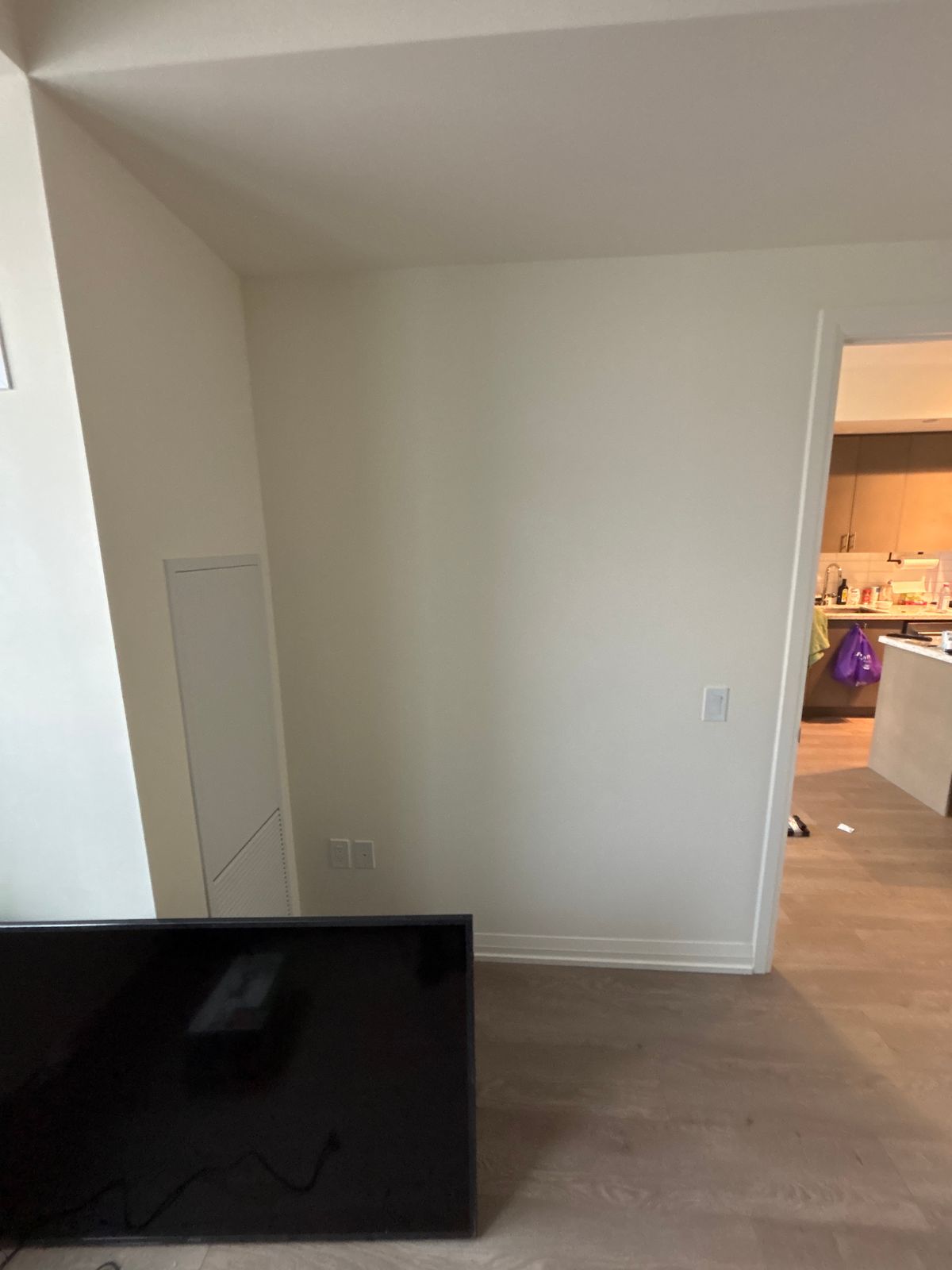
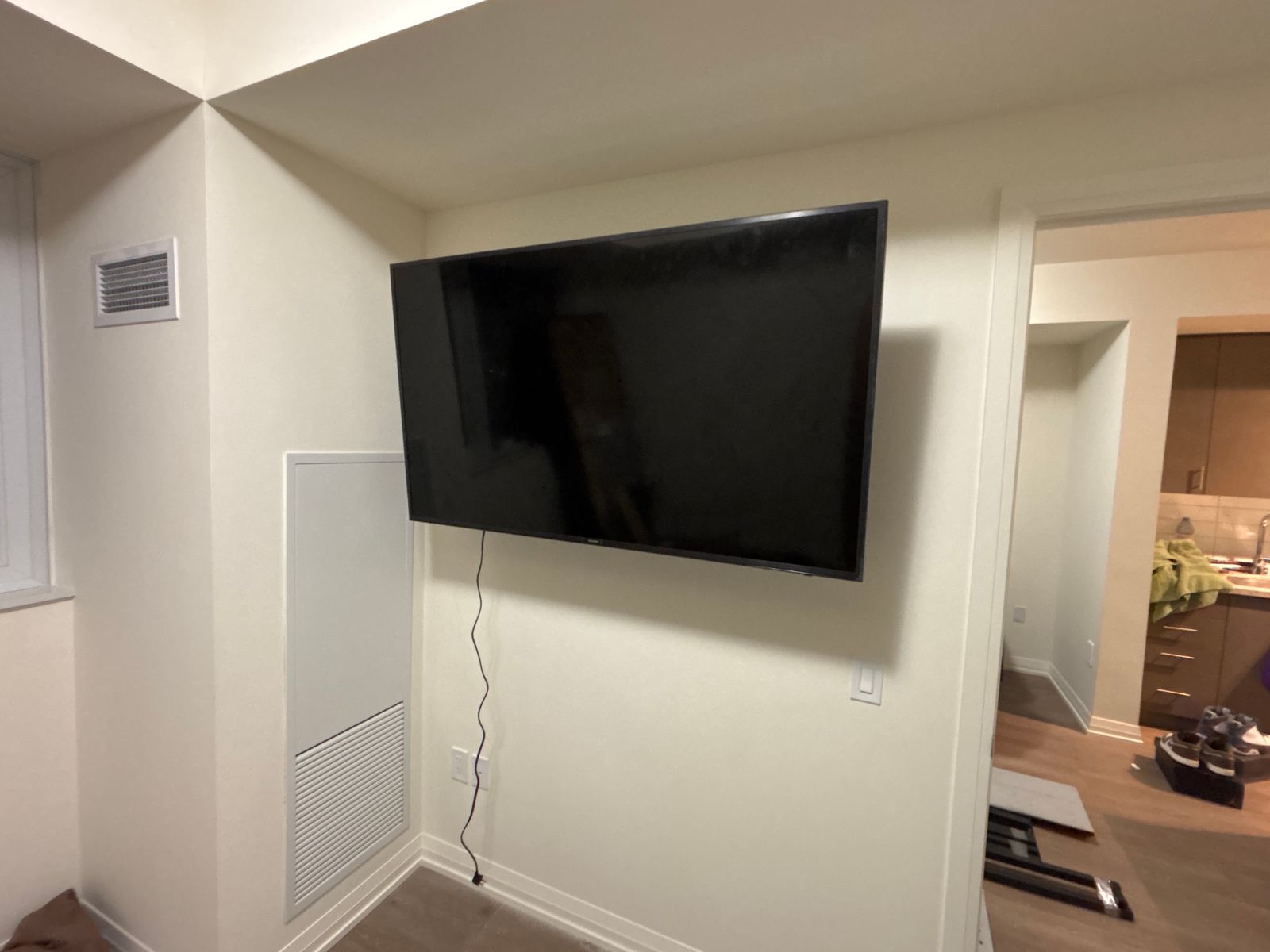
We installed a full-motion 56″ TV mount in a Vaughan home last year, and it’s a perfect example of why this job demands more than a stud finder and a drill. The client wanted the TV centered on a feature wall in their living room—but the studs didn’t cooperate. We found them 18 inches apart in one section, then 20 inches in another. Standard framing inconsistency, common in older Vaughan homes.
First, we located all studs with a precision stud finder, marked them with pencil, and measured twice. The TV’s mounting bracket required four anchor points minimum; we had two studs in the right zone naturally, but needed to reinforce the wall with additional blocking between the existing studs. We used 2×6 kiln-dried lumber fastened horizontally to create solid mounting points rated for a 60-pound full-motion arm.
Hardware mattered. We selected heavy-duty lag bolts (not drywall anchors—full-motion mounts flex under the arm’s articulation, and drywall anchors fail under load). Each bolt was secured into solid wood, spaced to distribute weight evenly. Cable management followed: we ran conduit down the stud cavities to a low outlet. The final mount held 56 inches of screen and lived through a full test cycle of arm articulation—left, right, up, down—with zero movement. That’s the standard we work to across Toronto, North York, and Vaughan.
Stud Spacing, Blocking & When the Studs Aren’t Where You Need Them
Most Canadian homes use 16-inch stud spacing, but some walls are framed at 24-inch centres, and renovations often leave irregular gaps. Vaughan has all of these, depending on when and how your house was built. A full-motion TV mount bracket—especially one supporting a 50″+ screen—needs four anchor points minimum, and they need to land on wood, not drywall.
The Stud Problem
Measure your wall. Mark every stud. If your mounting points align perfectly, you’re lucky. Most homes aren’t that lucky. If studs are too far apart or offset from your ideal TV position, you have three solutions:
- Add blocking: We install a horizontal 2×6 or 2×8 between existing studs, bolted into both sides of the framing. This is the most common fix and works even in drywall interiors.
- Use offset mounting hardware: Some brackets allow horizontal adjustment by 4–6 inches. Useful if studs are close but not exact.
- Relocate the TV position: Sometimes moving the mount 12 inches left or right puts you squarely on studs. Worth discussing before cutting into drywall.
Blocking Installation
If you need blocking, here’s what we do: cut a 2×6 to length (span between two studs), test-fit it, then bolt it securely using three or four half-inch bolts per connection point. The blocking sits flush with the stud edge so drywall can lie flat against it. Once the blocking is in, mark your four mounting holes on its face, drill pilot holes, and install the lag bolts. This creates a solid anchor point that won’t shift under a full-motion arm’s weight.
Blocking adds cost and time, but it’s non-negotiable for anything larger than 43 inches. Cutting corners here means your TV mount will sag, rattle, or eventually fail. Any opened drywall is patched afterward as part of our drywall repair work. If you’re not sure whether your wall is ready, our free estimates include a stud assessment and a clear explanation of what’s needed to do the job right.
Wall type also matters. Plaster walls in older Markham and Richmond Hill homes are harder to work through than drywall, but the principle is the same: find the studs, add blocking if needed, and anchor into solid wood. Never trust drywall anchors alone for a full-motion mount.
Full Motion TV Mount Installation Vaughan: 2026 Cost Guide
Full-motion mounts cost more than fixed brackets, but installation labour in Vaughan typically ranges from $150 to $400 depending on wall type and complexity. The mount itself runs $80 to $600 CAD for quality hardware that won’t fail under weight stress. Your total project usually lands between $300 and $1,000 for a professional installation. RenoHeal charges $90 per hour with a $150 minimum.
Wall type is the biggest cost variable. Drywall over studs is cheapest; plaster or brick adds time and specialized drilling. Running cables through walls or into existing conduit costs $50 to $150 extra. A 55–65 inch TV mount typically costs less to install than a 75+ inch setup because larger screens need more heavy-duty anchoring and careful stud placement.
| Service | Cost Range (CAD) | Notes |
|---|---|---|
| Labour only (drywall studs) | $150–$250 | Standard Vaughan residential |
| Labour (plaster/brick) | $250–$400 | Extra time for fastener selection |
| Full-motion mount (hardware) | $100–$600 | Quality matters for heavy TVs |
| Cable management/conduit | $50–$150 | In-wall wiring add-on |
| Total typical project | $400–$1,000 | 55–65 inch on drywall |
Homeowners in older parts of Vaughan and nearby Thornhill with plaster walls often see higher labour costs because fastener selection and wall reinforcement take longer. Get a free estimate to avoid surprises—most quotes include photo inspection of your wall type and stud layout.
DIY vs Hiring a Professional: Honest Breakdown
DIY TV mounting looks simple until you’re drilling into plaster or realizing your studs aren’t where the mount needs to go. You’ll need a stud finder ($20–$50), drill, level, socket set, and a ladder rated for your height and weight. If your mount requires studs and you can’t find them where you need them, you’re stuck.
Liability and safety matter more than cost here. A 65-inch TV weighs 25–35 kg. If the mount fails because anchors are overtightened, undersized, or placed in wrong material, the TV and mount fall. That’s property damage—and potential injury. RenoHeal carries $5M liability insurance for exactly this reason. Most homeowner policies don’t cover DIY installation errors, and Health Canada’s consumer product safety resources highlight the injury risks of falling and tipping TVs.
DIY is realistic if all three are true: your studs are visible and accessible, your TV is under 50 inches, and your wall is standard drywall over wood frame. For anything bigger, plaster walls, or locations far from existing studs, hire a professional. In Vaughan and surrounding areas like Markham and Richmond Hill, professional TV mounting services add certainty and warranty protection—your mount stays secure, and you’re covered if anything goes wrong.
The time trade-off also matters: DIY takes 2–4 hours if everything goes right. A professional typically gets it done in 45–90 minutes and handles cable routing too.
Common Mistakes That Lead to a TV on the Floor
Full-motion TV mounts fail for predictable reasons, and most of them happen before the drill comes out. The biggest culprit is using the wrong anchors for your wall type. Drywall anchors alone—even heavy-duty ones—cannot hold a 50+ inch TV when the mount swings out. You need to hit studs, period.
Skipping blocking when the studs don’t line up creates a false sense of security. Some installers catch one stud and rely on anchors for the rest instead of adding a solid wood reinforcement board behind the drywall. When you extend a full-motion arm 15–20 inches outward, you’re creating serious leverage. That bracket will twist and fail without proper backing.
Over-extending the arm on the first use is another trap. A 56-inch TV typically weighs 35–50 lbs depending on the model. If your mount isn’t secured flush to the wall with no gaps, even a small pull or bump can shift everything. Always check that the bracket sits flush before you hang anything.
Poor cable management leads to accidental tugs. If HDMI and power cords aren’t properly routed and secured, someone will yank them while adjusting the TV, putting unplanned stress on the mount. Run cables through in-wall conduit or use cable clips rated for the weight.
If you’re installing in Vaughan and want it done right the first time, professional TV mounting includes wall assessment, proper anchoring, and cable management—so your TV stays where it belongs.
Why Professional Installation Matters in Vaughan Homes
Vaughan homes vary wildly in construction age and quality. A house built in the 1980s may have plaster over brick; a newer build might have metal studs in some walls. A professional installer knows how to assess your specific wall before committing to any holes.
RenoHeal has completed 3500+ projects across the GTA, including dozens of full-motion installs in Vaughan. We carry stud finders, a drill with torque control, proper anchors for every wall type, and backing boards. We also provide a warranty on our work—if something fails, we fix it.
A rushed DIY install might save $200 upfront, but a falling 56-inch TV costs far more in property damage and injury risk.
Get a free estimate for your full-motion mount installation. We’ll assess your wall, show you the best placement, and explain exactly what’s going behind that drywall.
Frequently Asked Questions
How much does full-motion TV mount installation cost in Vaughan?
Professional full-motion TV mount installation in Vaughan typically runs between $150 and $300 CAD, depending on wall type, TV size, and whether cable concealment is included. Brick or concrete walls cost more due to the extra tools and anchors required. RenoHeal offers free estimates so you know the price before any work begins.
Can a full-motion TV mount be installed on drywall without hitting a stud?
Not safely — at least not for any TV worth mounting. Full-motion mounts create significant leverage when extended, and drywall anchors alone cannot handle that dynamic load over time. A proper installation always anchors into wood studs, metal studs with the right toggle bolts, or a solid blocking panel secured behind the drywall.
What size TV is safe for a full-motion wall mount?
Most quality full-motion mounts are rated for TVs between 32 and 85 inches, but the weight capacity matters more than screen size. A 75-inch OLED can weigh 40–55 kg, so you need both a mount rated for that load and a wall anchor system that can actually hold it. Always cross-check the mount’s VESA pattern and weight rating against your specific TV model before purchasing.
How do I know if my wall has metal or wood studs before mounting?
A magnetic stud finder will react to the drywall screws in both wood and metal studs, but a good electronic finder with AC detection will tell you which type you’re dealing with. Metal studs sound hollow when you knock between them and feel slightly springy when you probe with a thin finish nail. If you’re unsure, a professional installer can identify the stud type in minutes and choose the correct hardware before drilling.
Will a full-motion mount damage my wall more than a fixed mount?
Yes — full-motion mounts require more bolt penetrations and distribute stress differently because the arm shifts the TV’s centre of gravity away from the wall. That said, a properly installed full-motion mount causes no ongoing wall damage; the holes are clean and the load is stable. The risk of damage comes from improper installation — undersized anchors, missed studs, or a mount that isn’t rated for the TV’s weight.
How long does professional TV mount installation take?
For a straightforward drywall-and-wood-stud install, most professional technicians complete a full-motion TV mount in 45 to 90 minutes. Brick or concrete walls, cable-in-wall concealment, or awkward corner placements can push that to two to three hours. Same-day appointments are usually available in Vaughan when you book early in the day.
Full Motion TV Mount Installation Vaughan: Get It Done Right the First Time
A full-motion mount gives you genuine flexibility — tilt, swivel, pull-out reach — but only if the wall prep and anchor selection match the actual demands of the job. Vaughan homes present a real mix of wood studs, cold-formed metal studs, and older brick-and-plaster construction, and each one calls for a different approach before you ever pick up a drill.
Skipping the stud assessment, using undersized toggle bolts in metal studs, or trusting a mount that’s under-rated for your TV’s weight are the three mistakes that end with a TV on the floor and a wall that needs patching. Spending an hour with an experienced installer eliminates all three risks at once.
RenoHeal’s technicians handle full-motion TV mount installations across Vaughan and the GTA every day — fully insured, WSIB covered, and backed by a workmanship warranty. Request a free quote today, or learn more about our complete TV mounting service to see what’s included before you commit.