
Glass whiteboard installation Toronto property owners are considering can feel straightforward until you actually measure the weight and wall composition. Unlike a standard picture frame or TV mount, a glass whiteboard combines dead weight (the glass itself, typically 60–150 lbs for office sizes), the metal or aluminum frame, and the mounting hardware all working against drywall or concrete that wasn’t necessarily designed for that load. One wrong anchor choice or crooked installation can mean the board shifts, cracks, or worse—comes down entirely, risking injury and expensive replacement.
Toronto and GTA offices deal with a mix of older plaster walls, modern drywall, and concrete block depending on the building age and type. A 4×8 glass whiteboard in a North York corporate space isn’t just a wall décor choice—it’s a functional asset that needs rock-solid anchoring and perfect levelness or it becomes a productivity problem (markers pool, visibility angles are off, and users get frustrated). That’s why so many businesses in Scarborough, Etobicoke, and Markham call in professional handyman services instead of DIYing it.
We’ve installed dozens of glass whiteboards across the GTA, and the difference between a rushed job and a pro installation shows up within the first week of use.
What Makes Glass Whiteboard Installation Different From a Regular Wall Mount
Glass whiteboards weigh significantly more than a standard framed poster or even a 55-inch TV. A typical office-size glass whiteboard (4×8 feet) runs 90–150 lbs, and that load is concentrated on just four to six anchor points. Standard picture hangers or lightweight anchors fail instantly under that load.
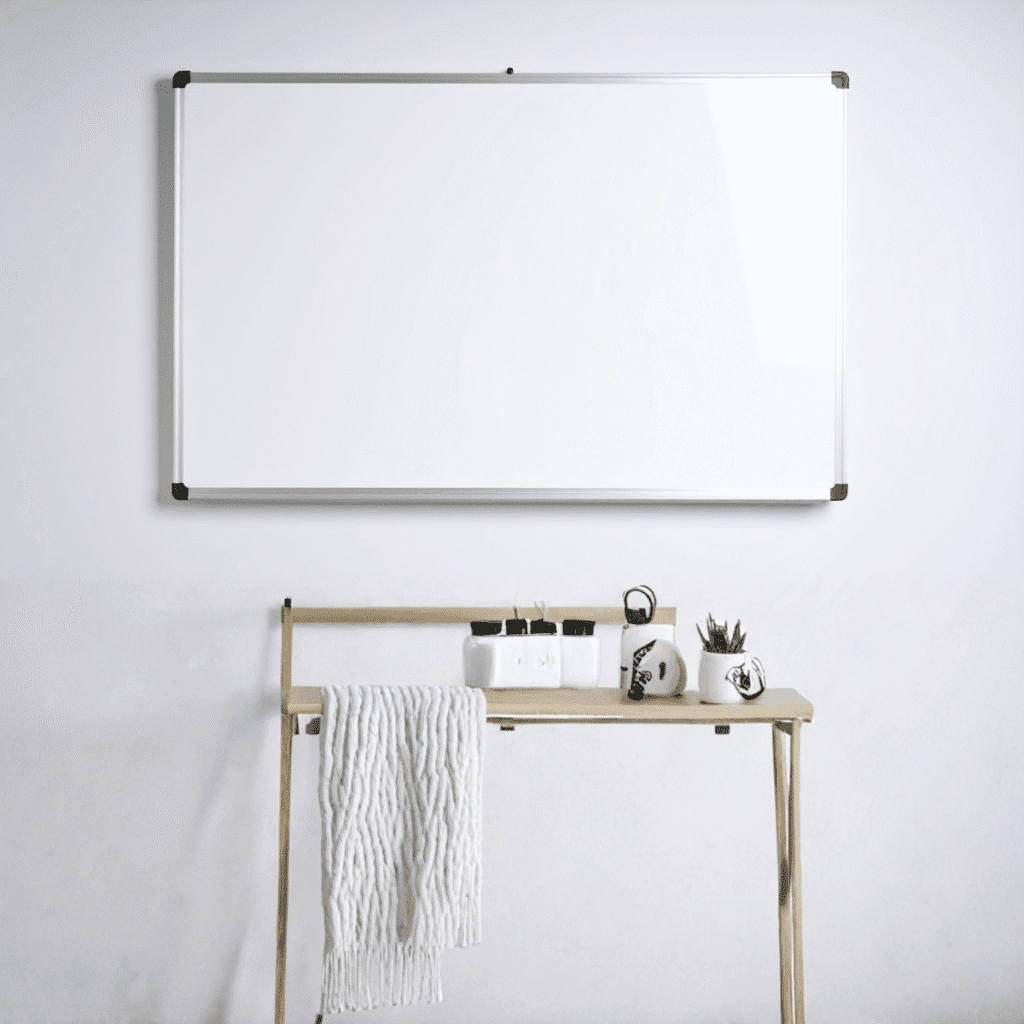
The wall composition in Toronto office buildings varies wildly. Older buildings in downtown Toronto often have solid plaster over lath; newer drywall-frame construction (common in Vaughan and Thornhill) requires different anchoring logic. Concrete-block walls in basement-level offices need masonry anchors entirely. Pick the wrong anchor type and you’re looking at cracking, settling, or a complete pull-through within months.
Precision matters too. A whiteboard that’s even a quarter-inch out of level becomes obvious when you’re trying to draw a straight line or when liquid marker pooling occurs at one corner. That’s why office users notice immediately when installation is sloppy.
Key challenges unique to glass whiteboard mounts:
- Weight distribution across limited fastening points
- Wall type identification and anchor matching
- Frame rigidity—the mounting hardware must hold the frame square, not just the glass weight
- Stud or blocking detection in drywall (studs offer 10× holding power vs. drywall alone)
- Vibration resistance (offices use these boards actively—constant writing, occasional bumps)
This is why we treat glass whiteboard installation as a precision carpentry and fastening job, not a quick handyman task. Your handyman service should approach it with the same rigor as TV mounting or cabinet installation.
How Glass Whiteboard Installation Toronto Pros Approach the Job
The first step is wall assessment. Before any fasteners go in, a pro inspects the wall for studs (using a stud finder), checks for pipes or wiring behind the drywall (especially important in Markham and Richmond Hill office complexes), and tests the wall surface for damage, moisture, or previous anchor holes that could weaken the holding power.
Stud location determines hardware. If studs are available behind the planned mounting area, lag bolts (¼-inch, 3-inch length) driven into the stud provide holding power of 300+ lbs per bolt. If studs don’t align with the board’s mounting holes, the next tier is heavy-duty toggle bolts or expanding anchors rated for 100–150 lbs each. In concrete or block walls (common in Brampton and industrial office spaces), masonry anchors or powder-actuated fasteners become the standard.
The installation sequence:
- Locate studs and mark the mounting line — We use a stud finder and laser level to mark exact mounting height (typically 12–18 inches below eye level for standing users).
- Drill pilot holes at the exact fastener locations — Hole diameter and depth match the anchor type; undersized holes prevent strip-out, oversized holes cause anchor failure.
- Install anchors with correct depth and spacing — Each anchor is set flush; protruding anchors can twist the mounting bracket.
- Attach the mounting bracket to the wall — Fasteners are torqued to the bracket manufacturer’s spec (usually 20–30 ft-lbs to prevent over-tightening and cracking).
- Hang the glass frame and level both horizontally and vertically — Shims or adjustment washers fine-tune alignment; this often takes more time than fastening.
- Check for drift and vibration resistance — We apply moderate pressure and confirm the frame doesn’t shift or creak.
Torque matters. Too tight and you strip the anchor or crack the mounting bracket; too loose and the board drifts over weeks. Experienced installers in Toronto use a torque wrench or calibrated feel built from hundreds of installs. A rushed job skips this step entirely.
Weather and wall condition factor in too. If your North York or Scarborough office has high humidity or temperature swings, anchors can loosen; we account for seasonal movement by over-anchoring slightly and checking after 2–3 weeks. We also protect the wall around the installation with painter’s tape to avoid cosmetic damage during the process.
Want to see how this translates to your space? Get a free quote for your glass whiteboard installation—we’ll assess your wall type and provide exact anchor and fastener specs before we start work.
Wall Types in Toronto Offices and Which Anchors Work
Toronto office buildings vary wildly in construction—some older heritage spaces in downtown Toronto use solid brick, while newer glass-tower offices rely on drywall partitions or concrete core walls. Your glass whiteboard’s success depends on matching the right anchor to your wall.

Commercial spaces also have to keep exits and corridors clear under the Ontario Fire Code, so we confirm board placement with the property manager before drilling.
Drywall Partitions
Most modern GTA offices use metal-stud drywall. Heavy glass whiteboards (often 30–80 lbs) need toggle bolts or heavy-duty drywall anchors rated for at least 50 lbs each. Use a minimum of four anchors, spaced evenly. Drywall alone cannot support a large board safely—it will sag or pull free.
Concrete & Brick
Commercial concrete and brick walls (common in older Toronto and North York buildings) require concrete wedge anchors or lag bolts with lead shields. These are far stronger and more reliable than drywall fasteners. Drilling into concrete takes longer and adds labour cost, but the hold is permanent.
Glass Partitions
If your office has glass dividers, a professional handyman service can install specialized glass clamps or patch fittings that don’t require drilling. These mount directly to the frame without damaging the glass.
The wall type you have determines not just which fasteners to use, but also labour time and overall project cost. Toronto’s mix of heritage and modern commercial space means installers need to know all three methods. Our free estimate process includes a wall assessment to recommend the right anchoring method for your space.
Glass Whiteboard Installation Toronto Cost Guide (2026)
Glass whiteboard pricing in Toronto depends on board size, wall material, and whether you need frame modifications or cable management. Most projects fall between $300 and $1,200 in labour alone, plus the cost of the board itself.
| Board Size | Drywall Wall | Concrete/Brick Wall | Glass Partition |
|---|---|---|---|
| 24″ × 36″ (small) | $250–$400 | $350–$550 | $300–$450 |
| 36″ × 48″ (medium) | $350–$600 | $500–$800 | $400–$650 |
| 48″ × 72″ (large) | $500–$900 | $750–$1,200 | $600–$1,000 |
| Custom sizes (contact) | $600+ | $800+ | $700+ |
What’s Included in Labour Costs
- Wall assessment and anchor selection
- Levelling and marking (critical for glass boards—even 2° off looks crooked)
- Drilling and anchor installation
- Board mounting and hardware tightening
- Testing for secure fit and safety
Extra Costs to Budget
Drywall repair (if holes need patching after removal of old fixtures): $50–$150. Concrete drilling (adds 30–60 minutes of labour): typically $100–$200 extra. Cable concealment (running wires through conduit): $150–$300 depending on distance and wall type.
Toronto and GTA offices often ask for cord management or mounting near power sources, which extends timeline slightly. If your board has motion sensors or built-in lighting, electrical rough-in may add another $200–$400. Contact us with your wall type, board size, and any special requirements for an exact quote—our estimates are always free.
DIY vs. Hiring a Professional for Glass Whiteboard Installation
Installing a glass whiteboard yourself sounds straightforward—hang a sheet of tempered glass on the wall, add some mounting hardware, call it done. In reality, it’s one of those projects where a few dollars saved upfront often costs you hundreds later.
Glass whiteboard installation Toronto offices book with us is often part of a larger fit-out. See our office renovation and commercial maintenance services, or our TV mounting page for boardroom screens.
The biggest risk is safety. A glass whiteboard typically weighs 60–150 lbs depending on size and thickness. If the anchors fail or the wall studs aren’t located correctly, the board falls. That’s not just damage to drywall; it’s a serious liability if someone is injured. In an office setting, you could face workers’ compensation claims or worse.
Then there’s the warranty question. Manufacturers like Luxor, Clarus, and Ghost almost always void warranties if installation wasn’t done by a qualified installer. That means if the tempered glass spontaneously cracks (rare but possible), you’re buying a replacement out of pocket—typically $500–$2,000.
Time and expertise matter too. Finding studs, cutting precise holes in tempered glass (which requires a specialist if needed at all), ensuring the board is perfectly level, and securing it without overtightening the fasteners—these steps take practice. Even small mistakes create uneven pressure on the glass, leading to cracking or a wobbly mount that wobbles or pulls away from the wall.
Hiring a professional like RenoHeal ensures the job is done to code, your warranty stays intact, and you have insurance backing the work. Get a free estimate and let an experienced technician handle it.
Common Mistakes That Lead to Cracked Boards or Failed Mounts
We’ve seen thousands of glass whiteboard installations across Toronto, North York, and Scarborough. These are the errors that pop up most often—and how to avoid them.
Wrong Anchors for Your Wall Type
Drywall anchors and concrete anchors are not interchangeable. Many DIY installers grab generic “heavy-duty” anchors from Home Depot without checking what the wall is actually made of. Toggle bolts work in drywall but strip easily if overtightened. Concrete anchors won’t grip in drywall. Masonry fasteners are useless in studs. The board pulls away within weeks, leaving gaps and unstable mounting.
No Stud Finding or Improper Load Distribution
Glass whiteboards are heavy. They need to be anchored into wall studs (on-stud) or use proper heavy-duty anchors rated for at least 150% of the board’s weight. Many installers skip stud-finding or use drywall anchors alone. The board’s weight slowly pulls the anchors out of the drywall. Result: a sagging, leaning, or completely failed mount within months.
Overtightening Fasteners
This is especially common with tempered glass. Tightening the mounting bolts too hard puts uneven stress on the glass. Tempered glass is strong, but point-load stress can cause cracking days or weeks after installation. The crack often appears far from the mounting hardware, making it seem random—but it’s really a delayed stress failure.
Uneven Installation or Missing Wall Blocking
If the board isn’t perfectly level, all the weight concentrates on the lower mounting points. In older commercial buildings in Vaughan or Mississauga with plaster walls, there’s often no solid backing behind the drywall. A professional installer will add blocking (wooden reinforcement) behind the wall before mounting, distributing pressure evenly. DIY installers often skip this step entirely.
Our team at RenoHeal checks wall structure, uses the correct fasteners for your wall type, levels the board precisely, and applies even pressure during mounting. Learn more about our handyman services or contact us for advice on your specific wall and board size.
Frequently Asked Questions
How much does glass whiteboard installation cost in Toronto?
Professional glass whiteboard installation in Toronto typically runs $150–$350 CAD for labour, depending on wall type, board size, and mounting complexity. That doesn’t include the board itself, which can range from $300 for a smaller tempered glass panel to $1,500+ for a large frameless unit. Always get a written quote that breaks out parts, labour, and any patching work needed after the job.
Can a glass whiteboard be mounted on drywall without studs?
It’s not recommended. Glass whiteboards are dense — a mid-size 4×6 ft panel can weigh 40–70 lbs — and standard drywall anchors alone aren’t rated for that kind of sustained load. A proper install uses stud-mounted hardware as the primary anchor, with heavy-duty toggle bolts as secondary support only where studs don’t line up with the bracket pattern. Skipping studs is the top reason these boards pull away from walls.
How long does it take to install a glass whiteboard?
Most glass whiteboard installations take 1.5 to 3 hours for a single board in a standard office setting. That includes locating studs, marking and drilling anchor points, levelling, hardware installation, and a final safety check. Installations on tile, concrete, or older plaster walls take longer due to the need for masonry bits and different anchor systems.
Do I need a permit to install a large glass whiteboard in a Toronto office?
No building permit is required simply to mount a glass whiteboard to an existing wall in Toronto. However, if the installation involves cutting into the wall to add blocking, modifying electrical for integrated lighting boards, or is part of a broader renovation, those components may trigger permit requirements under the Ontario Building Code. When in doubt, check with your building manager or a licensed contractor before proceeding.
What size glass whiteboard can be mounted on a standard office wall?
Most standard office walls with studs at 16-inch centres can support glass whiteboards up to 6×4 ft without structural modification. Boards larger than that — particularly 8 ft wide or more — often require added blocking inside the wall or a wall-spanning mounting rail system that distributes the load across more anchor points. A technician should always assess the wall before committing to an oversized install.
Will installing a glass whiteboard void my office wall warranty or lease terms?
It depends on your lease. Many commercial leases in Toronto require tenant approval before making penetrations in walls, especially for heavy fixtures. Installing a glass whiteboard creates multiple large-diameter holes, and if you leave without patching them properly, you could face deductions from your damage deposit. Review your lease’s “alterations” clause and get written landlord approval if required — a professional installer can also patch and paint the wall when the board comes down.
Glass Whiteboard Installation Toronto: What to Know Before You Book
A glass whiteboard is a serious wall fixture, not a picture frame. Getting the anchor points right — into studs, with the correct hardware rated for the board’s weight — is what separates a safe, level install from one that shifts, sags, or fails entirely. In a busy Toronto office, that’s not a risk worth taking.
The cost is predictable, the job is fast when done by someone who knows wall construction, and the result lasts for years without touch-ups. Whether you’re outfitting a boardroom, a collaborative workspace, or a home office, professional installation protects both the board and the wall behind it.
Ready to get it done right? Request a free quote from RenoHeal today, and let our technicians handle the anchoring, levelling, and cleanup — so your new board is ready to use the same day. Learn more about our full range of handyman services in Toronto and see why 3,500+ GTA clients trust us with their walls.