
Interlock tile repair Mississauga homeowners can rely on is one of those jobs that separates a quick patch from a real fix. Pavers crack, shift, and stain for specific reasons—and the Mississauga climate is brutal on outdoor surfaces. We’ve completed hundreds of paver repairs across the GTA, and the pattern is always the same: the problem starts long before you notice it.
Whether your interlock driveway has settled unevenly, your patio tiles are cracking, or paint has stained your pavers, the root cause usually traces back to soil movement, water, or installation shortcuts. The good news: most of these issues are fixable without replacing the entire patio.
This guide covers why pavers fail in our climate, what the most common problems look like, and what professional repair actually involves. If you’re dealing with wobbly tiles or visible damage, get a free estimate from our team—we’ll identify the real problem and give you honest options.
Why Interlock Pavers Fail in the Mississauga Climate
Mississauga winters are the main enemy of interlock pavers. Freeze-thaw cycles—where water freezes in cracks and joints, then thaws as temperatures rise—create tiny explosions inside the paver. This repeated stress cracks edges, widens joints, and destabilizes the entire system.
Most interlock tile repair Mississauga calls we get trace back to the same three things: frost heave, poor drainage and washed-out polymeric sand. The Interlocking Concrete Pavement Institute notes that a properly compacted base is what keeps pavers flat for decades, which is why we always check the base before resetting a single stone.
Clay-based soil, common throughout Mississauga and surrounding areas like Brampton, also heaves during winter. As soil freezes, it expands upward, pushing pavers out of level. When spring thaw comes, uneven settling creates gaps and wobbly tiles. This isn’t a sign of poor installation; it’s physics meeting Mississauga ground conditions.
Drainage failure accelerates all of this. If water pools under or between pavers instead of draining away, it stays frozen longer and expands with more force. Poor base preparation, compacted sand that’s lost its slope, or accumulated soil and debris in joints all trap water and speed up failure.
Summer heat also matters. Pavers expand in direct sun, and if joints are too tight or the base has shifted, the pressure has nowhere to go—cracks spread sideways through the tile. Salt from winter de-icing chemicals can also penetrate paver surfaces and weaken the material from inside.
The Most Common Interlock Problems We See on the Job
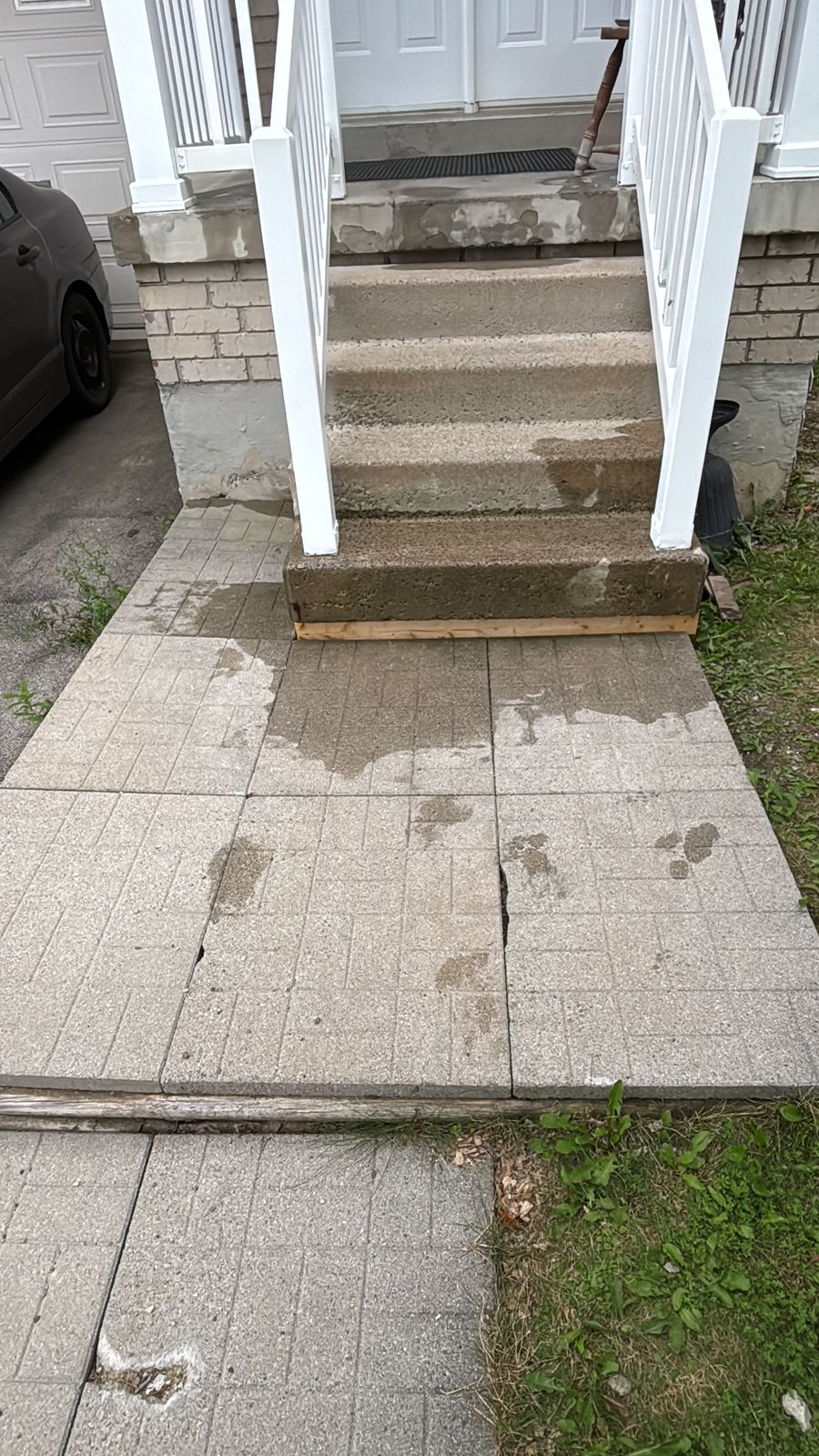
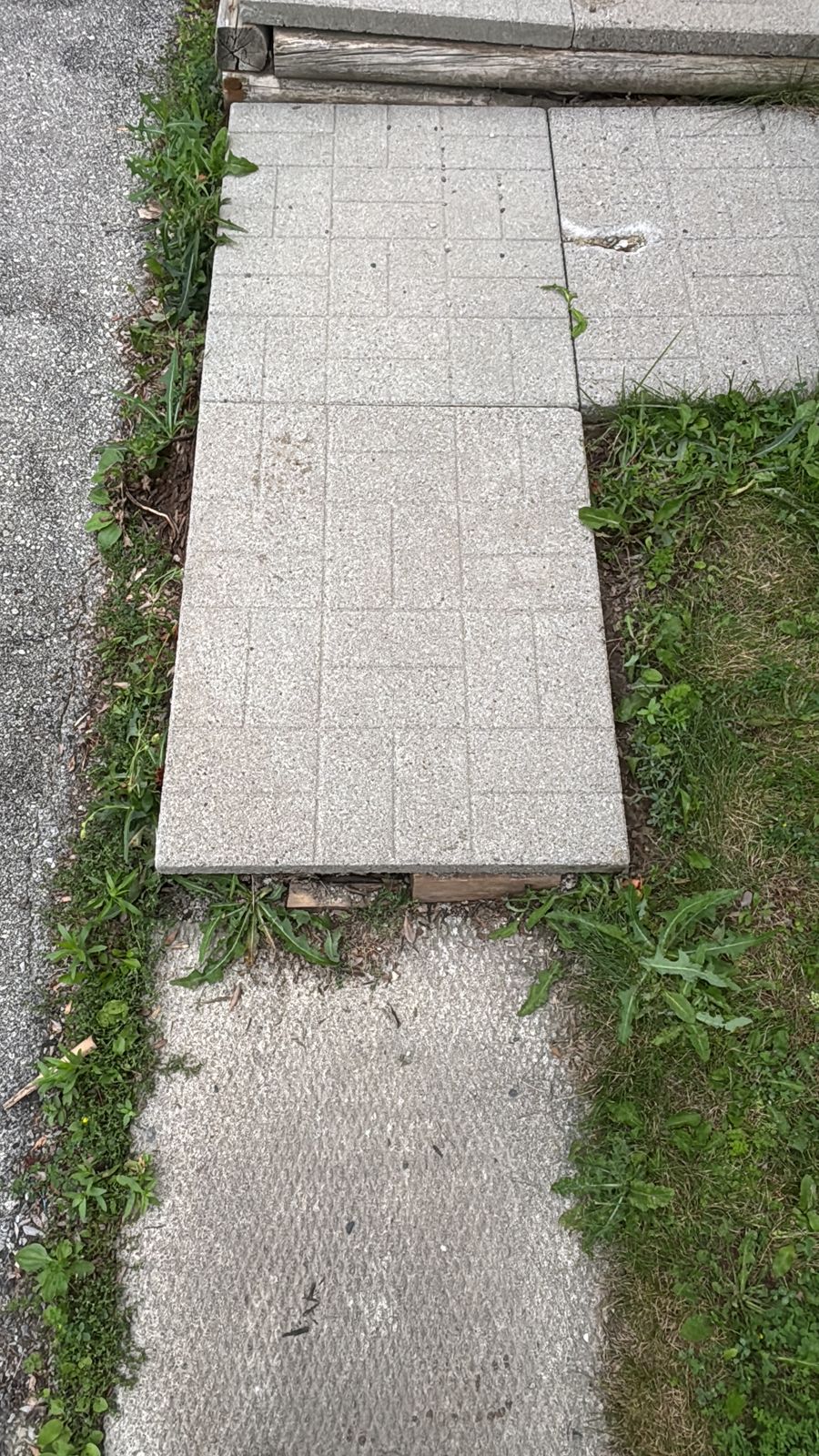
Wobbly tiles are the earliest warning sign. A paver that rocks when you step on it means the sand base has eroded or shifted. This happens fastest at the edges of driveways and patios, where traffic and water runoff are heaviest. Fix this early, or the wobble spreads to neighboring pavers like a domino effect.
Cracking takes two forms. Surface cracks (hairline splits on top) usually result from freeze-thaw stress or impact. Structural cracks (breaking the tile in half) mean the base has failed underneath—the paver has lost support and is flexing under load. Surface cracks can sometimes be sealed; structural cracks need the paver replaced.
Sinking and settling happen unevenly across a patio or driveway. One section drops a quarter-inch while the rest stays level, creating a trip hazard. This points to uneven soil compaction, poor drainage in that spot, or frost heave pushing neighboring sections higher. It’s impossible to fix by shimming individual pavers; you have to address the base.
Paint stains are common on pavers near garages or where contractors have worked. Unlike dirt, paint soaks into the porous surface. Some stains respond to chemical strippers; others require professional cleaning and sealing. We’ve tackled paint stain removal on Mississauga residential projects where a quick power wash alone won’t cut it.
Efflorescence—that white, powdery haze on paver surfaces—is a mineral deposit, not mold. It happens when water wicks through the paver and leaves behind salts and minerals as it evaporates. It’s unsightly but harmless, and usually clears up with weather or a specialized cleaner. It’s a sign your pavers are absorbing water, though, so drainage should be checked.
If your pavers show any of these problems, don’t wait for spring to make it worse. Contact us for a site visit—we’ll assess whether repair, replacement, or base work is the right fix for your Mississauga or GTA patio or driveway.
What Professional Interlock Tile Repair Mississauga Pros Actually Do
When interlock pavers start to wobble or sink, a proper repair isn’t a quick fix—it’s a methodical process that addresses the root cause, not just the symptom. Most Mississauga homeowners don’t realize that loose tiles usually mean the sand base underneath has shifted or compacted unevenly. A professional repair restores stability and prevents water pooling, which leads to frost heave and cracking in Ontario winters.
Here’s the step-by-step process a pro follows:
- Lift and remove. The technician carefully extracts the damaged or wobbly paver without disturbing neighbors. This takes patience and the right tools—prying too hard damages edges or displaces adjacent tiles.
- Inspect and clean the base. Once the paver is up, the sand bed underneath is checked for compaction, debris, or water pooling. Any contaminated or settled sand is removed.
- Re-bed with fresh polymeric or mason sand. A level, even layer of high-quality sand is laid and smoothed. This is critical—an uneven base means the tile won’t sit flush and will wobble again within months.
- Compact and level. Using a rubber mallet or hand tamper, the technician seats the paver firmly and checks it against surrounding tiles with a level. Proper compaction means the paver won’t shift under foot traffic.
- Resand the joints. Polymeric jointing sand is swept into the gaps and lightly misted with water, which activates the polymer binder and locks the tiles in place.
- Seal (optional but recommended). A professional-grade paver sealer protects against staining, water penetration, and UV fading—especially important in Mississauga’s wet springs and summers.
This is why wobbly pavers often return after a DIY attempt: homeowners skip the base inspection or use the wrong sand. When you get a free estimate for interlock tile repair, a pro will tell you exactly what needs to happen below the surface.
How Pros Remove Paint and Deep Stains from Pavers
Paint spills, rust stains, and oil marks are common on Mississauga interlock driveways and patios. The challenge isn’t just lifting the stain—it’s doing it without etching, discoloring, or damaging the paver itself. Pressure washing alone won’t cut through dried paint, and scrubbing by hand takes hours with mixed results.
Paver stain removal is often part of the same visit. If your driveway, walkway or patio needs more than spot repairs, our outdoor services team can quote resetting, re-sanding and sealing together so the whole surface wears evenly.
Professional stain removal uses a layered approach:
- Chemical stripper application. A pH-neutral or slightly alkaline paint stripper is applied to the stained area and left to penetrate for 15–30 minutes. This breaks down the paint’s bond without bleaching the paver’s color.
- Pressure washing. Once the stripper has done its work, a controlled pressure wash (typically 1500–2500 PSI) lifts the loosened paint. High-quality equipment and technique prevent gouging or sand erosion.
- Neutralizing and rinsing. Any residual chemical is neutralized with a rinse and mild acid wash to restore the paver’s pH balance. This step prevents white hazing and future staining.
- Drying and sealing. The cleaned area is left to dry completely, then sealed with a professional paver sealer to restore water resistance and protect against future spills.
For stubborn stains like rust or oil, a second treatment or specialized degreaser may be needed. Contact us in Mississauga or the wider GTA to discuss stain type—the faster you address it, the easier removal becomes.
Interlock Tile Repair Mississauga Cost Guide: What to Expect (CAD)
Interlock paver repair costs in Mississauga vary widely depending on the scope. A single wobbly tile usually costs $150–$300 to reset and resand, while multiple tiles or a sunken section can run $400–$800. Full-area resanding (50–100 sq. ft.) typically falls between $600–$1,200.
Stain removal adds another layer. Light paint or organic stains may cost $100–$300 if cleaning alone solves it; heavy or set-in stains requiring sealer reapplication can reach $400–$600 for the same area. Below is a realistic breakdown based on common Mississauga jobs:
| Repair Type | Area / Scope | Estimated Cost (CAD) | Timeline |
|---|---|---|---|
| Single wobbly tile reset | 1 tile | $150–$300 | 1–2 hours |
| 3–5 wobbly tiles, resand | Up to 20 sq. ft. | $350–$600 | 2–4 hours |
| Sunken patio section | 20–50 sq. ft. | $500–$900 | 4–6 hours |
| Full-area resand | 50–100 sq. ft. | $600–$1,200 | Full day |
| Paint/stain removal only | Up to 50 sq. ft. | $150–$400 | 2–4 hours |
| Paint removal + sealer | 50–100 sq. ft. | $400–$700 | 4–6 hours |
Costs also depend on paver age, soil conditions, and whether the underlying base needs rebuilding. Get a free estimate to know the exact price for your Mississauga property—no guessing.
DIY vs. Hiring a Pro for Interlock Repairs
DIY interlock repair works best for single, obviously wobbly tiles in good repair. You can reset one tile in 30 minutes if the sand bed hasn’t eroded and the paver hasn’t sunk. Rent a tamper, remove the tile, top up the sand, and reset it level. For this one-tile fix, you’ll spend $30–$50 on supplies and maybe 1 hour.
We handle interlock paver repair for homes across Mississauga, from Streetsville to Port Credit, usually within the same week you call.
DIY fails fast when multiple tiles are involved, the ground underneath has settled, or stains are baked in. Cleaning paint off interlock without damaging the sealer requires the right pressure-wash setting and pH-balanced cleaner—mistakes leave water marks or stripped color. Resanding a large area demands equipment most homeowners don’t own, plus the skill to match slope and compaction. If you undersand or oversand, water pools or tiles loosen again within weeks.
The biggest DIY risk: incomplete repairs hide root causes. A wobbly tile often signals base erosion or poor drainage; reset it without fixing those, and it’ll shift again next spring. A stain that returns after a scrub usually means sealer breakdown, which needs professional assessment. In Mississauga’s freeze-thaw cycle, recurring problems compound fast.
Hiring a pro eliminates guesswork. RenoHeal’s experienced technicians diagnose the underlying issue, use proper tamping and grading to ensure long-term stability, and apply sealer that lasts. One solid repair beats three DIY attempts.
Common Mistakes That Make Interlock Damage Worse
If your interlock tiles in Mississauga are already damaged, rushing the repair often compounds the problem. One of the biggest mistakes homeowners make is using the wrong type of sand—regular play sand or mortar sand won’t compact or bind properly under foot traffic. You need polymeric sand or high-quality paver sand that locks the stones together and resists washout.
Skipping compaction is equally damaging. After resetting a wobbly tile, the base must be tamped down with a mechanical compactor, not just walked on. Without proper compaction, the paver will shift again within weeks, and water will pool underneath, accelerating freeze-thaw cracking in Ontario winters.
Pressure-washing interlock tiles at more than 1,500 PSI (pounds per square inch) blasts sand out from between the pavers and etches the surface, making future staining worse. If stains are present—like the paint residue we removed on a recent Mississauga project—use a soft-bristle brush and mild detergent first, then low-pressure rinse only as a last resort.
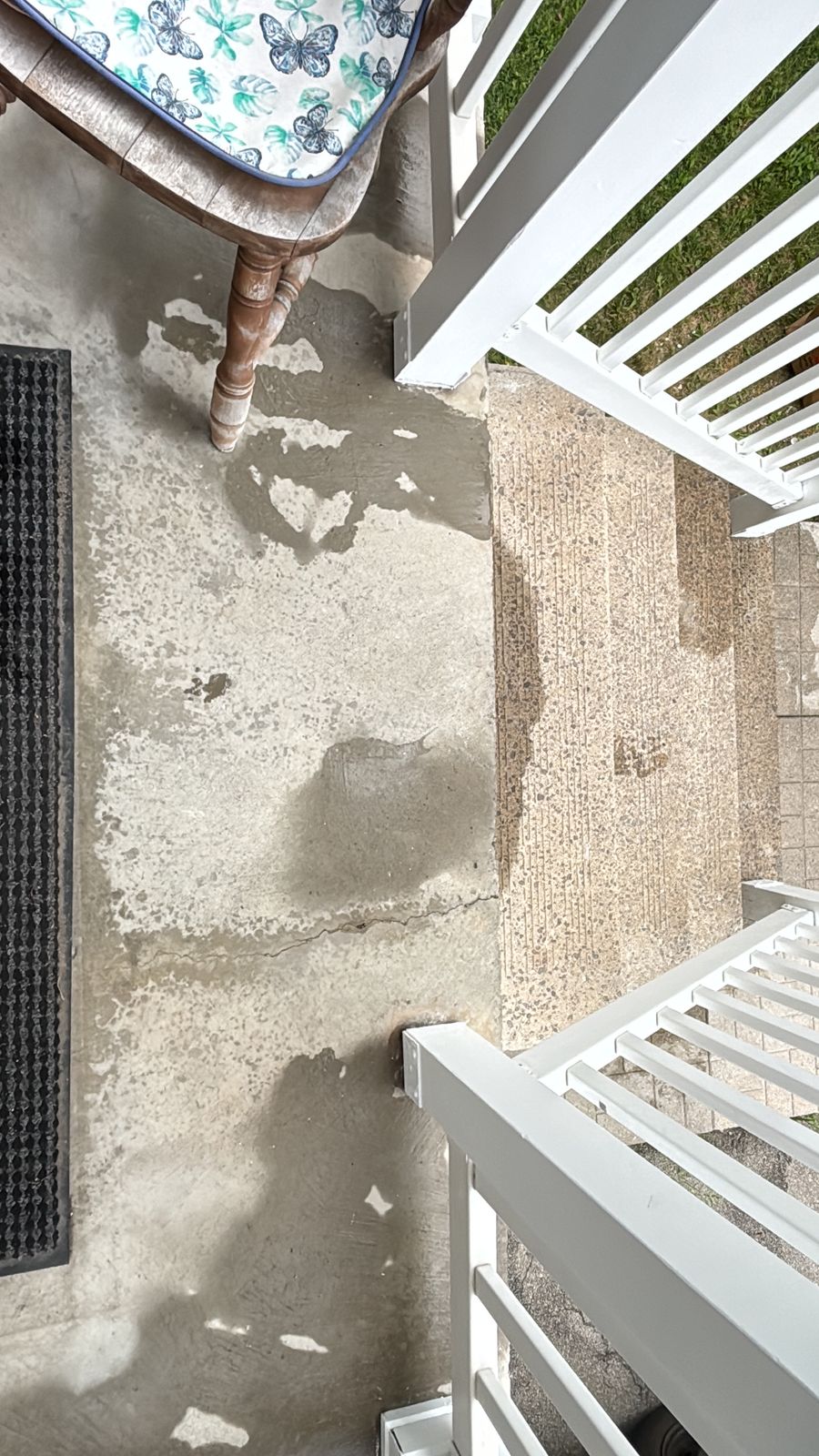
Poor drainage is silent but deadly. If water pools between pavers or beneath the surface, frost heave in winter will lift and crack tiles. A free estimate from our team can identify whether your base has adequate slope and drainage before damage spreads further.
Frequently Asked Questions
How much does interlock tile repair cost in Mississauga?
Most small-to-mid-scale interlock tile repairs in Mississauga run between $150 and $600 CAD, depending on how many pavers need attention, the extent of base damage, and whether polymeric sand or sealant is part of the scope. Larger driveway repairs with significant base failure can climb higher once compaction work and material costs are factored in. RenoHeal offers free on-site estimates so you get a clear number before any work begins.
Can you repair just a few wobbly pavers without redoing the whole patio?
Yes — spot repairs are completely viable when the surrounding pavers and base are still in good shape. A technician lifts the affected units, corrects the bedding sand or base layer underneath, re-levels, and re-lays the pavers with fresh polymeric sand swept into the joints. As long as the root cause (poor drainage, frost heave, a single void) is addressed at the same time, a partial repair holds just as well as a full redo.
What is the best way to remove paint stains from interlock pavers?
For fresh paint, blot — don’t scrub — to prevent the stain from spreading deeper into the paver’s pores, then apply a concrete-safe paint stripper and rinse thoroughly. Dried or cured paint usually requires a commercial alkaline or solvent-based stripper rated for concrete pavers, applied with dwell time, followed by a stiff-bristle brush and a pressure wash at controlled PSI to avoid surface erosion. Sealing your pavers after cleaning creates a barrier that makes future stains much easier to lift.
Why do my interlock pavers keep shifting even after being reset?
Recurring movement almost always points to an unresolved base problem rather than the pavers themselves — common culprits include inadequate compaction depth, missing or degraded edge restraints, and poor drainage that lets water pool under the bedding layer and erode it through Ontario’s freeze-thaw cycles. If the granular base wasn’t excavated and compacted to the proper depth (typically 6–8 inches for a patio, more for a driveway), resetting the pavers on top is only a temporary fix. A lasting repair means digging down, correcting drainage, recompacting, and re-establishing proper edge restraint before any paver goes back in place.
Should I seal my interlock pavers after repairs?
Sealing is strongly recommended after repair work — it locks polymeric sand in place, repels oil and organic stains, and slows the colour fade that Mississauga’s UV exposure and road salt cause over time. Wait at least 24–48 hours after the final polymeric sand application and any rain events before applying sealer so the joints are fully cured. A penetrating or film-forming paver sealer applied every 2–3 years keeps repaired sections looking consistent with the surrounding field and reduces how often future maintenance is needed.
How long does interlock paver repair take for a typical driveway or patio?
A straightforward spot repair — lifting, re-leveling, and resetting a section of 10–30 pavers — typically takes 2 to 4 hours on-site. Larger repairs involving base rework, edge restraint replacement, or widespread re-sanding of a full driveway can take a full day or occasionally two depending on square footage and drying requirements for polymeric sand. Most patio repairs are usable again within 24 hours; driveways may need 24–48 hours before vehicle traffic resumes.
Book Interlock Tile Repair Mississauga Done Right the First Time
Cracked, shifting, or stained pavers aren’t just an eyesore — left alone through another Ontario freeze-thaw season, minor surface problems turn into failed bases and far more expensive fixes. Catching the real cause early, whether that’s inadequate compaction, missing edge restraints, or drainage working against your slab, is what separates a repair that lasts from one you’re redoing in two years.
RenoHeal’s experienced technicians handle everything from a handful of wobbly pavers to full driveway base corrections across Mississauga and the GTA. Every job is backed by $5M liability insurance, WSIB coverage, and a workmanship warranty on eligible services — so you’re protected from the first lift to the final sand sweep.
Ready to stop watching your patio sink? Request a free quote today and let’s get it sorted — or explore RenoHeal’s full range of general home repair services to see what else we can tackle for you.