
Kitchen cabinet removal cost Toronto homeowners pay typically ranges from our 50 minimum for a small partial job to ,500+ for a full kitchen teardown with disposal and wall repair, depending on the size of the job, cabinet type, and what comes after. Whether you’re doing a full kitchen renovation or just clearing space around appliances, understanding the scope and labour involved helps you budget accurately. We’ve completed over 3,500 projects in Toronto and the GTA, and cabinet removal is one of the most common pre-renovation tasks homeowners tackle.
The real cost comes down to how many cabinets you’re removing, whether they’re built-in or freestanding, and whether you need the wall prepped and finished afterward. A simple surround-removal job (like taking out panels around a fridge) runs much cheaper than stripping an entire kitchen. The key is knowing what’s involved so you don’t get surprise charges midway through.
This guide walks you through what cabinet removal actually entails, shows you a real Toronto job we completed, and gives you honest pricing so you can plan your renovation confidently.
What Kitchen Cabinet Removal Actually Involves
Cabinet removal isn’t just ripping out wood and moving on. It includes careful disconnection of plumbing and electrical (if needed), removal of fasteners and backing panels, and assessment of the wall underneath. Most kitchens in Toronto homes have cabinets screwed directly into studs, so removal requires both precision and care to avoid wall damage.
Upper cabinets need support while being removed—they’re heavy and can come loose suddenly if not braced properly. Lower cabinets often sit on a base frame and may be connected to countertops, which need to be separated first. Fridge surround panels are typically easier than full cabinet banks, but still require disconnection from adjacent cabinetry and the wall.
Standard Cabinet Removal Steps
- Clear the interior and remove doors (reduces weight and prevents damage)
- Turn off power and water if cabinets house electrical outlets or plumbing
- Locate and remove fasteners (usually 2.5″ screws into studs)
- Support the cabinet while loosening to prevent it from falling
- Carefully pull away from the wall and assess damage underneath
- Remove backing panels, shelving, and hardware
- Assess wall condition for patching, painting, or prep for new cabinets (see our cabinet installation service)
Wall prep after removal is where extra costs can add up. If cabinets were covering drywall damage, water stains, or mismatched paint, you may need drywall repair or interior painting before moving forward. Ontario building code doesn’t require special finishes on exposed kitchen walls, but most homeowners want the space to look polished before installing new cabinetry.
A Real Toronto Job: Fridge Surround Cabinet Removal
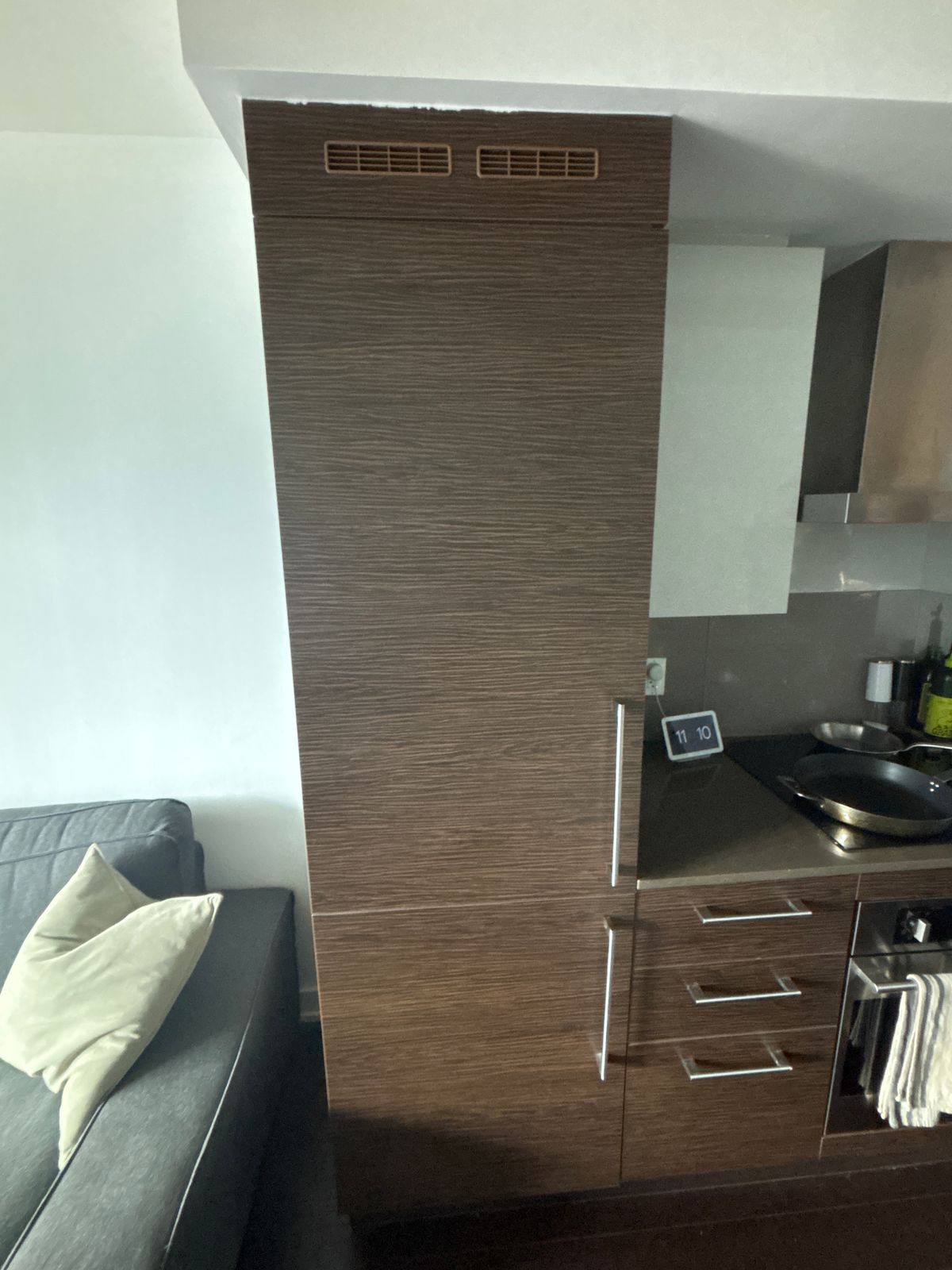
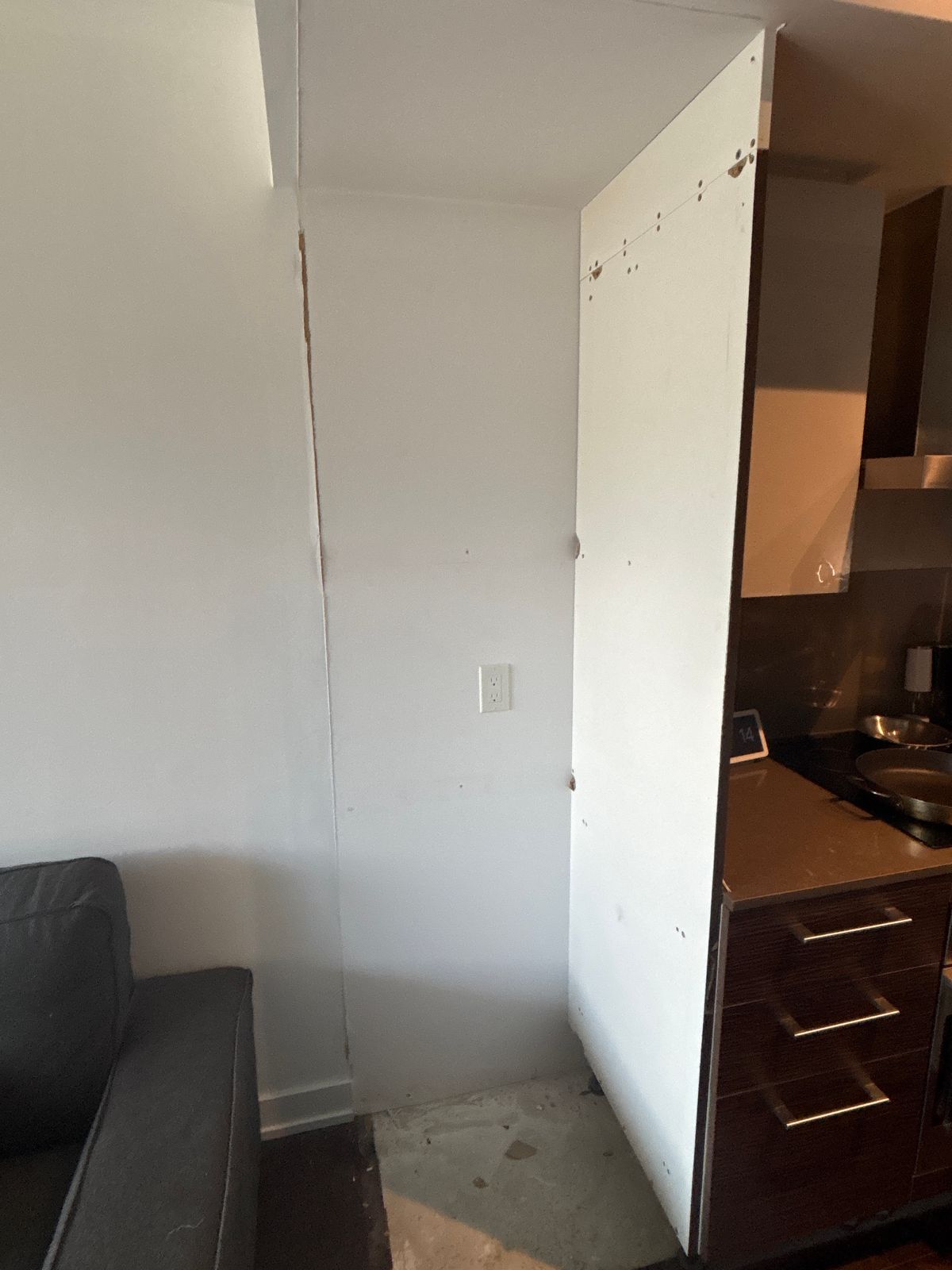
One of our recent Toronto projects involved removing cabinetry panels surrounding a refrigerator—left side, right side, top panel, and a small bottom trim panel. This is a common request when homeowners want to replace the fridge, upgrade the surround finish, or simply open up the kitchen space. The job took about 3 hours, including wall assessment and basic cleanup.
The fridge surround is trickier than it looks because those panels are often integrated into the full cabinet run. Removing them without disturbing adjacent cabinetry requires careful disconnection at the joints and support points. In this case, the left and right panels were screwed into a backing frame that was also securing the main cabinet bank, so we had to brace the adjacent cabinets before loosening anything.
How the Job Broke Down
| Task | Time | Notes |
|---|---|---|
| Assessment & planning | 20 min | Located fasteners, checked for hidden electrical or water lines |
| Support & bracing | 30 min | Secured adjacent cabinets to prevent shifting during removal |
| Panel disconnection | 90 min | Removed screws, separated joint points, pulled panels away carefully |
| Cleanup & wall check | 40 min | Assessed wall surface, removed old caulk, prepared space for finishing |
The wall underneath the fridge surround showed minor scuffing and a few anchor holes from old hardware. We filled these with spackle and noted that the homeowner would want to touch up the paint once the new panels or finish was in place. This is standard in North York and Toronto kitchens where cabinet integration is common.
Why This Type of Removal Costs Less
Surround removal is cheaper than full cabinet banks because the scope is narrower and the structural impact is lower. You’re not dealing with large weight loads, extensive plumbing/electrical runs, or multiple connection points. RenoHeal charges $90 per hour with a $150 minimum, so a 3–4 hour surround removal typically lands around $270–$360 in labour before materials or disposal fees.
Disposal is an add-on cost most homeowners overlook. Cabinet panels and backing wood need to go to a waste facility or be hauled away. Expect $100–$300 for disposal depending on volume and whether your contractor includes it. Get a quote from RenoHeal and we’ll break down labour, materials, and disposal so there are no surprises.
What Came Next for This Toronto Homeowner
After removal, the homeowner planned to install a new stainless steel fridge panel surround kit to match the cabinet finish. The exposed wall was painted to match the rest of the kitchen, and new trim was added at the joints where the panels had been. The whole kitchen felt more open without the surround, and the appliance looked intentional rather than boxed in.
If you’re in Scarborough, Etobicoke, Markham, or elsewhere in the GTA and need cabinet removal as part of a larger kitchen project, RenoHeal’s kitchen services handle everything from demo to finishing. We’re fully insured ($5M) and WSIB-covered, so you know the job is done safely and to code.
Kitchen Cabinet Removal Cost Toronto: What You’ll Pay
Cabinet removal costs in Toronto depend on how much you’re taking out and what shape your walls are in afterward. A straightforward partial removal—like the panels around a refrigerator—runs $300–$600 CAD. A full kitchen cabinet teardown typically costs $800–$1,500 CAD, depending on the number of units and how they’re installed.
| Removal Type | Scope | Typical Cost (CAD) |
|---|---|---|
| Partial removal (fridge surround) | 2–4 panels, minimal wall prep | $300–$600 |
| Partial removal (island or run) | 4–6 cabinets | $500–$900 |
| Full kitchen removal | All upper and lower cabinets | $800–$1,500 |
| Add-on: wall repair/patching | Drywall, paint touchup | +$200–$400 |
| Add-on: appliance disconnect | Gas, electric, plumbing (if built-in) | +$150–$300 |
| Add-on: disposal & debris removal | Haul-away, dump fees | +$100–$300 |
In Toronto and the GTA—especially Scarborough, Mississauga, and North York—RenoHeal’s labour rate is $90 per hour with a $150 minimum. Removal itself is usually quick (2–4 hours for a partial job), but wall damage repair can add time and cost. If cabinets were caulked or painted over, expect longer work. Get a free estimate to see exactly what your project will run.
How a Professional Demo Gets It Done Without Damaging Your Walls
Removing cabinets without destroying drywall comes down to care, the right tools, and understanding how they’re fastened. A skilled technician won’t just rip them off the wall—that’s how you end up with huge patches and an expensive drywall repair bill.
Step 1: Shutoff and Prep
If cabinets house a dishwasher, sink, or gas range, shut off water at the valve and power at the breaker first. Remove doors and shelves to reduce weight and make access easier. Clear the workspace so you have room to work safely.
Step 2: Score the Caulk Line
Caulk around cabinet edges seals them to drywall and paint. Use a sharp utility knife to score along the top and sides where the cabinet meets the wall. This breaks the seal so the drywall won’t tear when you pull the cabinet away.
Step 3: Locate and Remove Fasteners
Cabinets are usually bolted or screwed to wall studs. Look behind or inside for fasteners—often hidden under edge trim or at the top corners. Remove every fastener; don’t try to pry the cabinet free. Check at the sides and back too. For a fridge surround removal (like the kitchen project we completed), the left and right panels often share a single fastening point at the top or use L-brackets.
Step 4: Carefully Lift and Pull
With fasteners out, gently wiggle the cabinet away from the wall. Have a second person support the weight—some cabinets are surprisingly heavy. If it sticks, check for missed fasteners or caulk you didn’t score.
Step 5: Patch the Wall
Once out, you’ll see screw holes, nail marks, and adhesive residue. Sand the surface smooth, fill holes with drywall compound, and let it dry. Prime and paint over the patch to blend with existing wall color. Professional removal typically includes minor wall cleanup; major repairs are quoted separately and might involve drywall repair and interior painting.
RenoHeal’s experienced technicians handle this process on kitchen jobs across Toronto, Vaughan, Thornhill, and beyond with full insurance coverage ($5M) and a focus on protecting your home during the demo. The difference between a rushed removal and a professional one often comes down to how the walls look afterward.
DIY vs. Hiring a Pro for Cabinet Removal
Removing kitchen cabinets yourself seems straightforward—unscrew, pull, done—but the reality is more complex. You’ll need a stud finder, drill, pry bar, drywall saw, and safety gear, which adds up if you don’t already own them. More importantly, you don’t know what’s behind those walls until you open them up.
Hidden plumbing, electrical wiring, or gas lines behind cabinetry are common in Toronto kitchens, especially in older homes in neighbourhoods like Scarborough and Etobicoke. One wrong cut or pull can damage these utilities, leading to repair costs of $500–$3,000 or more. If you hit a live wire or water line, you’re looking at emergency calls, water damage, or worse.
The time factor matters too. A professional crew can safely remove cabinetry in 2–4 hours. DIY takes a weekend or longer, especially if you’re being careful around walls and fixtures. And if something goes wrong—cracked drywall, damaged flooring, or utility damage—repairs eat into any money you saved.
Hiring a professional handyman or contractor removes this risk. They arrive with the right tools, know how to identify and protect utilities, and carry insurance ($5M coverage protects you if something does happen). For cabinet removal around sensitive areas like a refrigerator, where tight spaces and utilities are common, professional experience is worth the investment.
Common Mistakes Homeowners Make During Cabinet Removal
Skipping the utility check. Before touching a cabinet screw, verify what’s behind the wall. If a gas range is involved, have a licensed gas technician disconnect and cap the line before any cabinet work starts. Use a stud finder with a wire detector. If you’re not 100% sure, hire someone who is—this one mistake can be dangerous and expensive.
Pulling cabinets straight out without proper support. Cabinets are often screwed to studs and anchored to the wall. Yanking hard damages the drywall around the fasteners, leaving large holes or gouges. Worse, if a cabinet is heavy (kitchen cabinetry can weigh 50–150 lbs per unit), it can fall and injure you or crack countertops and flooring underneath.
No wall or floor protection. Cabinets scratch flooring and gouge walls as they come out. Lay cardboard or plywood on the floor. Tape protective film or cardboard to adjacent walls. In a Vaughan or Richmond Hill kitchen renovation, protecting adjacent surfaces saves thousands in finish work later.
Removing caulk or sealant last. Many homeowners try to pull cabinets with caulk still applied. This tears drywall tape and finish. Use a caulk removal tool or sharp utility knife to cleanly cut the seal first, then unscrew and carefully pry the cabinet free.
When kitchen removal and renovation work involves tight spaces or older homes, mistakes multiply. Our experienced technicians follow proper removal protocols to protect your home and prevent costly repairs down the line.
Frequently Asked Questions
How much does it cost to remove kitchen cabinets in Toronto?
Most Toronto homeowners pay between $800 and $1,500 for a full kitchen cabinet removal (smaller partial jobs start at our $150 minimum), depending on the number of cabinets, their condition, and whether disposal is included. Upper cabinets typically cost less to remove than base cabinets because they’re lighter and not anchored to flooring. Get a free on-site estimate before committing — pricing varies significantly between contractors.
Do contractors dispose of old cabinets after removal?
Many handyman and renovation companies offer haul-away as an add-on service, usually priced at $100–$300 extra depending on the volume of material. Some contractors will deduct from that fee if the cabinets are in good enough condition to donate or resell. Always confirm disposal is included in writing before the job starts.
Will removing cabinets damage my drywall or tiles?
Some surface damage is common, especially where cabinets were screwed directly into drywall or installed before backsplash tiles were laid. An experienced technician works carefully to minimize damage, but you should budget for minor drywall patching or tile touch-ups after removal. RenoHeal can handle both the removal and any necessary repairs in the same visit.
How long does kitchen cabinet removal take?
A standard full kitchen — upper and lower cabinets — typically takes 2 to 5 hours with a professional crew. Smaller jobs, like removing just the uppers or a single cabinet run, can be done in under 2 hours. Kitchens with extra-heavy cabinets, built-in appliances, or tile backsplashes behind the units may take longer.
Can I remove just part of my cabinetry, like the panels around my fridge?
Yes — partial cabinet removal is a common request, and a good contractor can remove specific sections without disturbing the rest of the kitchen. Fridge surround panels, a single base cabinet, or an awkward corner unit can all be taken out independently. Just note that any gap left behind may expose unfinished wall or flooring that needs attention.
Do I need a permit to remove kitchen cabinets in Ontario?
No permit is required in Ontario simply to remove kitchen cabinets — it’s considered cosmetic work. A permit would only be needed if the removal involves moving or altering plumbing, gas lines, or load-bearing structures. The City of Toronto building and construction pages explain when a permit applies. If your renovation goes beyond cabinet removal, check with your local municipality or ask your contractor before work begins.
Kitchen Cabinet Removal Cost Toronto: Key Takeaways
For most Toronto kitchens, professional cabinet removal runs from about $300 for partial jobs to $800–$1,500 for a full kitchen, with the final number driven by cabinet count, accessibility, and whether haul-away is included. Partial removals — like pulling a fridge surround or a single base unit — are just as doable and priced accordingly. No permit is required for straightforward removal work in Ontario, so there’s no red tape slowing you down.
The biggest hidden cost isn’t the removal itself — it’s the drywall patching or tile repair that follows. Working with a crew that can handle both in one visit saves you time and avoids the hassle of scheduling multiple trades. That’s exactly how RenoHeal operates: one team, one visit, everything sorted.
Ready to clear out those old cabinets and start fresh? Request a free quote today and get a straight answer on price with no obligation. Our team handles everything from removal through repairs — visit our Kitchen Services page to see the full scope of what we can do for your kitchen.