
A mirror hanging service Mississauga homeowners can trust isn’t just about hammering a nail into drywall and hoping it holds. Many homeowners discover too late that the wrong hardware, wall type, or installation method leads to crooked mirrors, wall damage, or worse—a 50-pound mirror crashing down. Whether you’re hanging a heavy bathroom mirror, a decorative accent piece in your bedroom, or a row of frames in your hallway, the setup matters far more than most people think.
The challenge lies in matching the mirror’s weight to the wall’s capacity and using hardware rated for that load. Mississauga homes often have standard drywall over wooden studs, but wall composition varies—some older homes have plaster, newer condos have concrete or reinforced walls. Installing a mirror securely requires understanding which fastening method works best for each situation, then placing it level and at the right height.
RenoHeal’s handymen have completed hundreds of mirror and picture hanging projects across the GTA, from Mississauga to Scarborough and North York. This guide walks you through how a professional picks hardware, identifies studs, and gets the job done without damage or safety risks.
Why Mirror and Picture Hanging Is Trickier Than It Looks
Drywall is softer than most people expect. Standard drywall anchors—plastic plugs or butterfly toggles—can hold about 10–25 pounds each, depending on the anchor type and drywall thickness. Many mirrors exceed that weight, especially bathroom vanity mirrors or large decorative pieces. Hang a 40-pound mirror on two basic plastic anchors and you’re asking for wall failure within months.
Weight isn’t the only factor. Wall type changes the entire strategy. A wooden stud can safely hold 50+ pounds at a single point; drywall alone cannot. Plaster walls (common in older Toronto and Mississauga homes) require different anchors than modern drywall. Concrete or brick walls in condos need masonry fasteners. Misidentify your wall type and you’ll either strip the fastener or leave a hole that won’t hold.
Crooked installation is another common problem. A mirror that’s even 1/8 inch off level looks noticeably tilted, especially in a bathroom where you use it daily. Many DIY attempts fail because the installer didn’t use a proper level, didn’t account for wall irregularities, or didn’t mark the mounting points accurately before drilling.
Finally, poor spacing between mounting points can cause mirrors to tilt or sag over time. If you hang a heavy mirror on two points far apart, the weight distribution shifts and the mirror drifts downward. Professional installation prevents this by calculating the ideal bracket placement based on the mirror’s weight and dimensions.
How a Professional Handyman Chooses the Right Hardware
The first step is weighing the mirror and determining its exact weight. A standard bathroom vanity mirror (30–36 inches wide) typically weighs 20–50 pounds. Large decorative mirrors or antique frames can exceed 100 pounds. RenoHeal technicians always verify weight before selecting fasteners—there’s no guessing on a project like this.
Heavy mirrors should hang on hardware rated well above their weight. Health Canada advises securing heavy wall items in homes with young children, so on any mirror hanging service Mississauga visit we use stud screws, toggle bolts or a French cleat rather than a single nail.
Common Hardware Types and When to Use Them
| Hardware Type | Weight Capacity | Best For | Installation Notes |
|---|---|---|---|
| Toggle Bolts | 25–50 lbs per pair | Heavy mirrors on drywall | Requires larger holes; wings collapse when inserted |
| Molly Bolts | 15–35 lbs per pair | Medium mirrors on drywall | Good holding power; easier than toggles |
| Heavy-Duty Anchors | 10–25 lbs per pair | Lightweight frames, small mirrors | Quick installation; less reliable over time |
| Wood Studs (Direct) | 50+ lbs per fastener | Large, heavy mirrors | Strongest option; requires stud location |
| D-Rings or Sawtooth Hangers | Varies by mount | Framed mirrors with hanging hardware | Attached to mirror frame; simple and reliable |
Finding Studs vs. Using Drywall Anchors
A stud finder is a professional’s first tool. If you can locate a wooden stud behind the drywall, you’ve found the strongest mounting point—a single screw into a stud can safely hold 50+ pounds. For a 60-pound mirror, driving two wood screws into studs is the gold standard. However, studs are typically spaced 16 inches apart, which doesn’t always align with your desired mirror placement.
When studs don’t line up, toggle bolts or heavy-duty molly bolts become the solution. These fasteners create a mechanical grip in the drywall itself, distributing the load across a wider area. Toggle bolts are particularly strong—the butterfly wings open behind the drywall and resist pull-out forces. For a 40-pound mirror on non-stud drywall, two toggle bolts spaced at least 12 inches apart provide solid support.
Professional handymen in Mississauga, Toronto, and across the GTA always check wall composition first. Older homes and certain condos may have plaster over lath, which requires masonry anchors instead. A handyman service familiar with regional building practices ensures you’re using the right fastener for your specific wall.
D-Rings, French Cleats, and Bracket Systems
Framed mirrors often come with D-ring hangers or sawtooth hardware already attached. These are mounted to picture rail or directly to studs/anchors above the mirror. D-rings are reliable because the load is distributed through the frame itself, not through the wall fastener alone.
French cleats—a pair of angled wooden strips that interlock—are popular for heavy, frameless mirrors. One strip screws into studs, the other is attached to the mirror’s back. This method is extremely secure and allows for easy removal and repositioning. It’s especially useful in Vaughan and Markham homes where homeowners like flexibility in decor.
Mirror-specific bracket systems (often adjustable and leveling-enabled) are ideal for large, heavy pieces. They allow fine-tuning of angle and height after installation, reducing the likelihood of crooked results. Professional installers prefer brackets rated for at least 1.5× the mirror’s actual weight, providing a safety margin.
Choosing the right hardware depends on weight, wall type, and permanent vs. temporary installation. Get a free estimate from RenoHeal to discuss your specific mirror and wall situation—our technicians will recommend the safest, most durable option for your home.

Getting It Perfectly Level: The Method Pros Use
A crooked mirror looks worse every time you walk past it. Professional handymen use a laser level (not a bubble level) because it’s faster, more accurate, and shows a straight horizontal line across the entire mirror width. A $40 laser level pays for itself on the first job.
Here’s the exact process:
- Measure the mirror height and mark the center point on the wall with a pencil.
- Use the laser level to draw a horizontal line at your marked height. Double-check it from different angles.
- If the mirror has a frame, mark where the top edge will sit based on the laser line.
- Measure from that line down to where the hanging hardware actually sits on the back of the mirror—this gap matters.
- Mark your hardware holes on the wall using the laser as your reference.
The two-person hang is worth the effort. One person holds the mirror in place while the other checks plumb (vertical alignment) with a level on both sides. Even professional mirrors can shift during installation if you’re working alone. After anchors are set and the mirror is mounted, use a torpedo level to verify both horizontal and vertical alignment before walking away.
Our Mirror Hanging Service in Mississauga: A Real Project Breakdown
RenoHeal recently completed a handyman service call in Mississauga that included multiple mirrors, picture frames, and a bonus repair: a re-secured closet shelf that had pulled away from the wall. This kind of mixed project is common in older homes across the GTA where small fixes pile up.
What We Hung
The homeowner had three mirrors—one large bathroom mirror above the vanity, a hallway mirror in a lightweight frame, and a decorative mirror in the bedroom. We also hung two framed prints in the living room. Each piece had different weight and mounting requirements, which meant different hardware choices.
- Bathroom mirror (40 lbs): Heavy-duty toggle bolts into drywall, laser-leveled at eye height for standing use.
- Hallway mirror (8 lbs): Simple picture rails and wire hangers—faster, cleaner look.
- Bedroom decorative mirror (12 lbs): D-rings with a level check on both axes.
- Picture frames (lightweight): Nail and hook—no special hardware needed.
The Closet Shelf Issue
While we were onsite, the homeowner mentioned the master closet shelf was sagging and pulling away from the studs. We re-secured it using 2.5-inch wood screws through the bracket into solid framing, eliminating the wobble. This took 20 minutes but saved the shelf from eventual collapse under weight.
Total project time: 90 minutes for five pieces plus the shelf repair. If you’re in Mississauga or nearby areas like Etobicoke or Brampton and have mirrors, frames, or sagging shelves that need attention, get a free estimate from RenoHeal. We handle the hardware, the level, and the heavy lifting.
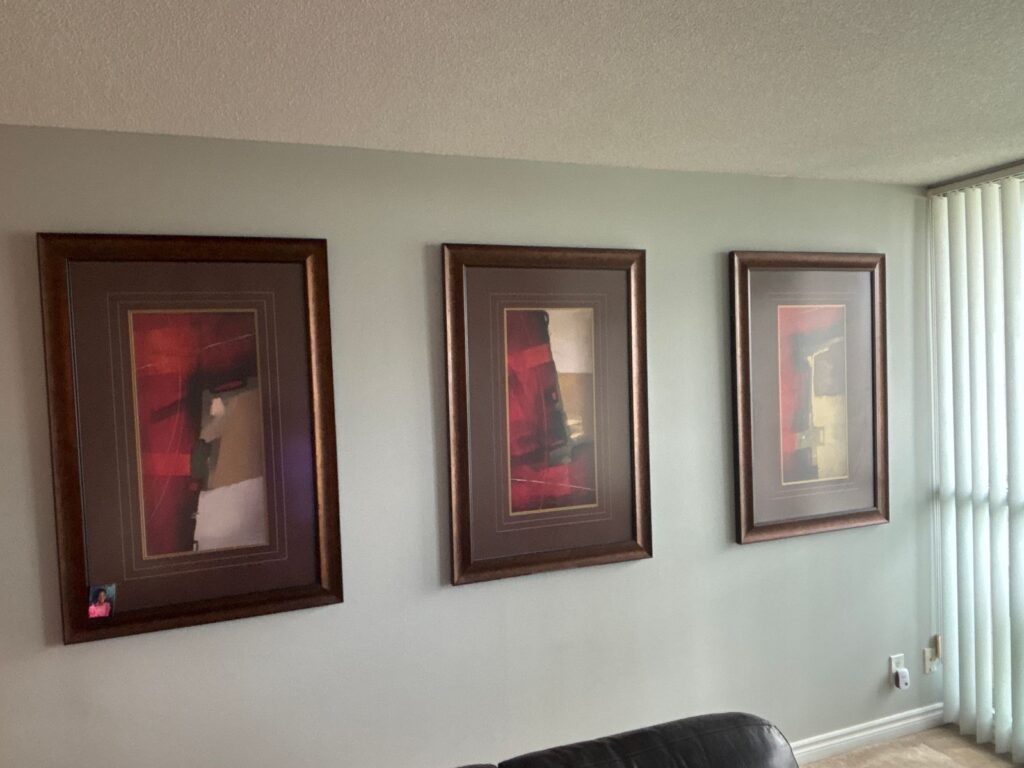
Mirror Hanging Service Mississauga Cost Guide (2026)
Mirror and picture hanging costs in Mississauga typically depend on the size, weight, wall type, and complexity of the job. Here’s what you can expect to pay:
| Service | Typical Cost (CAD) | Details |
|---|---|---|
| Single mirror or picture frame | $75–$150 | Includes locating studs, selecting hardware, leveling, and installation |
| Large mirror (40″+ or over 50 lbs) | $150–$250 | Requires heavy-duty brackets, possible reinforcement, extra labour |
| Gallery wall (3–5 pieces) | $200–$400 | Layout planning, drilling multiple holes, leveling across pieces |
| Shelf resecuring | $80–$180 | Tightens existing brackets, relocates if needed, checks load capacity |
Most handyman services in Mississauga include a stud finder inspection and drywall anchors rated for your mirror’s weight. If your wall is plaster or you’re hanging on tile, expect labour to increase by 20–30%. Many professionals offer free estimates, so you can confirm pricing before work begins.
DIY vs Hiring a Professional Handyman
When DIY works: Lightweight frames (under 10 lbs) on drywall with clear stud location are safe to hang yourself. A level, stud finder, and correct anchors from Home Depot or Lowe’s are enough for simple single-item jobs. If you’re confident reading a stud finder and hanging a few picture frames, this is where DIY saves money.
We often hang mirrors and art alongside other small jobs such as TV mounting or curtain rod installation. See our Mississauga handyman page for areas we cover.
When a professional makes sense: Heavy mirrors (over 30 lbs), gallery walls, textured or plaster walls, or hanging above furniture require expertise. A handyman will locate studs accurately, select the right hardware for your wall type, and ensure everything is level—not “close enough.”
The real risk: A heavy mirror mounted incorrectly can fall without warning, damaging drywall, flooring, and creating a safety hazard for family and guests. Plaster walls in older Mississauga homes crack easily with wrong anchors. Get a free estimate from a professional if you’re uncertain about the wall type or weight—it’s cheaper than repairs.

Common Mistakes Homeowners Make When Hanging Mirrors
The biggest mistake we see in Mississauga homes is using the wrong anchor for the mirror’s weight. Homeowners often grab a plastic toggle or a basic nail without checking what the mirror actually weighs—then wonder why it falls within weeks. A 40-pound bathroom mirror needs heavy-duty anchors rated for at least that load; a basic drywall anchor maxes out around 25 pounds.
Single-hook hangs are another frequent problem. Even lightweight mirrors should use two anchor points minimum, ideally spread wide apart. One hook concentrates all the force on one spot, creating a lever effect that pulls the anchor loose over time.
Eyeballing level is tempting—mirrors look close enough—but even a quarter-inch tilt becomes obvious over time, especially on bathroom or vanity mirrors. A $15 laser level or $8 spirit level takes 30 seconds and prevents the frustration of an off-kilter reflection.
Careless drilling also tears drywall edges or punches through into studs unexpectedly. When we’re called to rehang mirrors in North York or Scarborough, we often find previous holes surrounded by crumbled drywall that now can’t hold anchors. The solution is drilling straight, using the correct bit size, and stopping when you break through the drywall surface—not pushing through to the other side.
Frequently Asked Questions
How much does it cost to have a mirror hung by a handyman in Mississauga?
Most single-mirror hanging jobs in Mississauga run between $80–$150 CAD, depending on mirror size, wall type, and hardware complexity. Large or frameless mirrors that require specialty anchors or a two-person lift typically sit at the higher end. RenoHeal charges a flat hourly rate with no hidden fees, and you get a free estimate before any work starts.
What type of wall anchor should I use for a heavy mirror on drywall?
For mirrors over 20 lbs hanging on drywall without a stud available, toggle bolts (also called butterfly anchors) or snap toggles are the go-to choice — they spread load across a wide area of the drywall panel and can hold 50–100+ lbs each when installed correctly. Plastic expansion anchors are fine for lightweight décor but should never be trusted with a large mirror. A handyman will match anchor size and rating to the actual weight of your mirror before drilling a single hole.
Can a handyman hang a large bathroom or full-length mirror safely?
Yes — and for mirrors over roughly 30 lbs or longer than 48 inches, having a professional do it is genuinely the safer call. A handyman will locate studs with a stud finder, choose the right combination of stud fasteners and wall anchors, and use a level to ensure the mirror sits perfectly straight. Frameless bathroom mirrors and full-length leaner mirrors that need to be wall-anchored for safety both require precise hardware selection that an experienced handyman handles routinely.
How do I know if my mirror needs to go into a stud or if an anchor is enough?
The weight of the mirror is the deciding factor. Anything under 20 lbs can typically be supported by quality drywall anchors alone, provided the drywall is in good condition. For mirrors between 20–50 lbs, a handyman will try to hit at least one stud and supplement with a toggle anchor on the other side. Mirrors over 50 lbs — think large vanity mirrors or framed statement pieces — should be anchored into studs wherever possible, with a French cleat or mirror mounting bar distributing the weight evenly.
How long does it take a handyman to hang a mirror or set of pictures?
A single standard mirror typically takes 20–40 minutes from layout to final level check, including locating studs, drilling, setting hardware, and hanging. A gallery wall of 6–10 framed pieces usually runs 1.5–2.5 hours depending on the arrangement complexity. Booking a handyman for a minimum one-hour visit and grouping a few hanging tasks together is the most cost-effective way to get everything done in one shot.
Can a handyman re-secure a closet shelf at the same visit as hanging mirrors?
Absolutely — this is exactly the kind of task bundling that makes a handyman visit worthwhile. Re-securing a sagging or loose closet shelf (usually caused by failed drywall anchors or an overloaded bracket) takes 15–30 minutes and uses a lot of the same tools and hardware already on the truck. Grouping small repairs like shelf fixes, mirror hanging, and picture installation into one visit saves you both time and the cost of a second call-out.
Ready to Book a Mirror Hanging Service Mississauga Pros Trust?
Getting a mirror hung correctly comes down to three things: knowing the wall type, choosing hardware rated for the actual weight, and using a level from the very first mark — not as an afterthought. Cut corners on any of those and you’re looking at cracked drywall, a crooked mirror, or worse, a heavy piece of glass on the floor.
RenoHeal’s technicians bring the right tools, anchors, and experience to every job. With 3,500+ completed projects across Toronto and the GTA, a 4.9-star rating, and full $5M liability insurance plus WSIB coverage, you’re not taking a chance on a stranger with a drill. We also offer free estimates and a workmanship warranty on eligible services.
Don’t leave a heavy mirror propped against the wall any longer than it needs to be. Request a free quote today, or explore everything we handle through our Handyman Services page — mirrors, shelves, TV mounting, and dozens of other small jobs done right the first time.